Large Scale 50L Rotary Evaporator for Bulk Extraction
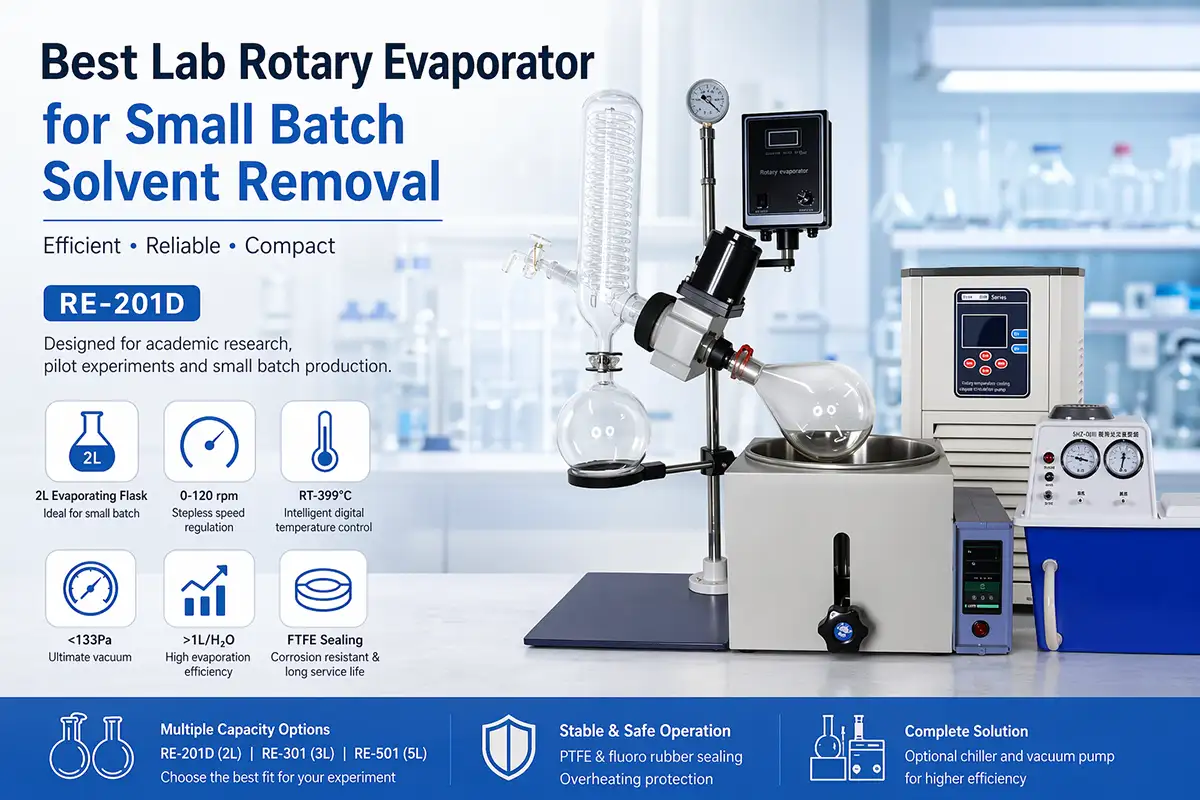
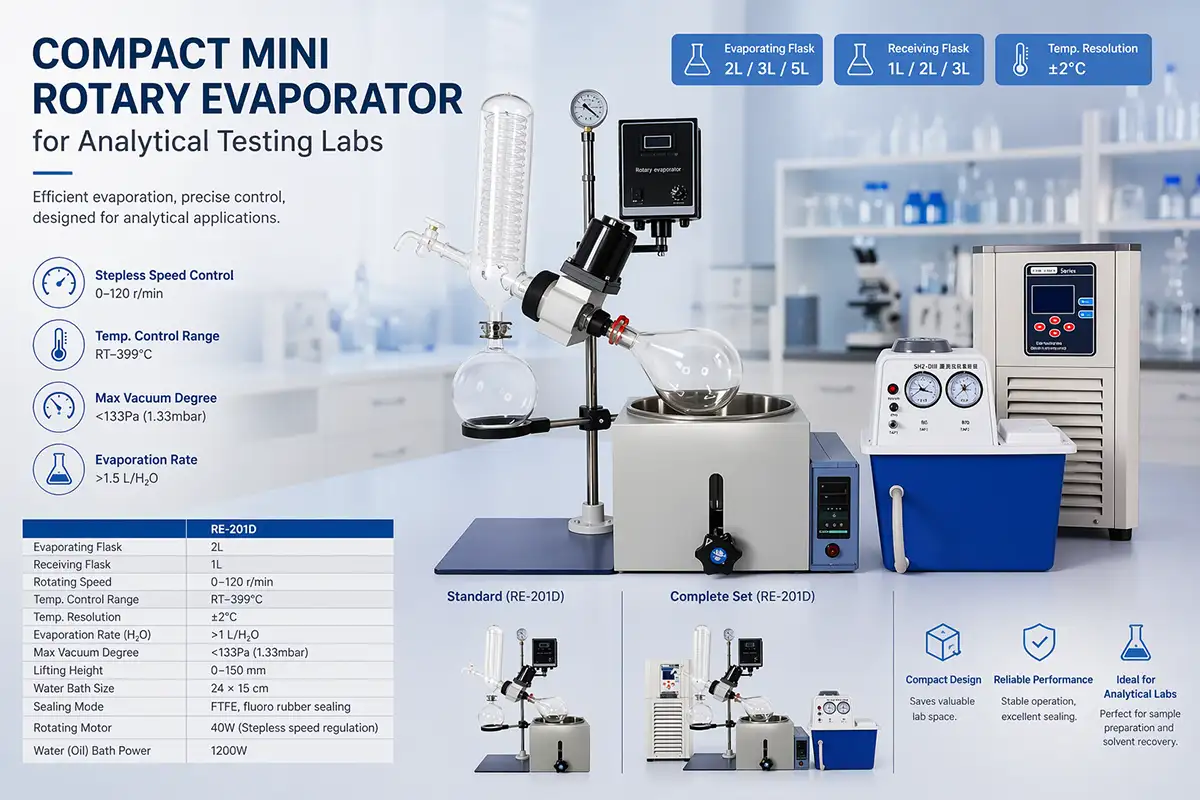
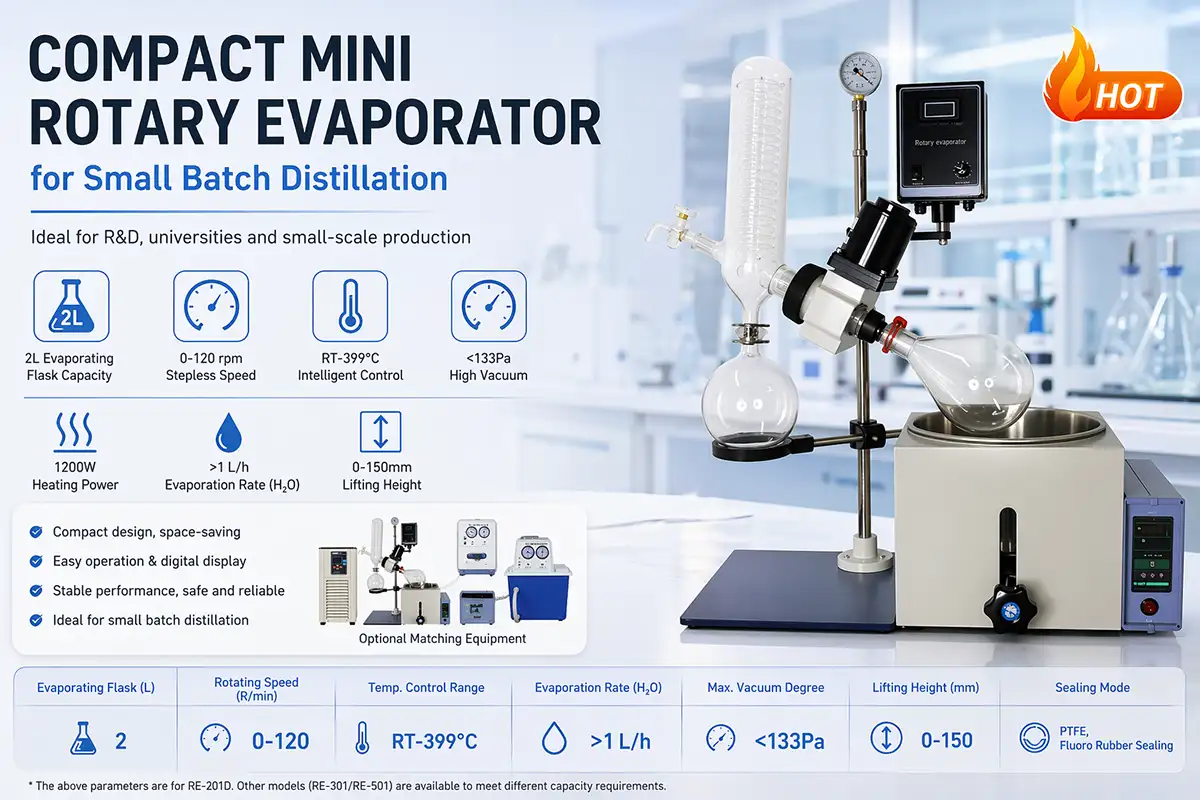
A 50L rotary evaporator is the practical bridge between benchtop concentration and production-scale solvent recovery. For extraction labs, botanical processing rooms, chemical pilot plants, and process development teams, it offers the glass visibility of a lab rotovap with the batch capacity needed for meaningful daily throughput.
Why a 50L rotovap fits bulk extraction workflows
Bulk extraction often creates solvent-rich solutions that are too large for a 2L or 5L lab evaporator but still need gentle, visible, vacuum-assisted concentration. A large scale 50L rotary evaporator solves that middle ground by combining a high-capacity evaporation flask, a large receiving flask, controlled bath heating, and efficient condensation in one compact recovery station.
The strongest use cases include ethanol recovery after botanical extraction, concentration of natural product extracts, solvent removal from reaction mixtures, essential oil processing, pilot-scale formulation work, and daily batch cleanup in research facilities. For buyers comparing a 50 liter rotary evaporator with smaller lab models, the main question is usually not whether the unit can evaporate solvent. The better question is whether the system can keep evaporation, condensation, receiving volume, and operator handling in balance.
RE-5002 and R1050: two 50L paths for solvent removal
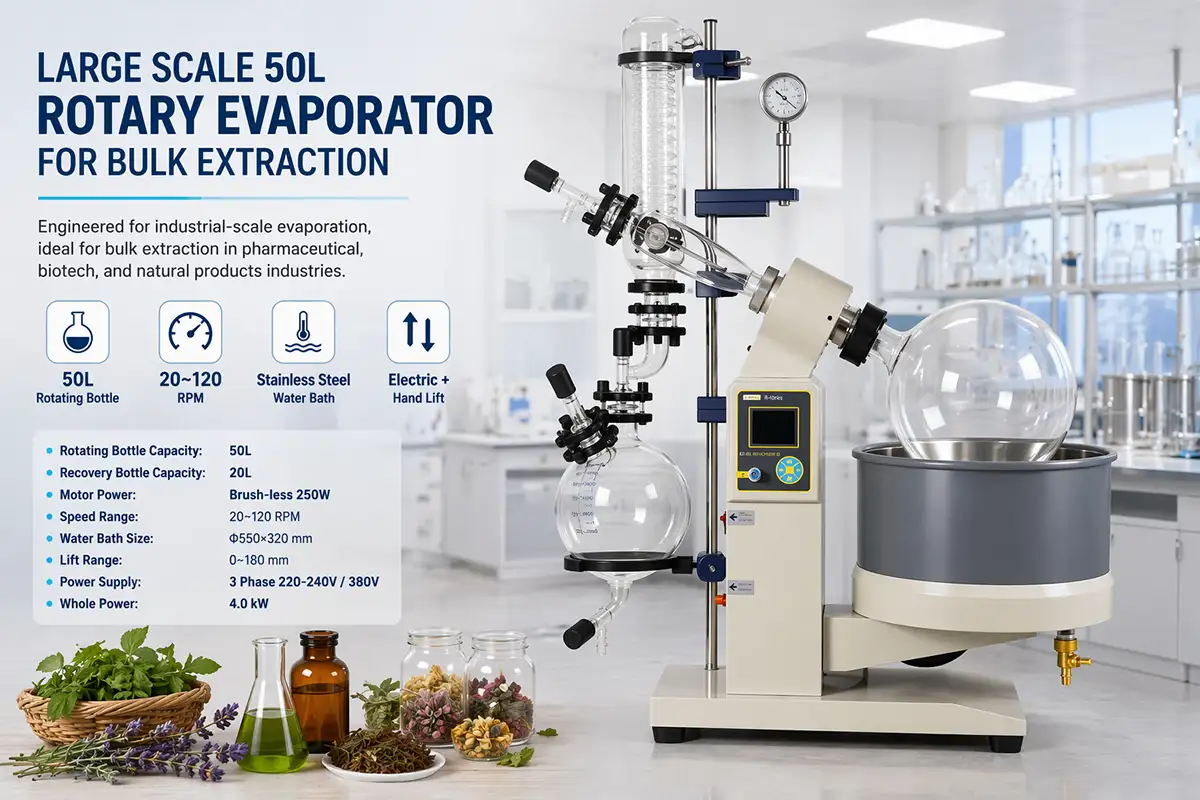
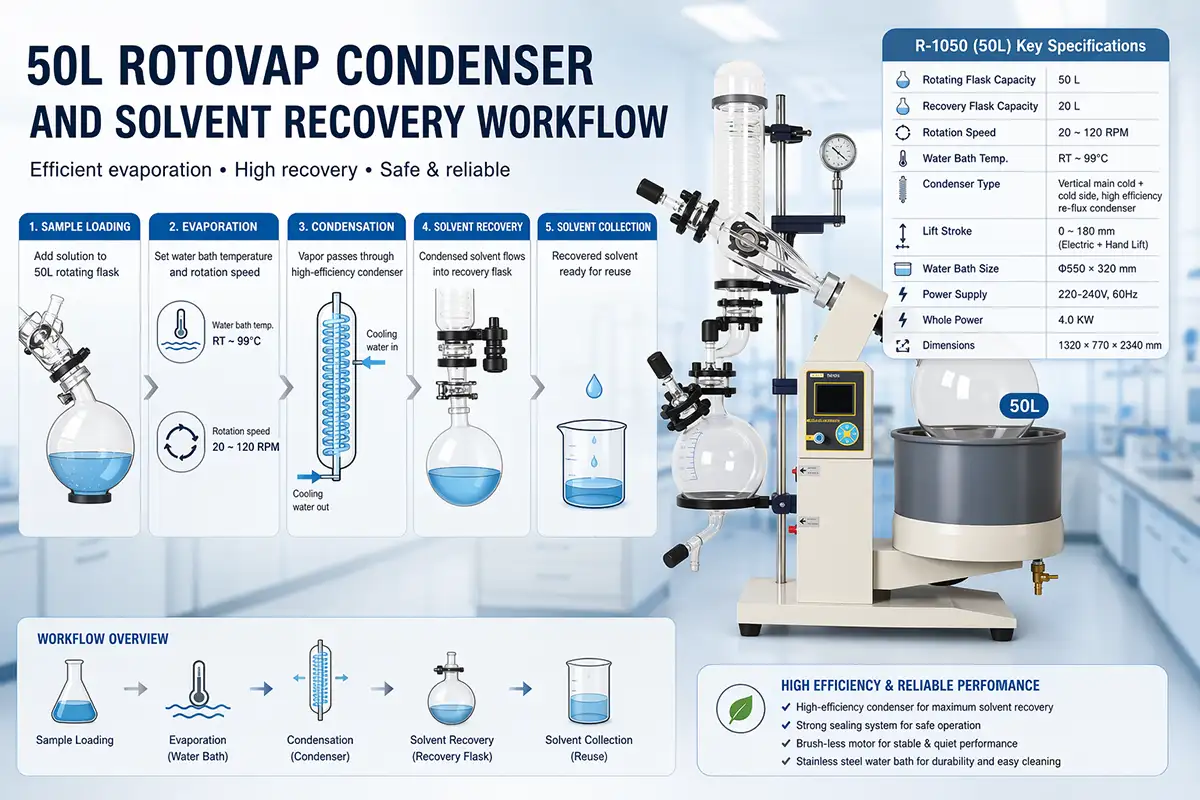
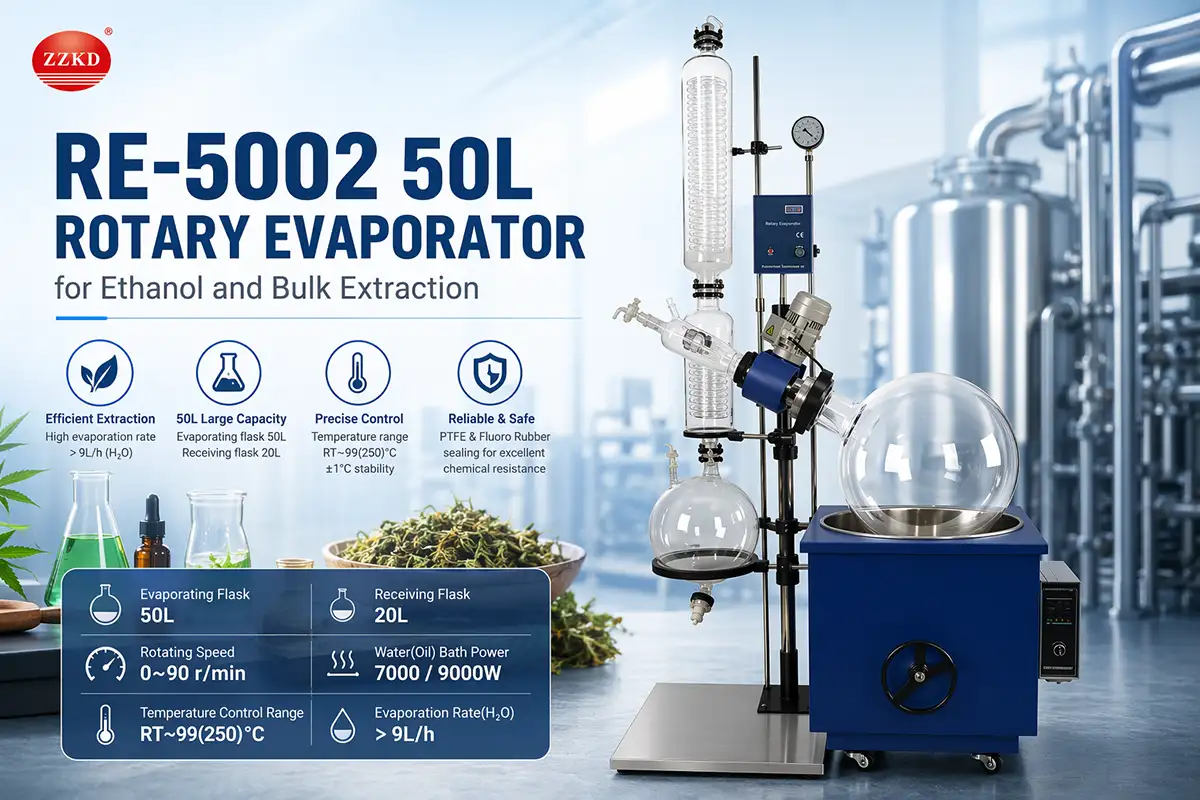
For 50L work, the supplied product data points to two useful large-capacity options. The RE-5002 emphasizes high evaporation output, a 50L evaporation flask, a 20L receiving flask, and a vertical double condenser. The R1050 also uses a 50L rotating bottle and 20L recovery bottle, with a vertical main condenser plus side condenser structure and electric plus hand lift support.
In practical terms, RE-5002 is a strong choice when the main purchasing goal is a clear 50L bulk extraction rotovap with a documented evaporation rate above 9L/h for water. R1050 is attractive when the selection is framed around R-series configuration, brushless motor design, and a large bath footprint.
The practical answer is no when solvent volume is already measured in multi-liter batches. A 50L flask gives the headroom needed for foam, bumping control, and staged loading, while the actual charge volume can still be managed conservatively for safer evaporation.
| Specification | RE-5002 | R1050 | Bulk extraction value |
|---|---|---|---|
| Evaporating flask | 50L | 50L rotating bottle | Supports larger solvent-rich batches with fewer transfers. |
| Receiving flask | 20L | 20L recovery bottle | Reduces interruption during solvent recovery. |
| Rotating speed | 0-90 r/min | 20-120 RPM | Allows film formation to be tuned for viscosity and foaming behavior. |
| Bath power | 7000/9000 W | 4.0 kW whole power | Provides heat input for high-volume evaporation. |
| Temperature range | RT-99°C, oil bath up to 250°C | Water bath, stainless steel | Matches common ethanol, water, and mixed-solvent recovery needs. |
| Condenser | Vertical double condenser | Vertical main condenser plus side condenser | Improves solvent capture when vapor load is high. |
| Reference price | $2,545 | $1,818 | Price varies by configuration, accessories, voltage, and logistics. |
What makes a 50L rotary evaporator efficient in bulk solvent recovery?
Efficiency comes from the whole system, not from flask size alone. In a large rotovap, rotation spreads liquid into a thin film on the warm glass surface. Vacuum lowers the boiling point. The bath supplies controlled heat. The condenser removes vapor energy and returns solvent to the receiving flask. When these parts are balanced, solvent removal becomes faster, cleaner, and less stressful for heat-sensitive extracts.
Large evaporation surface: The 50L flask improves film area, helping solvent evaporate without aggressive bath temperatures.
High-capacity condensation: Double condenser designs are valuable when ethanol, water, or mixed solvents generate heavy vapor flow.
Vacuum compatibility: PTFE and fluoro rubber sealing helps maintain stable vacuum conditions during long recovery cycles.
Operator visibility: Full glass construction makes foam, bumping, residue thickness, and color change easier to monitor.
No. The better approach is to match bath temperature, vacuum depth, rotation speed, and condenser cooling capacity. Excessive heat can overload the condenser or damage temperature-sensitive extracts, while controlled vacuum often improves speed more elegantly.
For ethanol-heavy processes, a dedicated ethanol rotary evaporator setup should also include appropriate cooling, a compatible vacuum pump, and careful receiving flask management. The 50L evaporator is the center of the workflow, but condenser temperature and pump selection determine how consistently the system performs over a full shift.
How to choose the right 50L rotary evaporator configuration
A 50L unit should be selected around real process volume, solvent type, vapor load, facility power, available cooling, and cleaning routine. A low initial price can look attractive, but the better value is usually the system that runs steadily with fewer pauses, fewer solvent losses, and less manual handling.
| Selection factor | Recommended check | Reason it matters |
|---|---|---|
| Batch size | Keep working fill below total flask volume and allow foam headspace. | Bulk extracts can bump or foam during vacuum changes. |
| Solvent | Confirm boiling point, vacuum target, and condenser cooling needs. | Ethanol, water, and mixed solvents behave differently under vacuum. |
| Power supply | Confirm 220V/50Hz, 380V/50Hz, or project-specific voltage before order. | Large baths and motors need stable facility power. |
| Cooling capacity | Pair the condenser with a chiller sized for vapor load. | Weak cooling reduces recovery rate and increases vapor loss risk. |
| Vacuum pump | Choose a pump compatible with solvent vapor and desired vacuum depth. | Stable vacuum keeps evaporation predictable and repeatable. |
A practical bulk extraction recovery workflow
Daily operation should be calm, repeatable, and easy to inspect. The following rhythm suits a 50L rotary evaporator used for bulk extraction solvent removal.
Pre-check the glassware and seals
Inspect the evaporating flask, receiving flask, condenser joints, PTFE components, and sealing surfaces before loading solvent-rich material.
Set conservative bath and rotation conditions
Begin with moderate rotation and controlled bath temperature, then adjust after the liquid film forms smoothly and vapor flow becomes steady.
Apply vacuum gradually
Step down vacuum slowly to reduce bumping. This is especially important for extracts with dissolved gases, fine particles, or foam-forming compounds.
Watch condenser load and receiving volume
Recovered solvent should condense cleanly and collect without excessive vapor carryover. Empty or swap receiving glassware before capacity becomes a bottleneck.
The bottleneck is often the supporting equipment rather than the evaporating flask. In many installations, undersized chilling, unstable vacuum, or limited receiving capacity restricts recovery speed before the 50L flask itself becomes the limiting factor.
For teams still building operator SOPs, a practical primer on how to use a rotovap can help standardize loading, vacuum ramping, bath control, and shutdown steps before moving into larger daily batches.
When the 50L size is the best investment
A 50L rotary evaporator is usually the right investment when smaller units create long queues, when solvent recovery has become a daily production task, or when pilot extraction data must scale beyond small glassware. It is also a strong fit when the process needs gentle concentration without moving directly to a more complex falling film or wiped film system.
The main value is operational balance: enough capacity for meaningful bulk extraction, enough visibility for process control, and enough flexibility for ethanol recovery, essential oil distillation, reaction concentration, and formulation work. For many labs, this makes a 50L rotovap the most practical large scale rotary evaporator before fully continuous equipment becomes necessary.
Bottom line
A large scale 50L rotary evaporator is built for labs that need serious solvent removal without losing the control and visibility of glass evaporation. With a 50L evaporating flask, 20L receiving capacity, double condenser options, and practical pricing references from $2,545 for RE-5002 configurations, it is a strong choice for bulk extraction, ethanol recovery, and pilot-scale concentration.
The best result comes from matching the evaporator with the right chiller, vacuum pump, bath conditions, and loading discipline. When those pieces are aligned, a 50L rotovap becomes a reliable daily solvent recovery station rather than just a larger piece of glassware.