Pilot-scale processing · Purchasing guide
Buy 10L rotary evaporator for pilot plant distillation
Planning to buy a 10L rotary evaporator for pilot plant distillation? Start with the process, not just the flask size. A well-matched rotary evaporation system can support solvent removal, sample concentration and solvent collection during development work, while helping a team evaluate operating conditions before moving to larger equipment.
Where a 10L rotary evaporator fits in pilot work
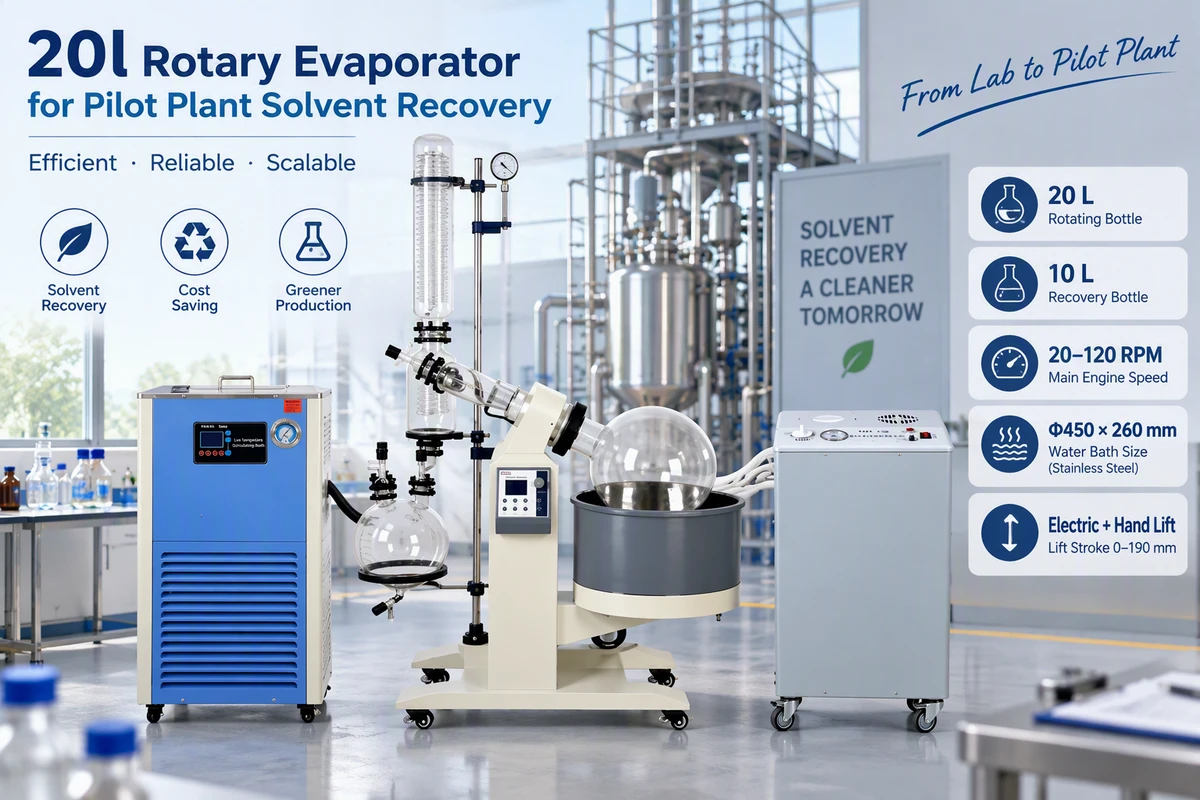
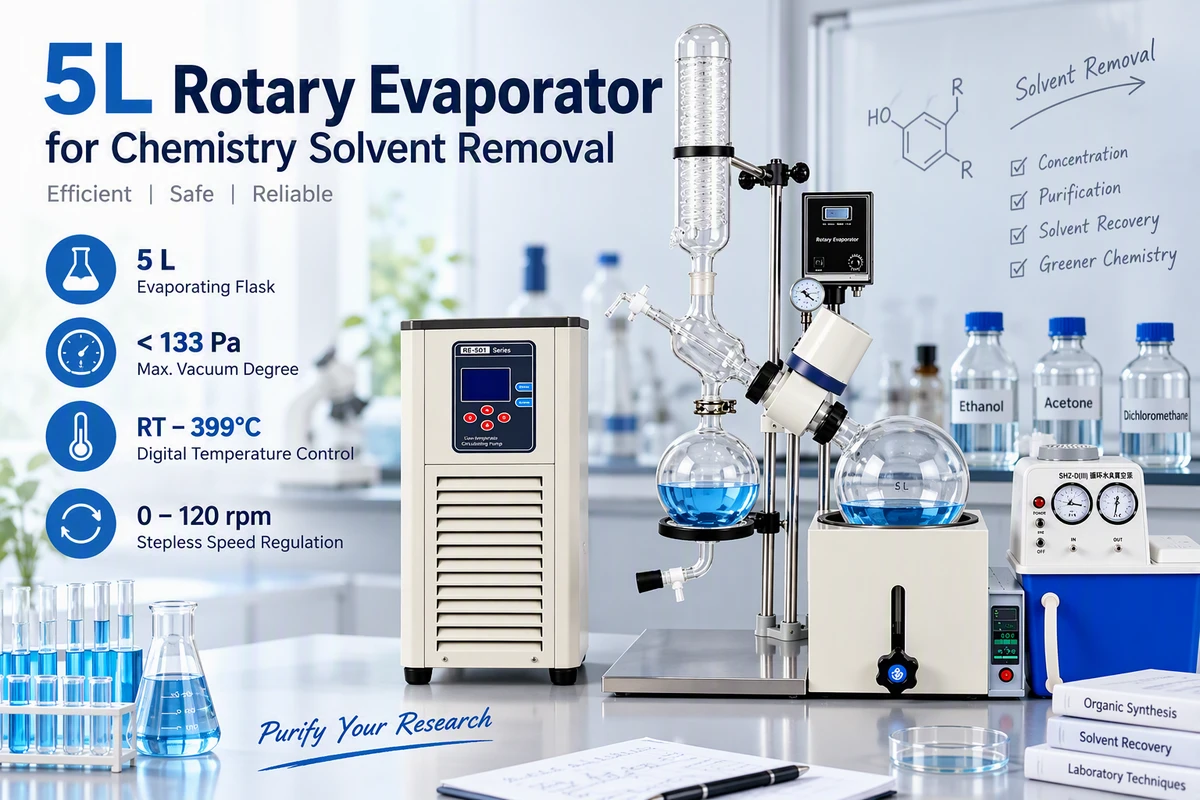
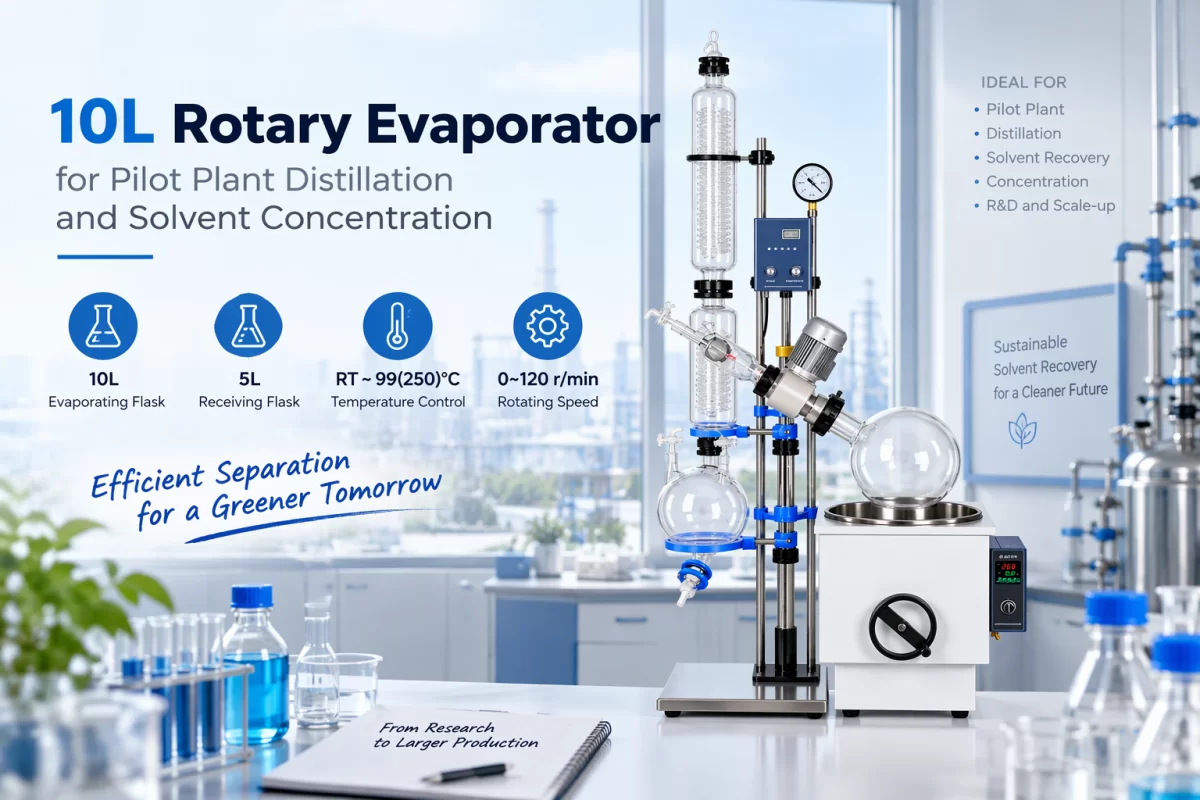
A Rotary Evaporator combines a rotating evaporation flask, a heating bath, a vapor pathway, a condenser and a receiving flask. It is useful when a process requires a volatile solvent to be separated from less volatile material. Pilot-scale work may include concentrating chemical solutions, removing solvent from botanical extracts, collecting solvent for evaluation or preparing concentrated intermediates for subsequent experiments.
The R1010 is a 10L model in the R-series range. Its rotating flask provides a defined vessel size for planning batch experiments, and its separate receiving vessel collects condensed liquid. This arrangement allows operators to observe both the concentrating material and the collected distillate during a run.
Rotary evaporation should not automatically be treated as high-resolution fractional distillation. When closely boiling components must be separated to a demanding purity target, the separation method needs its own assessment. For routine solvent removal and concentration trials, however, a rotary evaporator is a practical equipment category to consider.
How pilot-scale vacuum distillation works
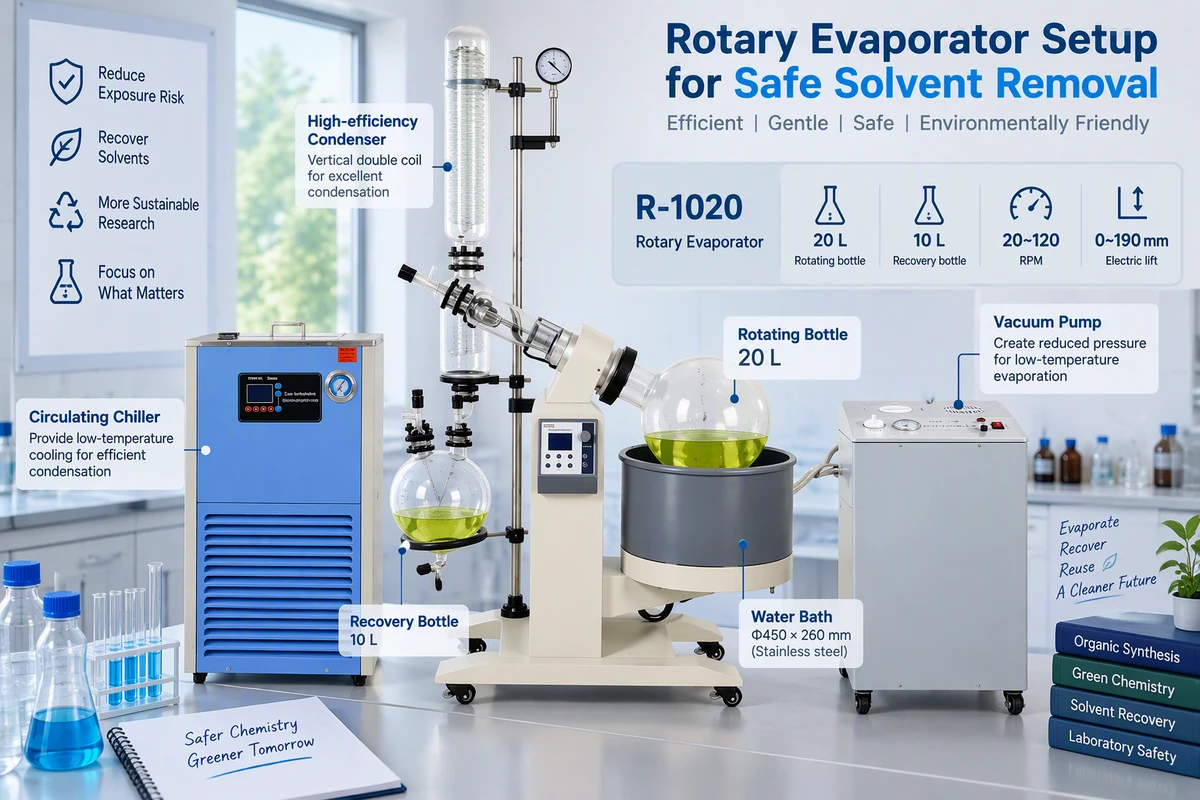
Rotation spreads liquid across the inside of the evaporation flask, renewing the wetted surface. The heating bath supplies energy, while reduced pressure allows many solvents to boil at a lower temperature than they would at atmospheric pressure. Vapor travels to the condenser, where cooling removes heat and converts it back into liquid for collection.
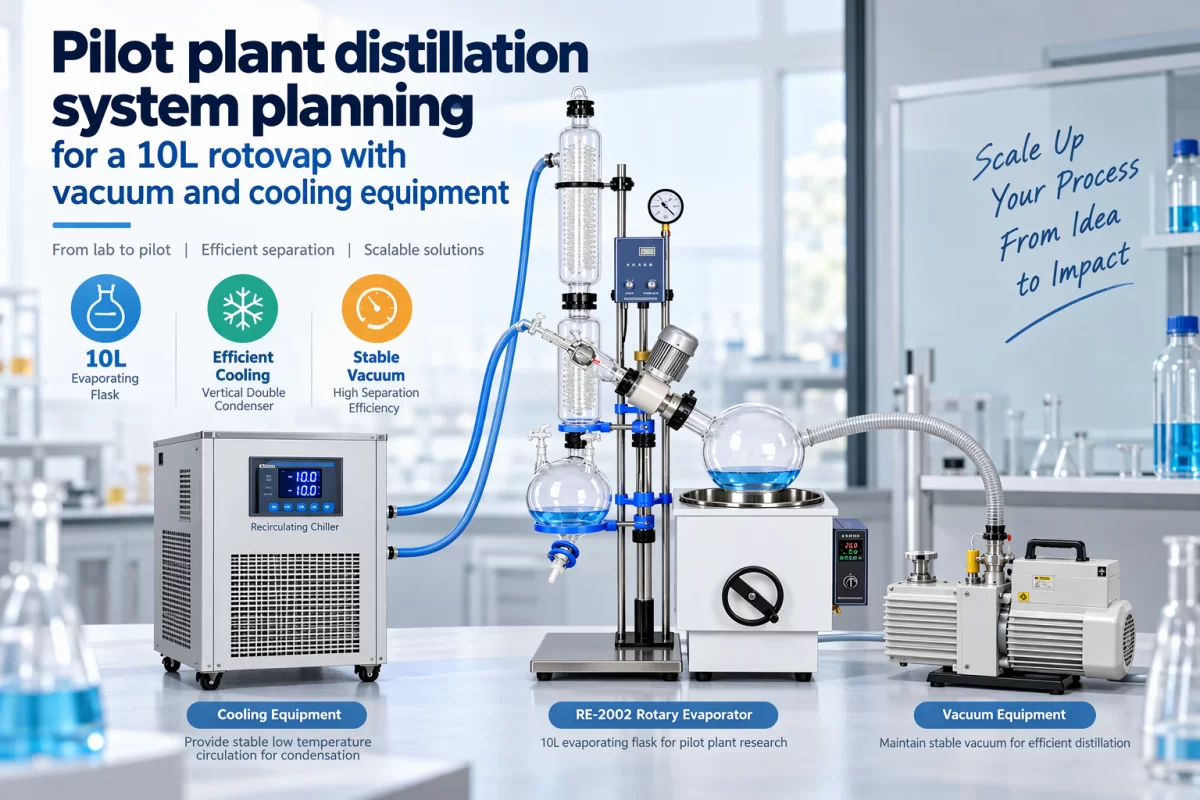
The useful operating balance involves bath temperature, pressure, rotation and cooling. Increasing heat alone does not guarantee a better process: an undersized cooling system may fail to condense the vapor load, and an unsuitable vacuum arrangement may produce unstable boiling. Heat-sensitive materials also require attention to actual exposure time and temperature; vacuum operation does not by itself guarantee product stability.
For a broader explanation of the process, read the guide to rotary evaporation in chemistry. Understanding the vapor path makes it easier to specify a complete pilot setup rather than purchasing the evaporator in isolation.
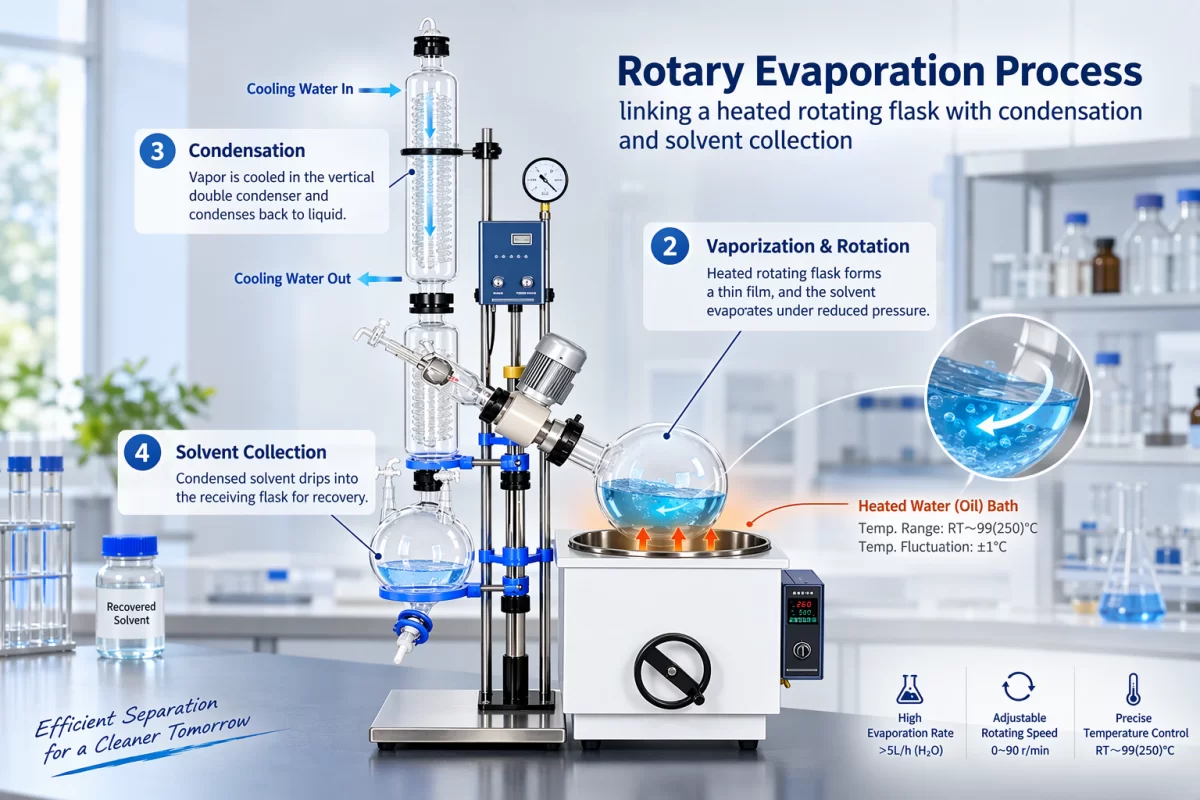
R1010 10L rotary evaporator: key specifications
The following specifications describe the R1010 model. Vessel capacities and installation dimensions help establish whether it fits the proposed pilot workspace and collection routine.
| Parameter | Value | Unit |
|---|---|---|
| Model | R1010 | — |
| Rotating flask capacity | 10 | L |
| Receiving flask capacity | 5 | L |
| Bath vessel size | Ø350 × 220 | mm |
| Lift travel | 0–160 | mm |
| Total power | 3 | kW |
| Overall dimensions | 920 × 550 × 1700 | mm |
The 5L receiving flask deserves attention when planning solvent collection: the collected amount depends on the solvent fraction in the feed, and the operating plan must accommodate receiver management. Likewise, the stated overall dimensions are equipment dimensions, not a complete clearance allowance. Additional room is needed for access, glassware handling, hoses and auxiliary equipment.
Select the complete pilot plant distillation system
A productive purchasing discussion starts with the process requirements and installation environment. Prepare the following information before selecting the system:
- Material and solvent: Identify the solvent or solvent mixture, feed concentration, viscosity and any tendency to foam or form solids.
- Batch and endpoint: State the intended working charge, solvent removal objective and acceptable final concentration or residual solvent target.
- Vacuum arrangement: Match pressure control, pumping capability and wetted-material compatibility to the solvent duty. Consider vapor protection and appropriate trapping.
- Cooling requirements: Specify available coolant conditions and assess the cooling duty at the intended operating temperature, not just a chiller’s headline rating.
- Installation and safety: Review electrical supply, ventilation, glassware protection, access and the site’s requirements for handling flammable solvents.
- Purchase scope: Establish whether the quotation includes the vacuum pump, chiller, connecting hoses, controls and required accessories.
The rotovap vacuum pump selection guide provides a useful next step for assessing the vacuum side of the installation. A coordinated system specification is more meaningful than comparing vessel size alone.
Reference price and purchasing value
Our company’s catalog reference price: US$1,480. This is a company-wide reference across the listed offerings, not a model-specific quotation for the R1010 or a complete 10L pilot system. The actual quotation depends on configuration and the inquiry results.
The purchasing value of a 10L rotary evaporator lies in its suitability for the planned experiments. A properly specified setup can help a team investigate concentration behavior, collection procedures and operating sequences at a useful development scale. It can also provide practical experience with material handling before a larger process is selected.
Compare quotations by their included equipment and suitability for the duty. A bare evaporator and a package with vacuum and cooling equipment are different purchase scopes. Include utility preparation, maintenance access, consumables and operator procedures in the budgeting discussion rather than relying solely on the initial equipment figure.
Buy a 10L rotary evaporator with the process in mind
To buy a 10L rotary evaporator for pilot plant distillation, connect the equipment choice to the actual solvent removal task. The R1010 offers a 10L rotating flask and a 5L receiving flask, with defined dimensions and lift travel for installation planning. Its suitability depends on matching those features with the material, working charge, vacuum system, cooling duty and safe operating arrangements.
For another 10L equipment option, explore the RE-1002 10L rotary evaporator product page as part of the selection discussion. Keep each model’s specification and quotation separate when comparing configurations.
Prepare the process requirements and request a configuration-specific quotation to move from a nominal capacity choice to a practical pilot-scale solution.