Where to Buy 5L Rotary Evaporator for Chemistry?
A clear guide to choosing a capable 5L chemistry rotovap, comparing sellers, checking technical specifications, and ordering a complete working system rather than an incomplete machine.
The best place to buy a 5L rotary evaporator for chemistry is a specialist laboratory equipment manufacturer or an authorized laboratory distributor that can supply the evaporator, condenser, glassware, vacuum pump, and cooling equipment as a matched package. General marketplaces may show a lower initial price, but a chemistry laboratory should compare the complete system, warranty, replacement glassware, electrical standard, documentation, and technical support before placing an order.
The short answer
Buy directly from a rotary evaporator manufacturer when customization, factory pricing, and a complete package are priorities. Choose a local authorized distributor when rapid local service, procurement paperwork, or installation support matters more. In either case, request a written quotation listing every included component and confirm that the 5L evaporating flask is suitable for the intended batch volume.
Why a 5L rotary evaporator fits many chemistry labs
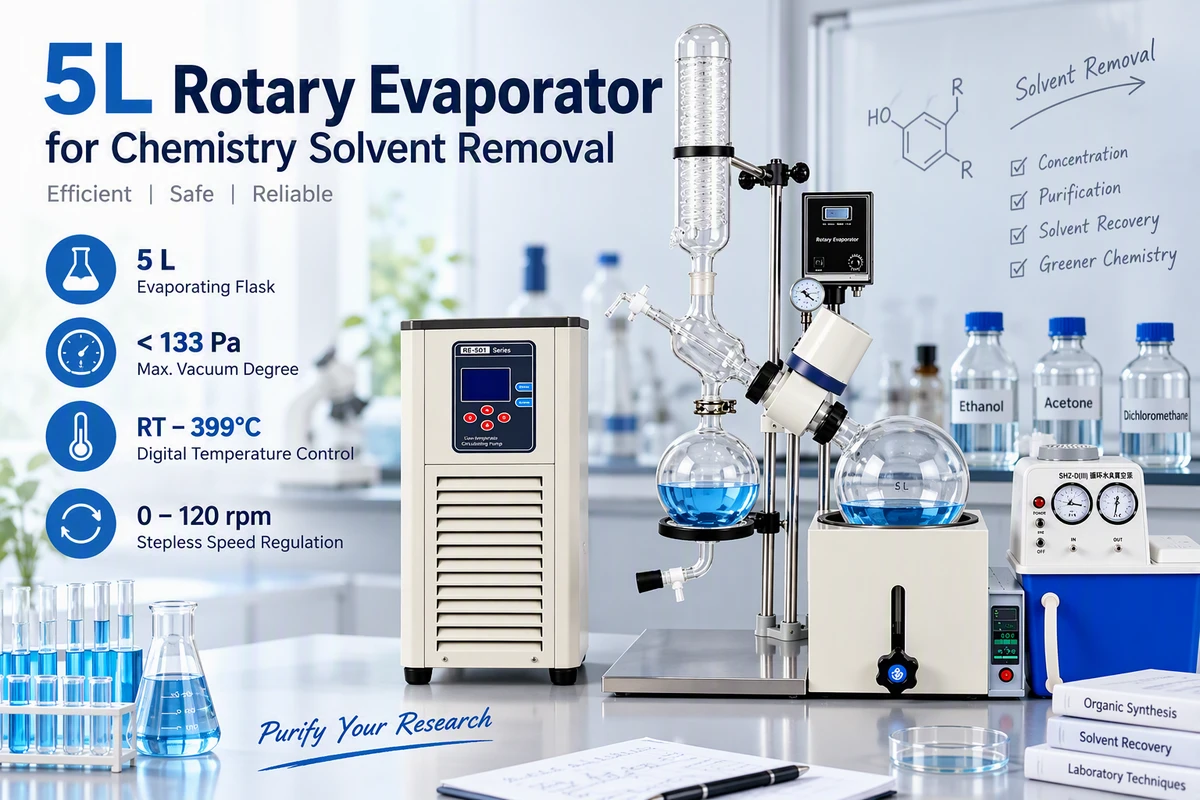
A 5L rotary evaporator sits between small benchtop units and pilot-scale equipment. It provides useful capacity for organic synthesis, concentration of extracts, solvent recovery, sample preparation, and process development without requiring the floor space or utility demand of a 10L or 20L system. The rotating flask spreads liquid into a thin film, while vacuum lowers the boiling point and a condenser turns vapor back into recoverable liquid.
According to the NIST Chemistry WebBook, the normal boiling point of water is 373.15 K, or 100°C, at standard pressure. Rotary evaporation uses reduced pressure so a solvent can boil at a lower bath temperature. This is especially valuable when working with heat-sensitive compounds, although the correct pressure and temperature depend on the solvent and process.
Two practical 5L configurations to compare
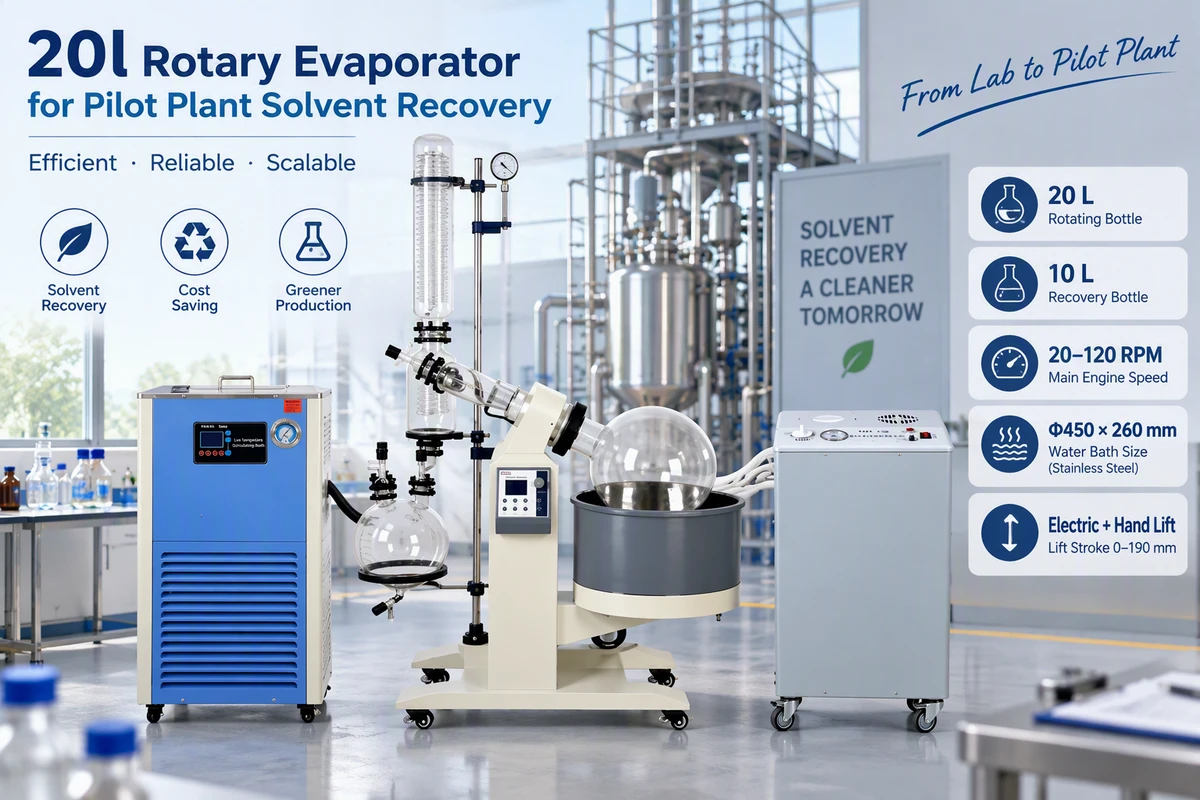
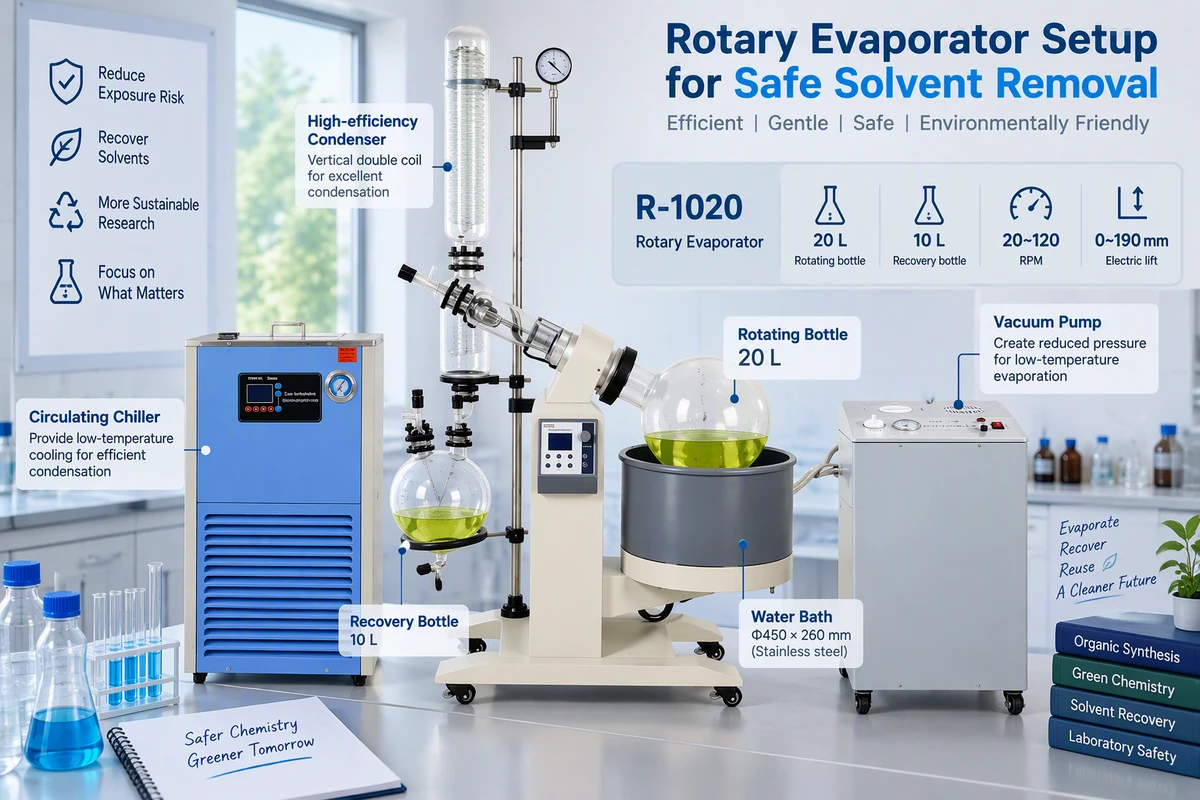
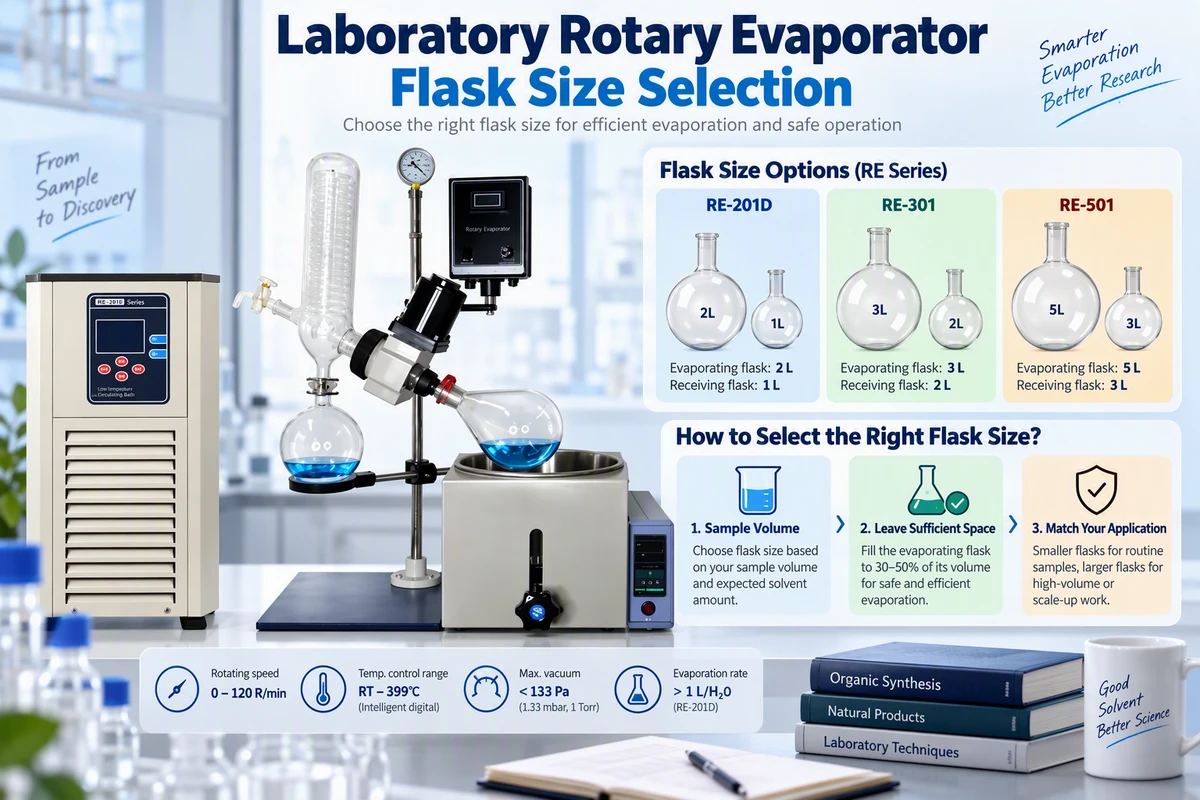
The supplied technical data describes two 5L options: the RE-501 and R1005. Both use a 5L evaporating flask and a 3L receiving flask, but their speed, bath, lift, power, and electrical configurations differ. The table below shows why model-level comparison is more useful than purchasing by flask size alone.
Swipe horizontally to view all specifications.
| Specification | RE-501 | R1005 | Why it matters |
|---|---|---|---|
| Evaporating / receiving flask | 5L / 3L | 5L / 3L | Defines nominal batch and collection capacity |
| Rotating motor | 40W, stepless regulation | 40W | Supports steady flask rotation |
| Rotating speed | 0–120 rpm | 10–140 rpm | Allows adjustment for film formation and sample behavior |
| Bath / heating | 1,500W; digital RT–399°C listed | Stainless bath; 2kW total power | Must match the intended medium and temperature range |
| Temperature performance | ±2°C resolution listed | Ask supplier to confirm | Affects process repeatability |
| Vacuum | <133 Pa maximum listed | Ask supplier to confirm | System vacuum also depends on pump, seals, and leaks |
| Condenser | Confirm configuration | Vertical double coil | Cooling area influences vapor capture |
| Lift | 0–120 mm | Electric, 0–150 mm | Helps remove the flask from the bath quickly |
| Power supply | Confirm before ordering | Single-phase 220V/60Hz | Must match the laboratory outlet and frequency |
| Dimensions | Confirm before ordering | 660 × 400 × 1020 mm | Important for bench space and clearance |
Note: The RE-501 sheet lists “FTFE, fluoro rubber sealing.” Ask the seller to confirm whether “FTFE” is intended to mean PTFE and to identify all wetted seal materials. Also verify the stated high bath-temperature range against the supplied bath medium, glassware, and operating manual before use.
Where to buy: compare these three channels
Specialist manufacturer
Best for direct technical communication, configuration choices, factory pricing, export packaging, and matched accessories. Request test documentation and an itemized quote.
Authorized distributor
Best when local invoicing, installation, operator training, or faster domestic service is required. Confirm authorization and access to genuine replacement glassware.
Laboratory marketplace
Useful for price discovery, but listings can omit pumps, chillers, or adapters. Verify the actual seller, warranty provider, shipping protection, and return terms.
Do not overlook the vacuum pump and chiller
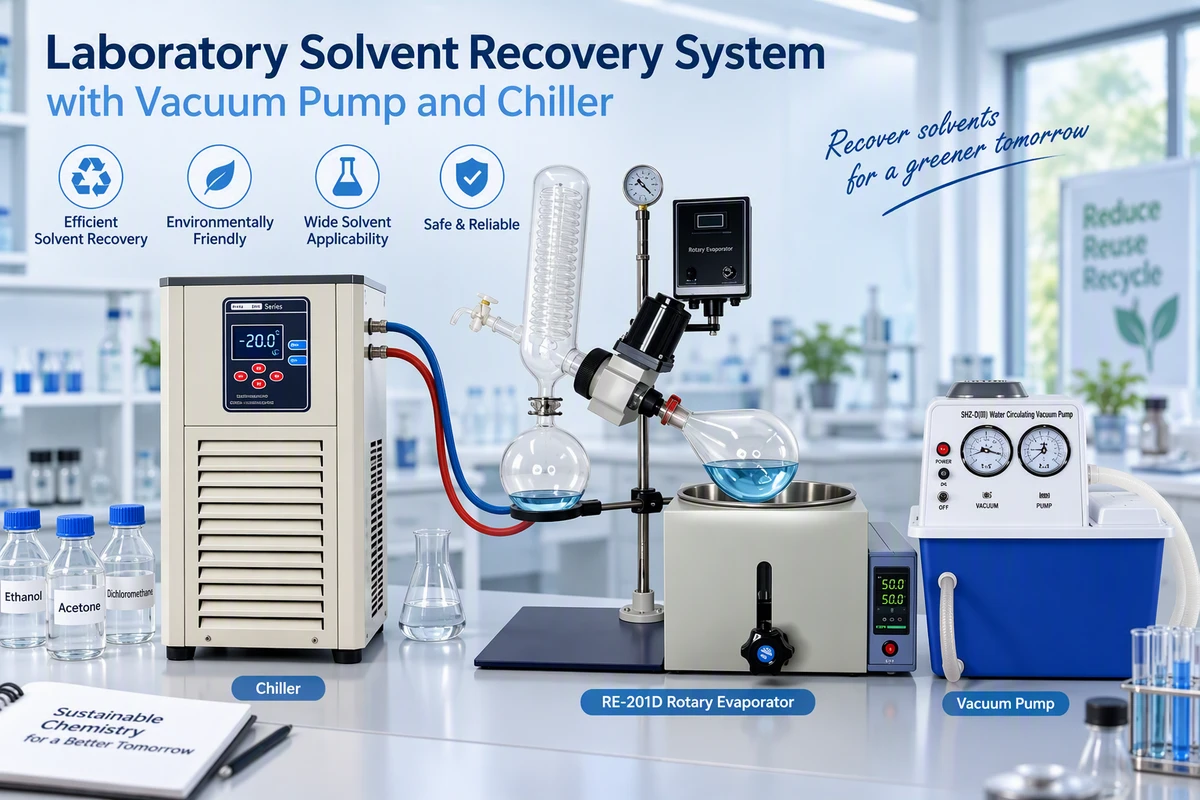
A rotary evaporator cannot perform well if the vacuum source is chemically incompatible, undersized, or difficult to control. Pump choice should account for solvent vapor, target pressure, flow, corrosion resistance, and the use of a cold trap. A deeper vacuum rating on paper does not automatically produce a better process; stable control and leak-tight glassware matter just as much. For a focused comparison, read this guide to selecting a vacuum pump for a rotovap.
The chiller must remove enough heat to condense the expected vapor load at the selected evaporation rate. Ask the supplier to recommend coolant temperature and cooling capacity for the actual solvent, bath temperature, and throughput. Tap water may appear convenient, but a recirculating chiller provides better control and reduces water consumption.
A purchase checklist that prevents expensive omissions
Application: identify solvents, sample type, desired throughput, and whether foam or bumping is likely.
Electrical compatibility: confirm voltage, phase, frequency, plug, total current, and local compliance requirements.
Materials: verify borosilicate glass, seal composition, tubing compatibility, and all solvent-contact surfaces.
Performance: request realistic evaporation data for the intended solvent rather than relying only on water-rate figures.
Control: check speed range, bath-temperature control, vacuum regulation, lift travel, and emergency flask removal.
Service: ask for warranty duration, response time, spare-parts availability, and glassware lead time.
Delivery: confirm protective packaging, freight terms, customs responsibility, insurance, and inspection procedure.
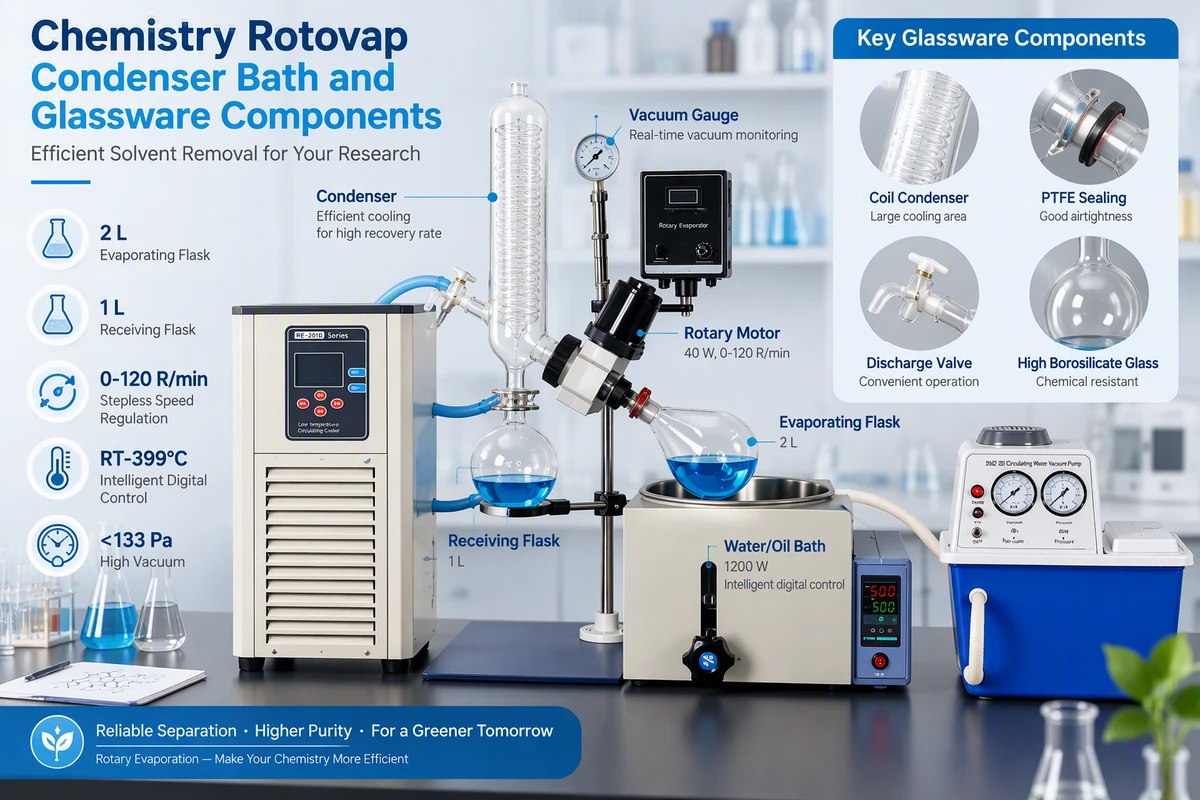
Replacement availability deserves special attention because seals and glassware are normal service items. This illustrated overview of rotary evaporator parts can help purchasing teams identify what should appear in the quotation.
Safety belongs in the buying decision
OSHA's laboratory standard, 29 CFR 1910.1450, requires covered laboratories to maintain a Chemical Hygiene Plan. A rotovap purchase should therefore be reviewed alongside ventilation, solvent hazards, glass inspection, implosion protection, grounding, bath limits, and written operating procedures. Equipment specifications do not replace a laboratory-specific risk assessment.
How to request a useful supplier quote
Send the supplier a short process summary: solvent names, approximate charge volume, target concentration, preferred processing time, available power, desired vacuum control, cooling-water conditions, and shipping destination. Ask for the exact model, a component list, technical datasheet, system diagram, production lead time, warranty, recommended spares, and a video or report of pre-shipment testing.
For laboratories new to the process, understanding rotovap chemistry and rotary evaporation makes it easier to discuss pressure, temperature, rotation, and condensation with a seller. The final choice should match the chemistry—not simply the largest motor, broadest temperature claim, or lowest advertised price.
Ready to source a 5L rotary evaporator?
Request an itemized chemistry configuration and compare the RE-501 and R1005 features against the solvent, throughput, utilities, and service requirements. Confirm every accessory in writing before payment.
Request a 5L System Quote