Rotovap Parts: Complete Guide to Essential Rotary Evaporator Components
Understanding rotovap parts is one of the most practical ways to improve evaporation efficiency, protect glassware, and choose the right rotary evaporator for laboratory or pilot-scale work. A reliable system is never just about the main unit. Performance depends on how every component works together, from the evaporating flask and condenser to the sealing system, bath, lift, and vacuum support equipment.
In many labs, buyers focus first on capacity, but experienced users know that the real difference often comes from component quality and system matching. When key rotovap parts are selected correctly, solvent recovery becomes smoother, bumping risk drops, temperature control becomes more stable, and maintenance becomes easier over time. For laboratories comparing benchtop and larger systems, this component-level view also makes budgeting more accurate.
For readers who want more background on the science behind the equipment, it is helpful to review rotary evaporator chemistry explained and the basic rotary evaporator use principles before selecting a complete system.
What Are the Main Rotovap Parts?
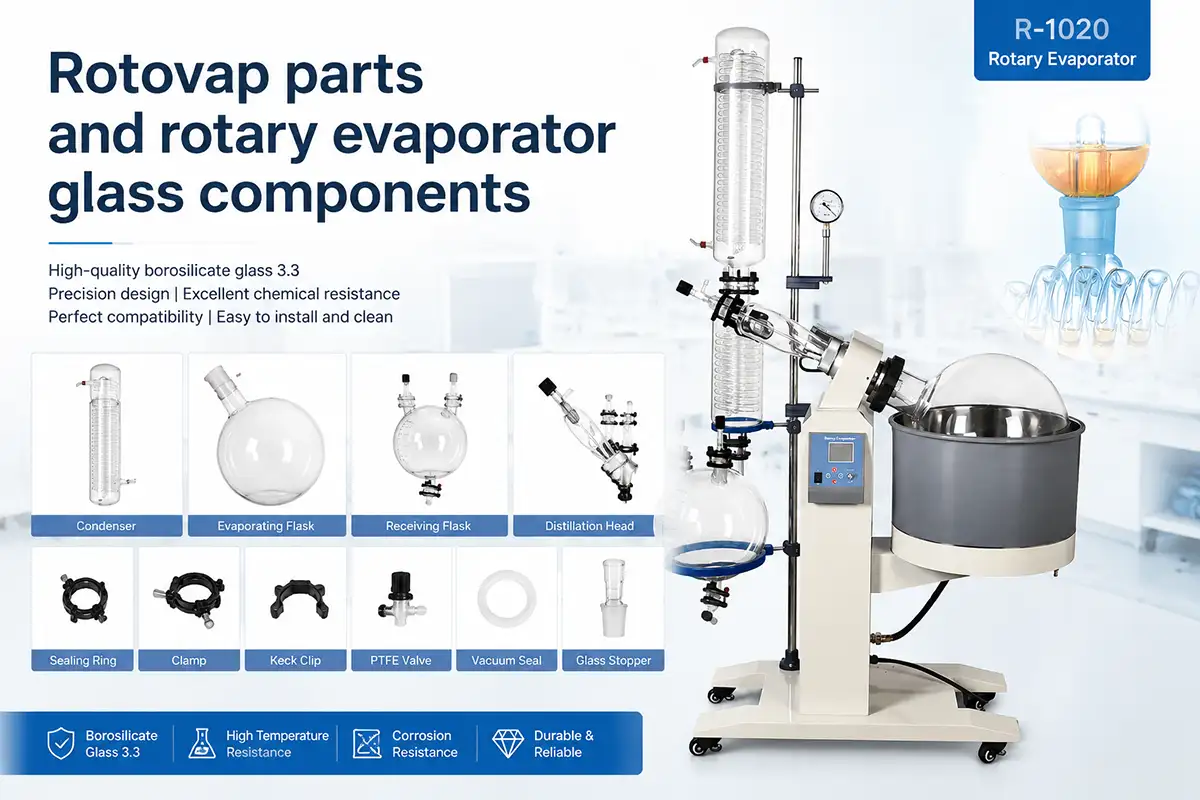
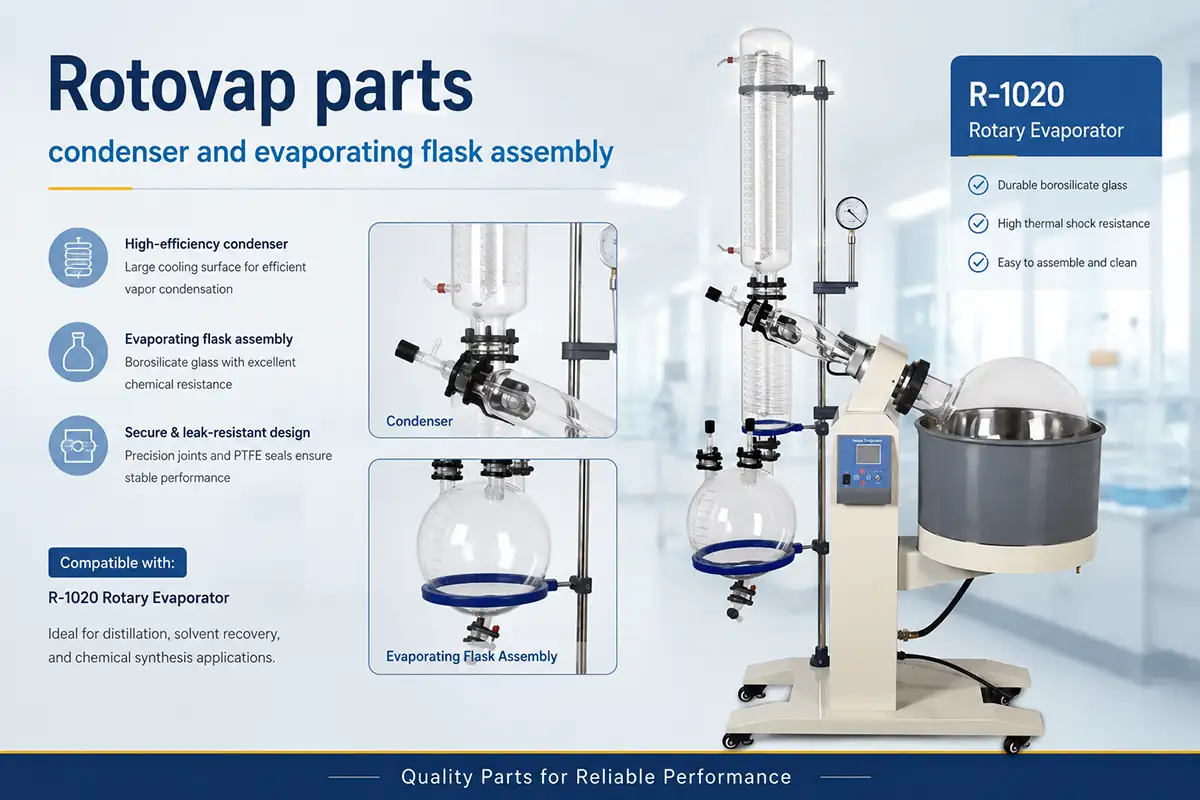
A rotary evaporator is a coordinated evaporation system. Each part affects pressure stability, heat transfer, condensation efficiency, and final recovery rate. The most important rotovap parts usually include:
Evaporating Flask
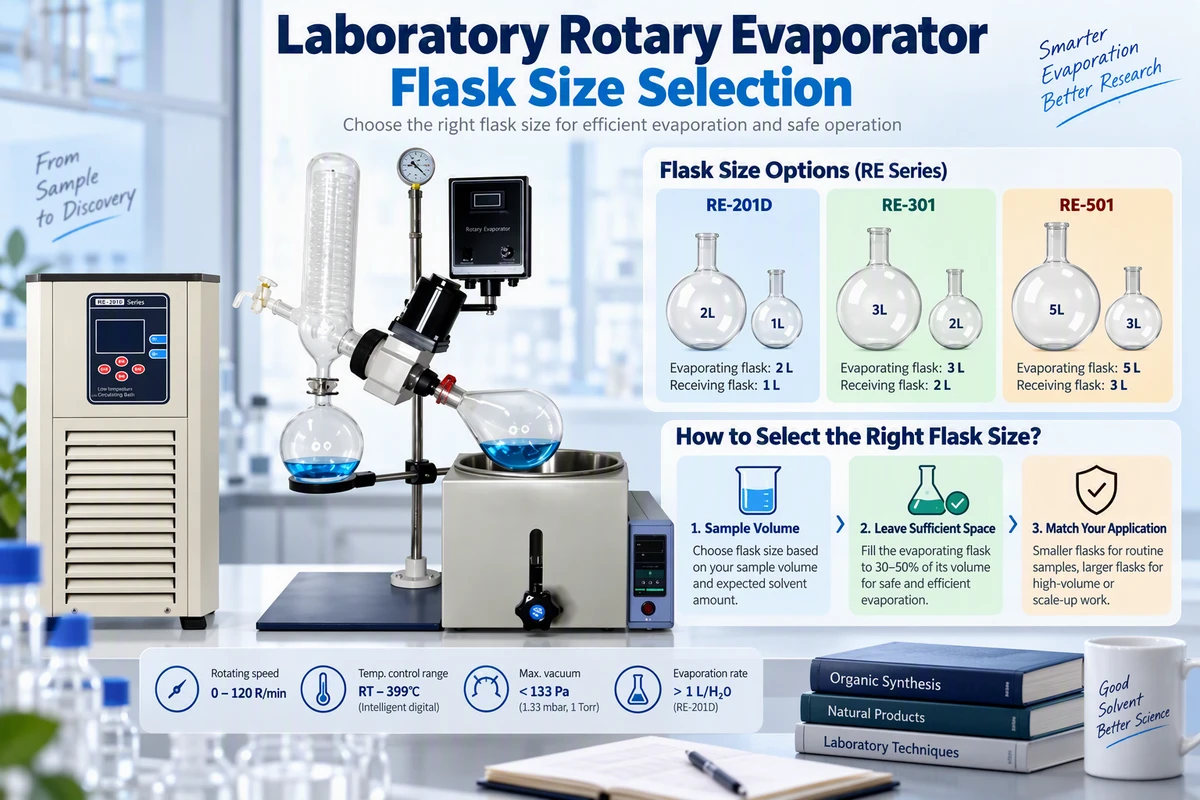
The rotating flask holds the solution being concentrated or solvent being removed. Common capacities in the supplied model range include 2L, 3L, 5L, 10L, 20L, and 50L.
Receiving Flask
This flask collects condensed solvent. Matching receiving capacity matters for long operation cycles and safer solvent handling.
Rotating Motor
The motor creates a thin film on the inner flask wall. That film increases evaporation area and improves efficiency at lower temperatures.
Water or Oil Bath
The bath supplies controlled heat. Bath power, temperature range, and temperature stability strongly affect throughput and repeatability.
Condenser
Vertical double condensers and vertical double-coil condensers are common in the provided specifications. Efficient condensation reduces solvent loss and improves recovery.
Sealing System
PTFE and fluoro rubber sealing materials are widely used because they support chemical resistance and vacuum integrity.
Lifting Mechanism
Manual lift, electric lift, and electric plus hand lift designs change convenience, safety, and control during process adjustments.
Vacuum and Cooling Accessories
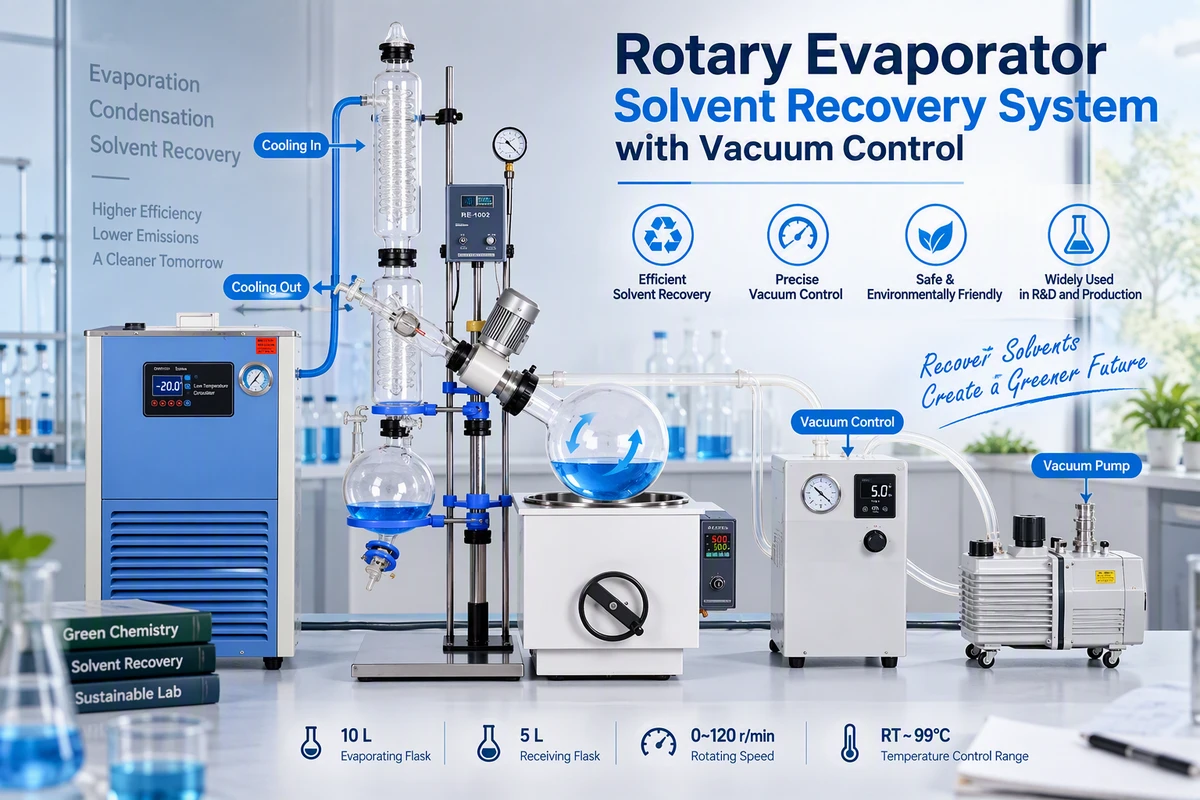
A rotovap works best as part of a full system with a vacuum pump and recirculating chiller. These are not optional in serious solvent recovery work.
Why Rotovap Parts Matter More Than Many Buyers Expect
Two rotary evaporators with similar flask volume can deliver very different results if their core parts are different. A stronger condenser, more stable bath, better seal, or more practical lifting structure can noticeably improve day-to-day operation. In small-scale chemistry, that means less sample loss. In pilot-scale extraction, that often means higher batch consistency and faster solvent recovery.
Another often-overlooked point is compatibility between parts. Flask size, motor speed range, vacuum level, and bath control should be balanced. Oversizing one part while under-supporting another can create an expensive but inefficient system.
Rotovap Parts and Performance by Model Range
Based on the supplied technical data, KD rotary evaporator models cover small laboratory work through larger pilot-scale production. The specifications below show how rotovap parts scale with capacity.
| Model | Evaporating Flask | Receiving Flask | Motor / Speed | Bath Power | Evaporation Rate | Lifting / Seal |
|---|---|---|---|---|---|---|
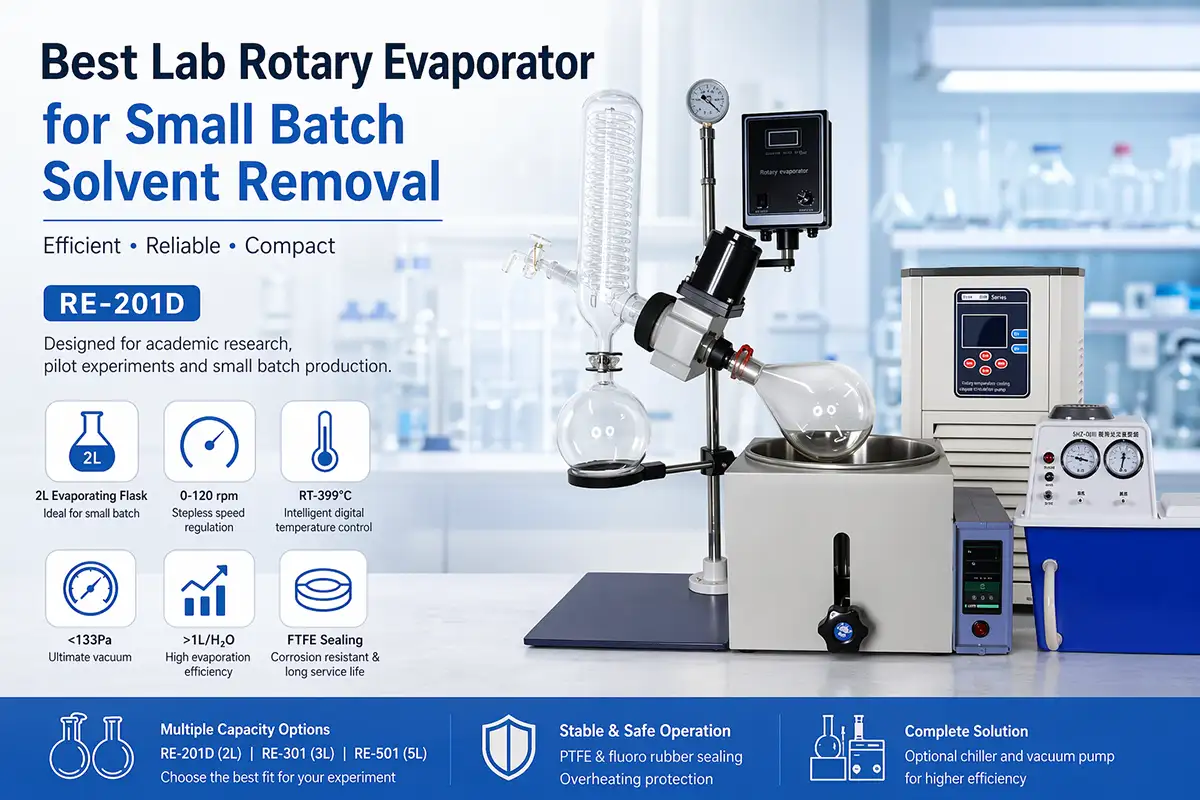
| RE-201D | 2L | 1L | 40W / 0-120 rpm | 1200W | >1 L/h (H2O) | 0-150 mm / PTFE-fluoro sealing |
| RE-301 | 3L | 2L | 40W / 0-120 rpm | 1500W | >1.5 L/h | 0-120 mm / PTFE-fluoro sealing |
| RE-501 | 5L | 3L | 40W / 0-120 rpm | 1500W | >1.5 L/h | 0-120 mm / PTFE-fluoro sealing |
| RE-1002 | 10L | 5L | 180W / 0-120 rpm | 3000W | >3 L/h | Manual lift / PTFE, fluoro rubber |
| RE-2002 | 20L | 10L | 180W / 0-120 rpm | 5000W | >5 L/h | Manual lift / PTFE, fluoro rubber |
| RE-5002 | 50L | 20L | 250W / 0-90 rpm | 7000W/9000W | >9 L/h | Manual lift / PTFE, fluoro rubber |
| R1005 | 5L | 3L | 40W / 10-140 rpm | 2KW total | — | Electric lift / vertical double coil |
| R1010 | 10L | 5L | Brush-less 250W / 20-120 rpm | 3KW total | — | Electric + hand lift / high-efficiency reflux condenser |
| R1020 | 20L | 10L | Brush-less 250W / 20-120 rpm | 4KW total | — | Electric + hand lift / high-efficiency reflux condenser |
| R1050 | 50L | 20L | Brush-less 250W / 20-120 rpm | 4KW total | — | Electric + hand lift / high-efficiency reflux condenser |
How to Choose the Right Rotovap Parts for Different Applications
Small R&D labs usually prioritize compact design, flexible speed control, and quick cleaning. In that setting, 2L to 5L systems are often enough. Pilot plants and extraction facilities usually need larger flasks, stronger bath heating, and more efficient condensers, which makes 10L, 20L, and 50L systems more suitable.
For basic chemistry labs: focus on stable sealing, easy-to-replace glassware, and practical manual or motor lift design.
For solvent recovery: prioritize condenser performance, vacuum tightness, and receiving flask capacity.
For essential oil or botanical extraction: look for balanced evaporation rate, precise bath control, and compatibility with chiller and vacuum pump systems.
For scale-up work: check lift height, condenser size, motor power, and whether bath power supports target throughput.
Typical Price Reference for Rotary Evaporators and Related Parts
The provided price list includes complete rotary evaporators as well as related accessories such as chillers and vacuum pumps. Where products showed a range, the lower middle value was selected as requested. These figures are useful as market references when planning a complete rotovap setup.
| Product | Reference Price | Notes |
|---|---|---|
| RE-201D Industrial Mini Vacuum Rotary Evaporator | $595 | Entry-level small-capacity rotovap |
| 5L Lab Vacuum Rotary Evaporator Set | $1,699 | Typical mid-range lab setup |
| RE1002 Factory Price 10L Rotary Evaporator | $1,900 | Common pilot-lab transition model |
| RE-2002 20L Large Volume Rotary Evaporator | $2,100 | Large-capacity solvent recovery |
| RE-5002 50L Essential Oil Distillation Rotator Evaporator | $2,545 | Large pilot-scale configuration |
| R-1050 50L Rotary Vacuum Evaporator | $1,818 | 50L class reference listing |
| Vacuum Rotovap Parts | $2,200 | General parts listing reference |
| Keda Instrument Rotary Evaporator Parts | $2,600 | General accessory / parts reference |
| Laboratory Chemical Vacuum Diaphragm Membrane Vacuum Pump | $1,000 | Vacuum support equipment |
| PID Temperature Control Recirculating Chiller for Rotary Evaporator | $1,242 | Cooling support equipment |
Buyers comparing large systems may also want to review the dedicated 50 liter rotary evaporator page for a product-focused reference.
Which Rotovap Parts Usually Need the Most Attention?
Some components naturally receive more wear or require more routine inspection than others. In daily operation, these are usually the most important areas to monitor:
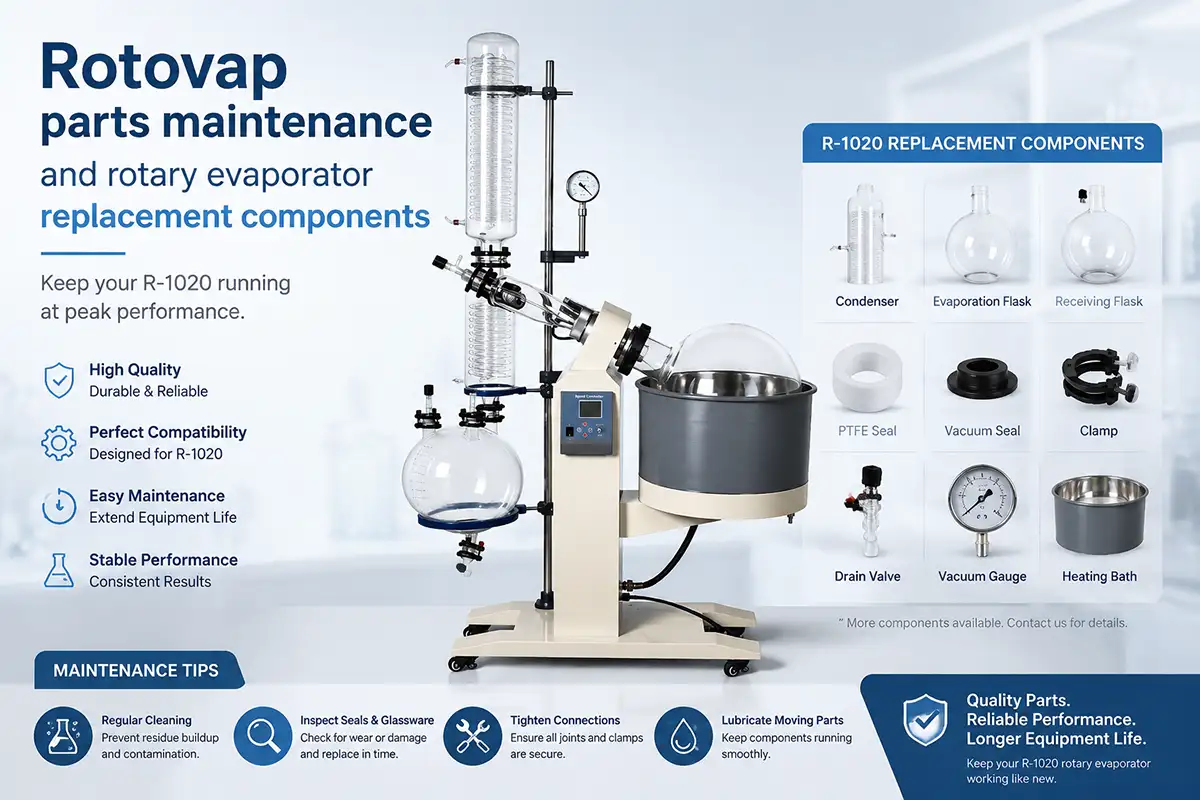
Seals
Seals directly affect vacuum level. If a system suddenly loses evaporation efficiency, sealing wear is one of the first items to check.
Glassware Connections
Joint cleanliness and correct assembly help avoid leaks, contamination, and accidental breakage.
Condenser Pathways
Fouling or poor cooling circulation reduces condensation efficiency and solvent recovery.
Bath Accuracy
Temperature drift can change evaporation speed, affect sample quality, and reduce reproducibility.
Maintenance Tips for Longer Service Life
A rotary evaporator is a precision lab instrument, but its lifespan depends heavily on routine care. Preventive maintenance is often more valuable than emergency replacement. The best practice is to treat core rotovap parts as an integrated operating system rather than isolated accessories.
Inspect PTFE and fluoro rubber seals regularly for wear, stiffness, or chemical damage.
Clean evaporating and receiving flasks immediately after use to prevent residue buildup.
Verify bath temperature accuracy and keep the bath medium clean.
Check lift motion for smooth operation, especially on larger models.
Ensure the condenser receives stable cooling from a properly matched chiller.
Monitor vacuum consistency and inspect tubing and pump connections for leaks.
Final Thoughts on Choosing Rotovap Parts
The term rotovap parts may sound simple, but in practice it represents the full logic of rotary evaporation performance. Flask volume, motor speed, bath power, condenser design, lift structure, vacuum resistance, and sealing quality all shape the user experience. Small laboratories often benefit from compact 2L to 5L systems with straightforward maintenance. Pilot users usually need stronger heating, larger flasks, and more efficient condensation from 10L to 50L equipment.
The strongest purchasing decision usually comes from evaluating the whole process: target solvent, expected batch size, evaporation rate goals, available utilities, and replacement-part availability. When those points are aligned, the selected rotary evaporator does more than remove solvent efficiently. It becomes a stable and dependable part of the laboratory workflow.