How to Use a Rotovap: A Practical Step-by-Step Guide for Safe, Fast Solvent Removal
A rotovap, or rotary evaporator, is one of the most efficient tools for concentrating samples and removing solvents under reduced pressure. When the setup is correct, rotary evaporation becomes faster, gentler, and more repeatable. This guide explains how to use a rotovap properly, what settings matter most, and how to choose a suitable system for laboratory or pilot-scale work.
Contents
What a Rotovap Does
The purpose of a rotary evaporator is to remove volatile solvents from a liquid sample by combining rotation, gentle heating, vacuum, and condensation. Rotation spreads the sample into a thin film inside the evaporating flask. Vacuum lowers the solvent boiling point. The heated bath provides controlled thermal energy, and the condenser turns solvent vapor back into liquid for collection.
For laboratories handling organic solvents, extracts, reaction mixtures, or recovered ethanol, this method is preferred because it reduces thermal stress compared with open heating. For a broader explanation of rotary evaporation principles, see rotary evaporator chemistry explained.
Why is vacuum so important in rotary evaporation?
Vacuum lowers the boiling point of the solvent, which allows evaporation at a lower bath temperature. That helps protect heat-sensitive compounds, improves efficiency, and reduces the risk of decomposition.
Main Parts of a Rotary Evaporator
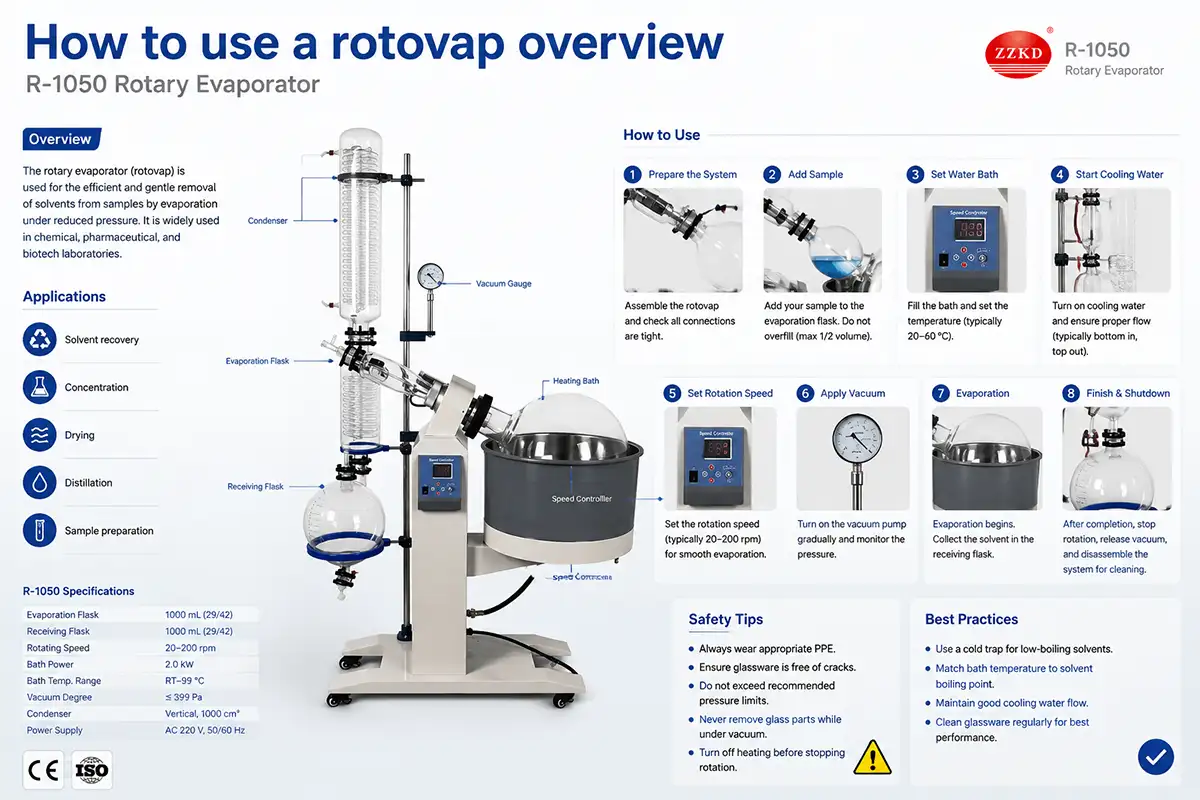
Before learning how to use a rotovap, it helps to understand the key components that influence performance:
Evaporating flask: holds the solution that needs solvent removal.
Receiving flask: collects condensed solvent after evaporation.
Rotating motor: turns the flask to increase surface area and improve heat transfer.
Water or oil bath: supplies stable heat for evaporation.
Condenser: cools vapor and converts it back to liquid.
Vacuum system: lowers pressure to reduce boiling temperature.
Lifting mechanism: raises or lowers the flask into the bath quickly for control and safety.
Sealing system: usually PTFE and fluoro rubber, used to maintain vacuum integrity.
If the goal is to understand the working principle in simpler terms, how rotary evaporators work offers a useful companion explanation.
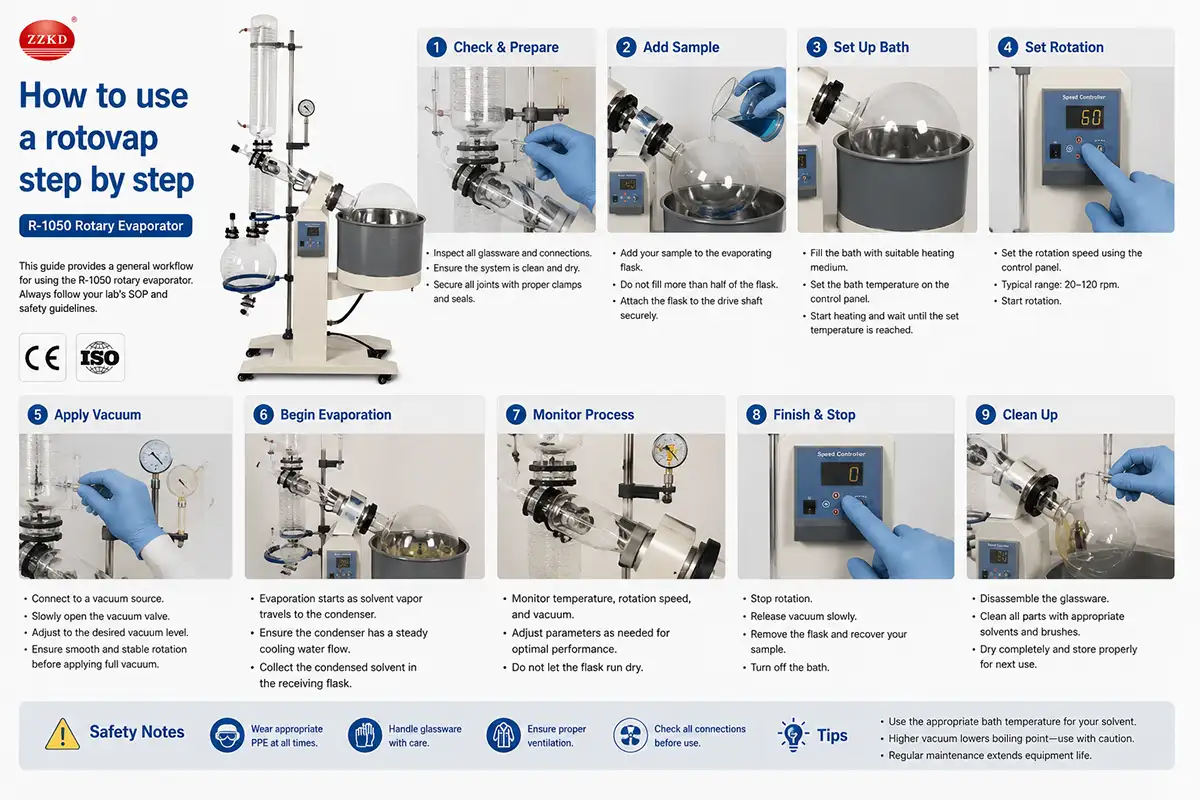
How to Use a Rotovap Step by Step
Inspect the system before startup
Check the glassware, joints, seals, clips, and receiving flask. Make sure the condenser coolant is flowing and the vacuum connections are tight. Confirm that the bath contains enough water or heat-transfer fluid for the intended temperature range.
Load the sample correctly
Fill the evaporating flask to no more than about half of its total volume. Overfilling increases bumping risk and can contaminate the condenser or receiving flask. Match flask size to batch volume for better evaporation efficiency.
Attach the flask and start rotation
Secure the flask carefully, then begin rotation at a moderate speed. The exact speed depends on system size and solvent behavior, but the purpose is always the same: create a thin, moving film on the inner wall of the flask.
Lower the flask into the heated bath
Bring the flask into the bath after rotation has started. Use a bath temperature appropriate for the solvent and vacuum level. The best results come from gentle heat rather than excessive temperature.
Apply vacuum gradually
Reduce pressure slowly, especially with volatile solvents. Sudden vacuum application can cause violent bumping and sample loss. A controlled vacuum ramp produces steadier evaporation and cleaner recovery.
Monitor evaporation continuously
Watch vapor formation, condenser efficiency, and collection in the receiving flask. If foaming or bumping occurs, reduce vacuum slightly, decrease bath temperature, or increase rotation stability depending on the cause.
Stop safely after solvent removal
Lift the flask out of the bath first, then slowly release vacuum, stop rotation, and remove the evaporating flask. This sequence helps prevent suck-back and protects both sample and equipment.
Should high bath temperature always be used to speed up solvent removal?
Not necessarily. In most cases, better control comes from balancing moderate heat with proper vacuum. Excessive bath temperature may degrade valuable compounds or make bumping more likely, while optimized pressure often improves speed more effectively.
How to Choose Rotation, Vacuum, and Bath Temperature
Good rotary evaporation depends on balancing three operating variables:
Rotation speed: higher rotation usually improves surface area and heat transfer, but it should remain stable and appropriate for the flask size.
Vacuum level: deeper vacuum lowers boiling point more strongly, but applying it too fast can trigger bumping.
Bath temperature: should be high enough to support evaporation while remaining gentle enough for product quality.
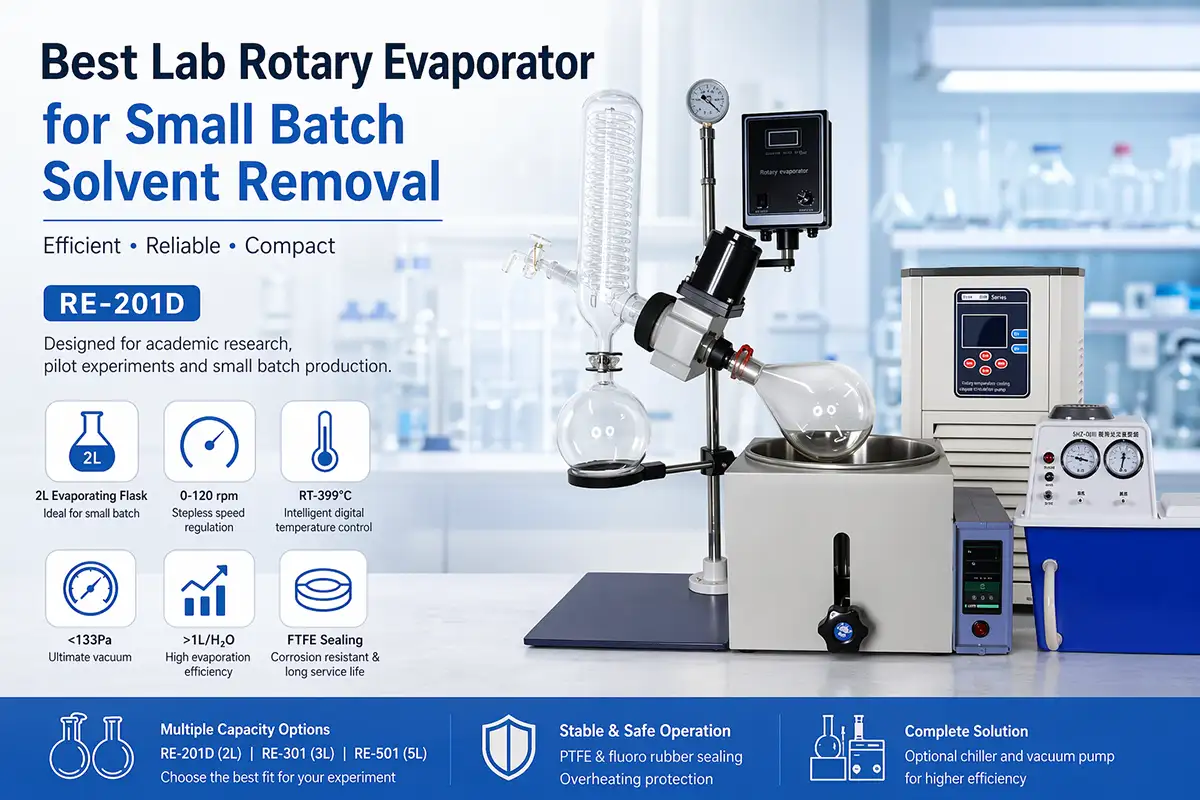
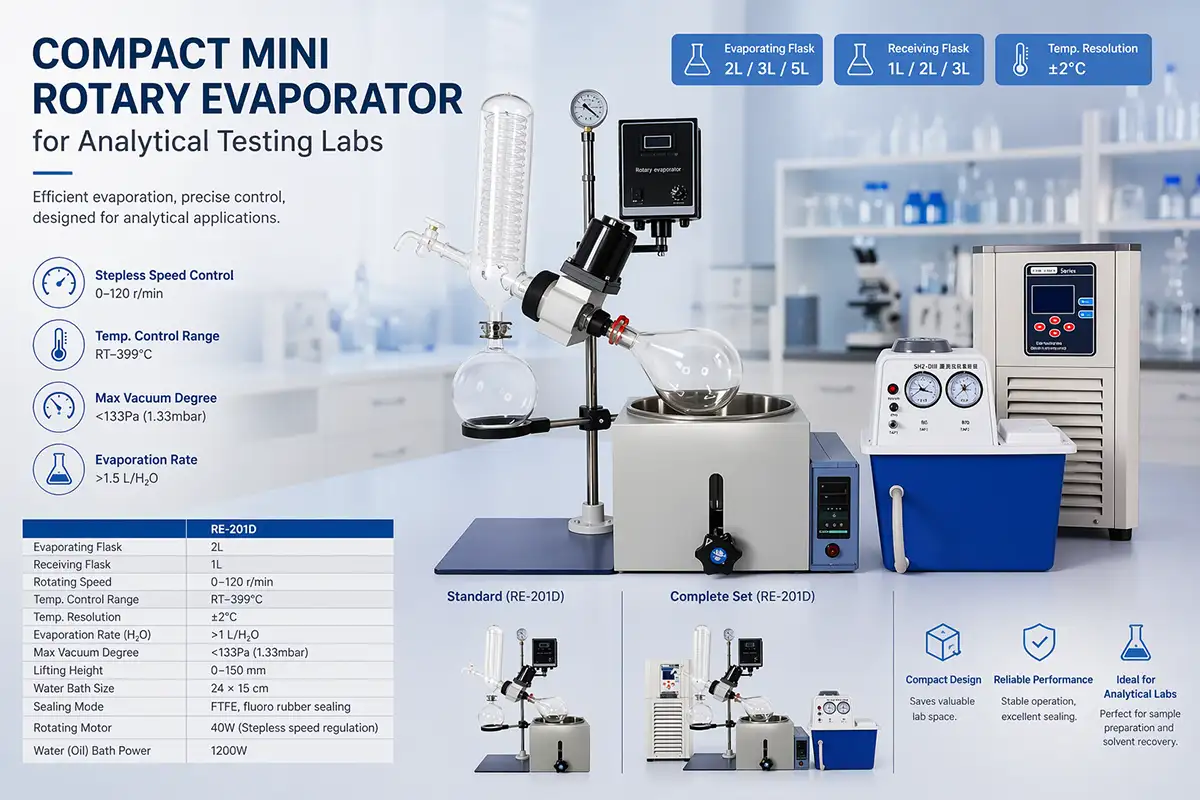
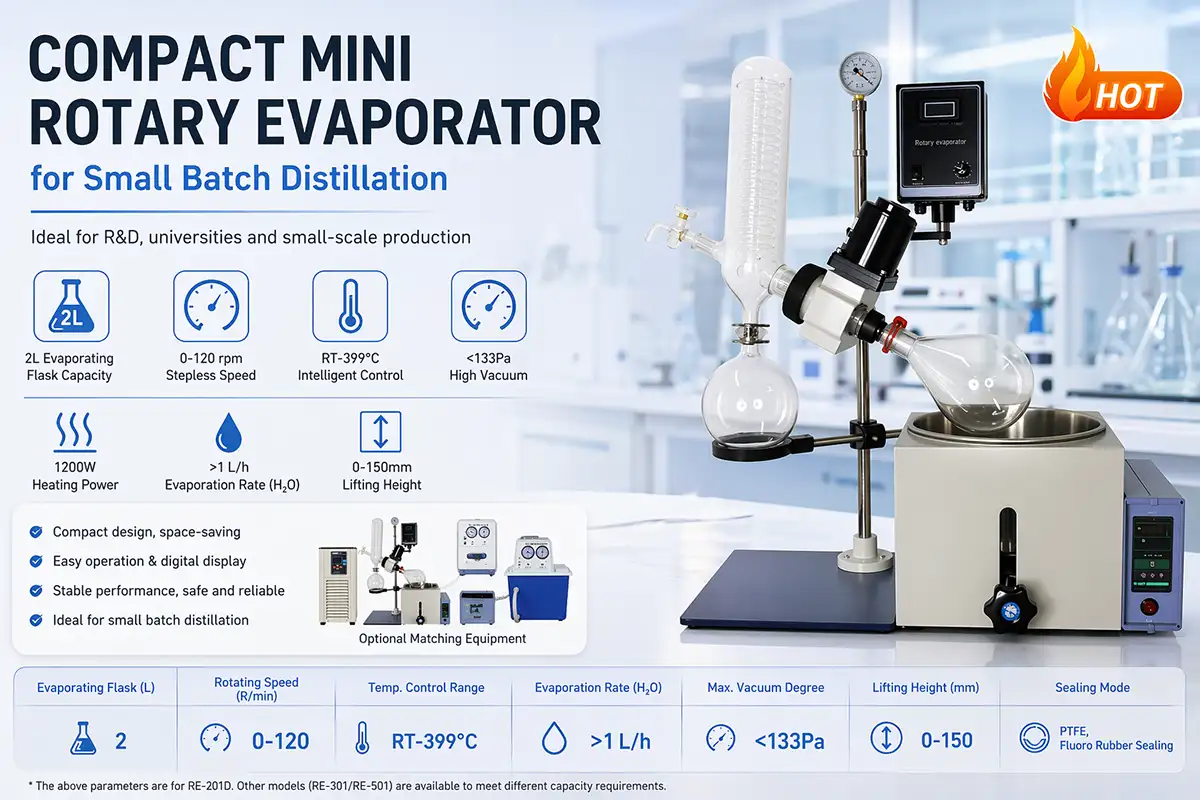
For smaller KD models such as RE-201D, RE-301, and RE-501, the rotating speed range is 0-120 rpm, with intelligent digital temperature control up to 399°C and evaporation rates above 1-1.5 L/h of water. These units are practical for routine lab work where batch sizes are moderate and flexible control is needed.
For larger capacity systems such as RE-1002, RE-2002, and RE-5002, the evaporation flask capacity reaches 10 L, 20 L, and 50 L, with evaporation rates above 3 L/h, 5 L/h, and 9 L/h respectively. These models are better suited for pilot-scale concentration and solvent recovery.
Advanced R-series systems such as R1005, R1010, R1020, and R1050 offer electric lift, larger bath sizes, and high-efficiency condensers. For facilities that need higher throughput and convenient handling, these design features can significantly improve workflow.
Representative KD Rotary Evaporator Parameters
| Model | Evaporating Flask | Receiving Flask | Rotation Speed | Bath Power | Evaporation Rate | Lifting Height |
|---|---|---|---|---|---|---|
| RE-201D | 2 L | 1 L | 0-120 rpm | 1200 W | >1 L/h (H₂O) | 0-150 mm |
| RE-301 | 3 L | 2 L | 0-120 rpm | 1500 W | >1.5 L/h (H₂O) | 0-120 mm |
| RE-501 | 5 L | 3 L | 0-120 rpm | 1500 W | >1.5 L/h (H₂O) | 0-120 mm |
| RE-1002 | 10 L | 5 L | 0-120 rpm | 3000 W | >3 L/h (H₂O) | 0-220 mm |
| RE-2002 | 20 L | 10 L | 0-90 rpm | 5000 W | >5 L/h (H₂O) | 0-220 mm |
| RE-5002 | 50 L | 20 L | 0-90 rpm | 7000/9000 W | >9 L/h (H₂O) | 0-220 mm |
Common Mistakes and How to Avoid Them
Overfilling the flask: leave enough headspace to prevent foaming and splashing.
Applying full vacuum too quickly: reduce pressure gradually to avoid bumping.
Ignoring coolant flow: poor condensation lowers recovery efficiency and increases vapor loss.
Using incorrect seal materials: compatibility matters when handling aggressive solvents.
Choosing the wrong model size: undersized units slow production, while oversized systems may waste energy in routine lab tasks.
What usually causes sample bumping in a rotovap?
The most common reasons are vacuum applied too fast, a flask filled too high, or unstable boiling conditions. A slower pressure reduction and better flask loading usually solve the problem quickly.
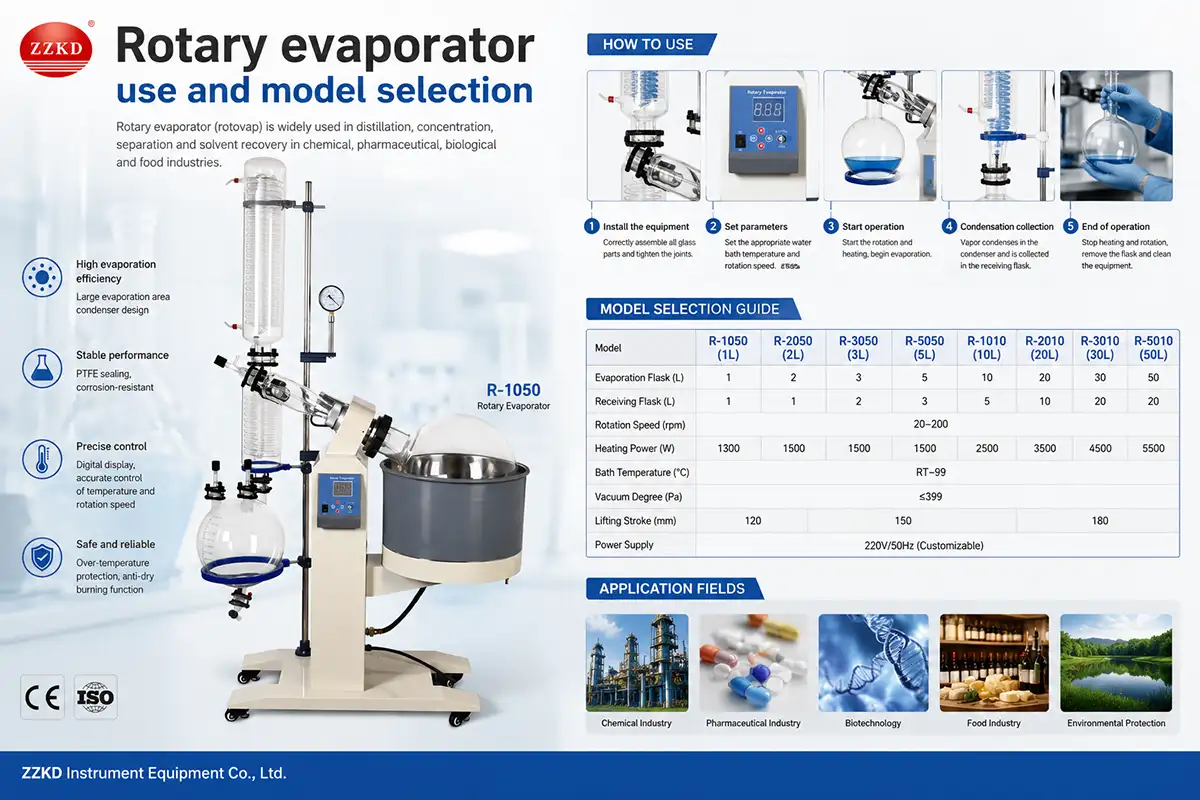
Choosing the Right KD Rotary Evaporator Model
Model selection depends on sample volume, evaporation rate target, workflow frequency, and available utilities. A small research lab often benefits from compact systems like RE-201D through RE-501, while pilot production and solvent recovery lines may require larger models such as RE-1002 to RE-5002 or the R-series.
For example, users seeking large-batch solvent recovery may consider a dedicated 50 liter rotary evaporator. If the objective is general background reading before purchase, what is a rotary evaporator is also relevant.
In practical terms, a good rotovap should offer stable rotation, reliable sealing, efficient condensation, precise bath control, and a lifting system that supports safe day-to-day operation. KD systems are designed around these core requirements, from bench-scale research to larger capacity processing.
Quick FAQ on How to Use a Rotovap
What solvent types can a rotovap handle?
A rotary evaporator is commonly used for ethanol, methanol, acetone, hexane, ethyl acetate, and many other volatile solvents, provided the correct temperature, vacuum, and material compatibility are maintained.
What is the ideal fill level for the evaporating flask?
As a practical rule, the flask should generally be filled to no more than 50% of its total capacity. Lower fill volumes can improve control, especially with foaming samples.
How does a larger rotary evaporator improve productivity?
Larger systems increase batch capacity, bath power, and solvent recovery throughput. For commercial or pilot work, this can reduce processing time significantly while keeping the same basic operating principle.
Final Thoughts
Understanding how to use a rotovap correctly is essential for achieving fast evaporation, high solvent recovery, and consistent sample quality. The best performance does not come from heat alone. It comes from the right balance of flask loading, rotation speed, vacuum control, condenser efficiency, and equipment sizing.
Whether the application involves routine chemistry work, botanical extraction, solvent recycling, or pilot-scale concentration, a properly selected rotary evaporator can make the process safer and far more efficient. KD Rotary Evaporators offers models ranging from compact lab units to large-capacity systems, making it easier to match equipment to the real demands of the process.