Rotovap Chemistry: A Practical Guide to Rotary Evaporators for Modern Labs
Rotovap chemistry sits at the center of efficient solvent removal, concentration, recovery, and purification in laboratories. From routine organic synthesis to pilot-scale production, a well-matched rotary evaporator can improve throughput, reduce thermal stress on samples, and support cleaner process control. This guide explains the chemistry behind rotary evaporation and shows how equipment specifications translate into real laboratory performance.
What Rotovap Chemistry Really Means
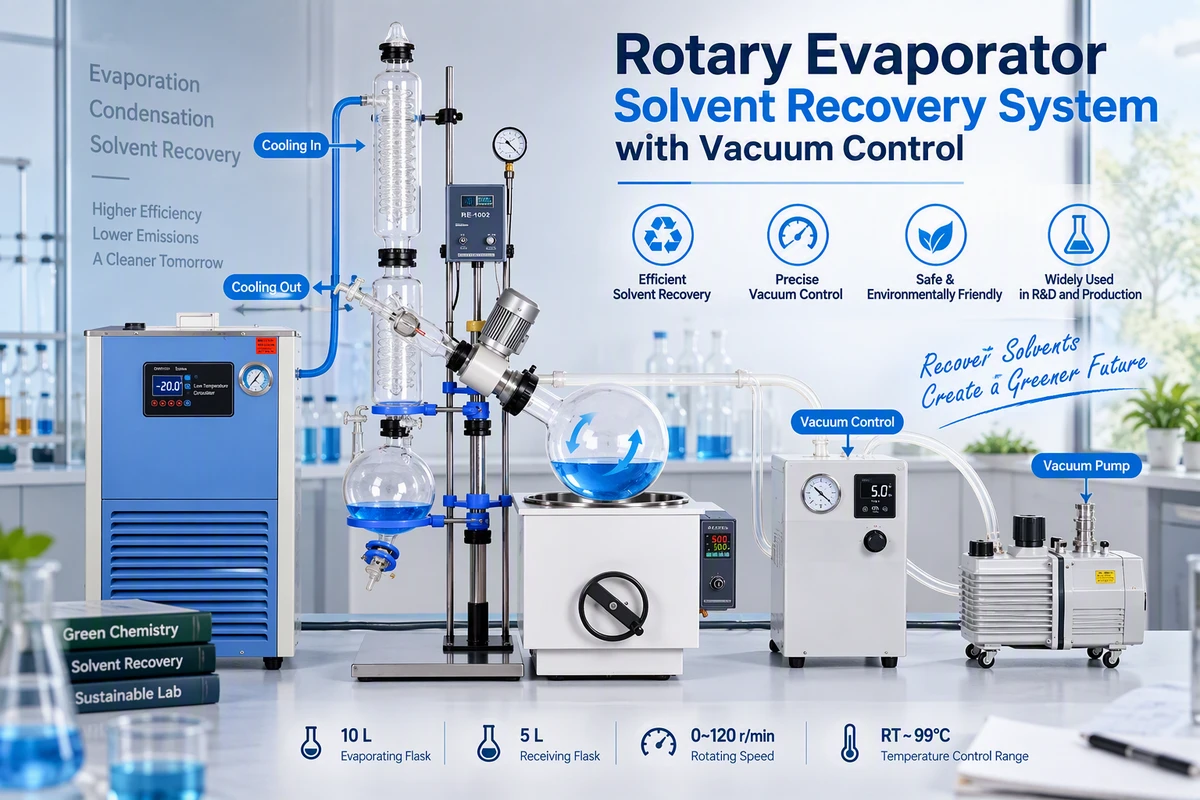
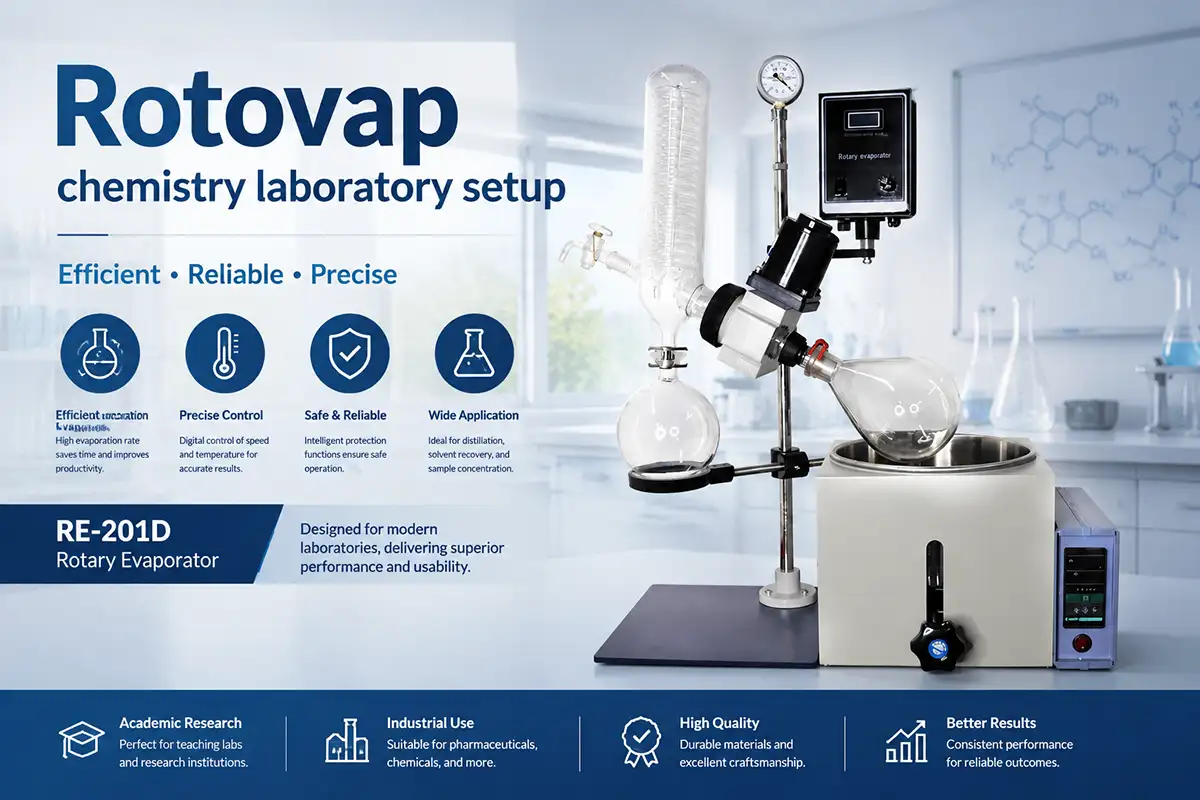
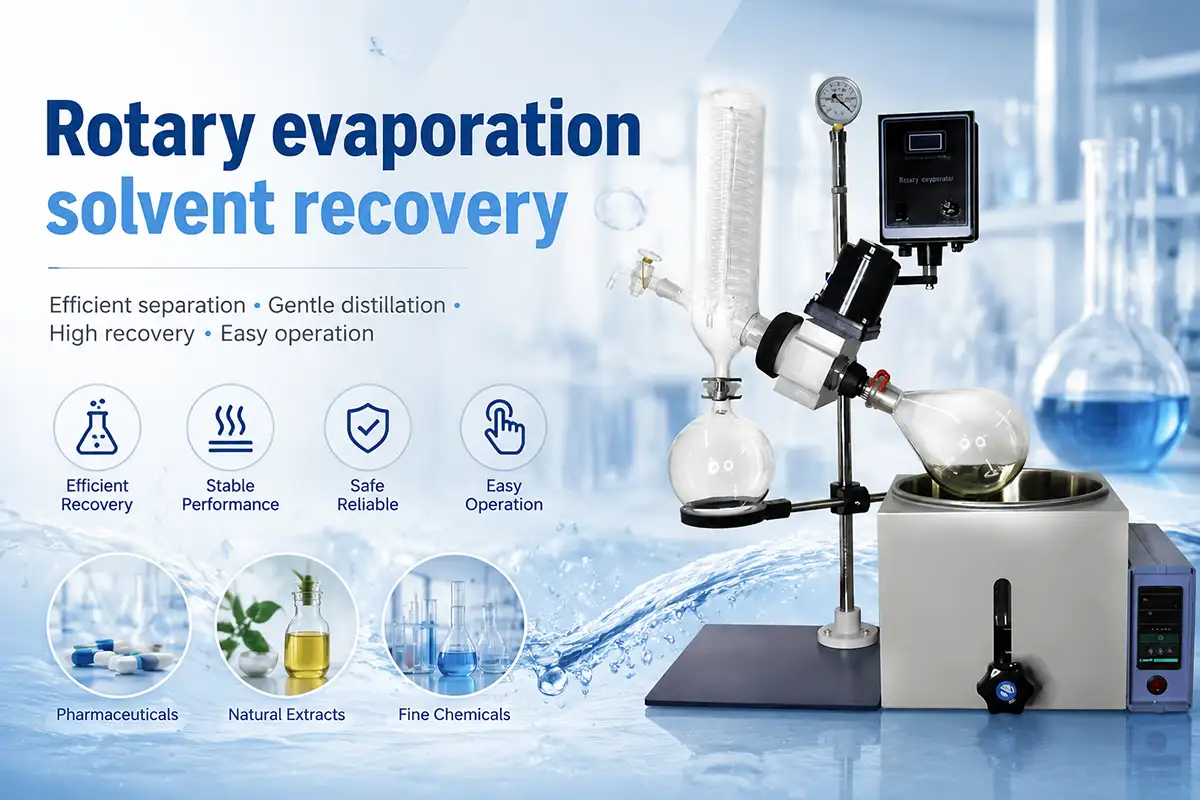
In practical terms, rotovap chemistry refers to the use of a rotary evaporator to remove volatile solvents under reduced pressure while protecting heat-sensitive materials. The rotating flask creates a thin liquid film, increasing evaporation surface area and improving heat transfer. At the same time, vacuum lowers the boiling point of the solvent, allowing evaporation to occur at gentler temperatures than conventional atmospheric distillation.
This combination is why rotary evaporation is so common in organic chemistry, pharmaceutical R&D, natural product extraction, fine chemical processing, and educational laboratories. It is not just about making a solvent disappear. It is about controlling the balance between temperature, vacuum, rotation, and condensation efficiency to achieve cleaner and faster separation.
The Scientific Principle Behind Rotary Evaporation
The chemistry of a rotary evaporator depends on several coordinated effects:
Reduced Pressure
Vacuum lowers solvent boiling points, making it possible to evaporate ethanol, acetone, methanol, hexane, or other common solvents at lower bath temperatures.
Continuous Rotation
The rotating flask spreads liquid into a thin film, increasing the available evaporation area and reducing bumping risk during solvent removal.
Efficient Condensation
The condenser cools solvent vapor and channels it into the receiving flask, supporting solvent recovery and cleaner downstream handling.
A high-performing system depends on harmony between these variables. If vacuum is too weak, the process becomes slow. If bath temperature is too high, sensitive compounds may degrade. If condenser efficiency is limited, vapor losses increase and solvent recovery drops.
For readers looking for a broader conceptual explanation, this related article on rotary evaporator chemistry provides additional context on process fundamentals and common terminology.
Why Rotary Evaporators Matter in Chemistry Labs
Rotary evaporators are widely used because they align well with the actual needs of laboratory chemistry. Solvent removal is rarely an isolated step. It often sits between extraction, reaction workup, concentration, crystallization, or purification. A reliable rotary evaporator helps maintain continuity across those steps.
Organic synthesis: removing reaction solvents before purification or product isolation.
Natural product extraction: concentrating extracts without excessive heat exposure.
Pharmaceutical development: solvent exchange and concentration under controlled process conditions.
Chemical manufacturing: scaling from benchtop screening to pilot and production support.
Academic labs: teaching core separation principles in a visible, practical format.
That is also why search topics such as what does a rotary evaporator do and process optimization continue to attract interest. The equipment is simple in concept, but highly valuable in execution.
How Technical Specifications Influence Real Performance
Choosing equipment for rotovap chemistry should begin with actual process requirements, not just flask size. The supplied specifications reveal meaningful differences across compact, mid-scale, and large-capacity systems.
Evaporating Flask Capacity
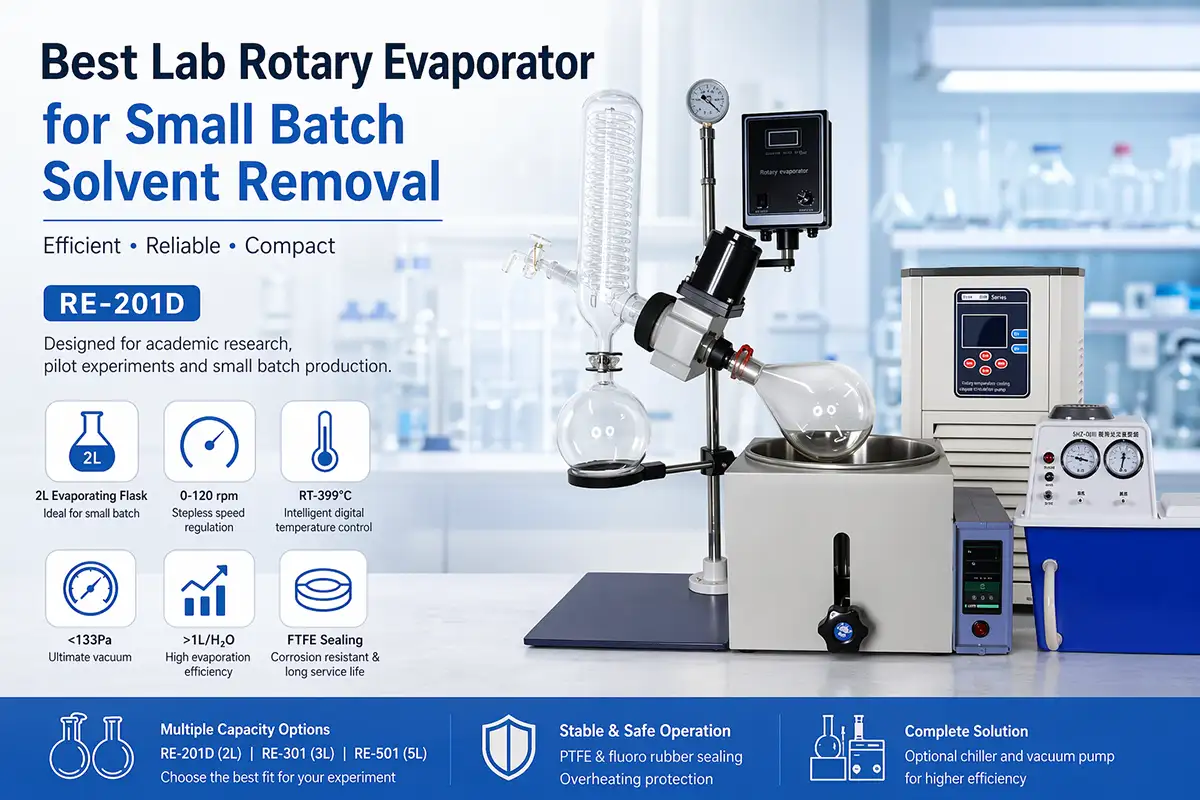
Models range from 2 L and 3 L up to 50 L. Small-capacity units fit routine R&D and teaching labs, while 10 L to 50 L systems support pilot-scale solvent recovery and larger batch concentration.
Rotation Speed
Typical speed ranges include 0-120 rpm, 0-90 rpm, 10-140 rpm, and 20-120 rpm. Higher or adjustable speed helps maintain thin-film formation across different solvent viscosities and fill levels.
Bath Heating Power
Bath power increases significantly from 1200 W in smaller units to 7000/9000 W in large-scale models. Higher power supports faster heat-up and better process stability during larger runs.
Temperature Control
Specified ranges include RT-399℃ and RT-99(250)℃, with fluctuations down to ±1℃ or resolution around ±2℃. Good temperature control matters when working with volatile or heat-sensitive materials.
Vacuum and Sealing
Vacuum performance such as <133 Pa, combined with PTFE and fluoro rubber sealing, supports chemically resistant operation and lower boiling temperatures for many solvents.
Condenser Design and Lift
Vertical double condensers, double-coil condensers, and efficient reflux condenser structures help improve solvent capture. Lift design, whether electric, manual, or hybrid, influences daily usability.
Model Comparison for Different Chemistry Workflows
The following comparison summarizes key data from the provided rotary evaporator parameters. It helps translate specification sheets into practical equipment positioning.
| Series / Model | Evaporating Flask | Receiving Flask | Rotation Speed | Bath Power | Temp Range | Evaporation Rate | Lift | Best Fit |
|---|---|---|---|---|---|---|---|---|
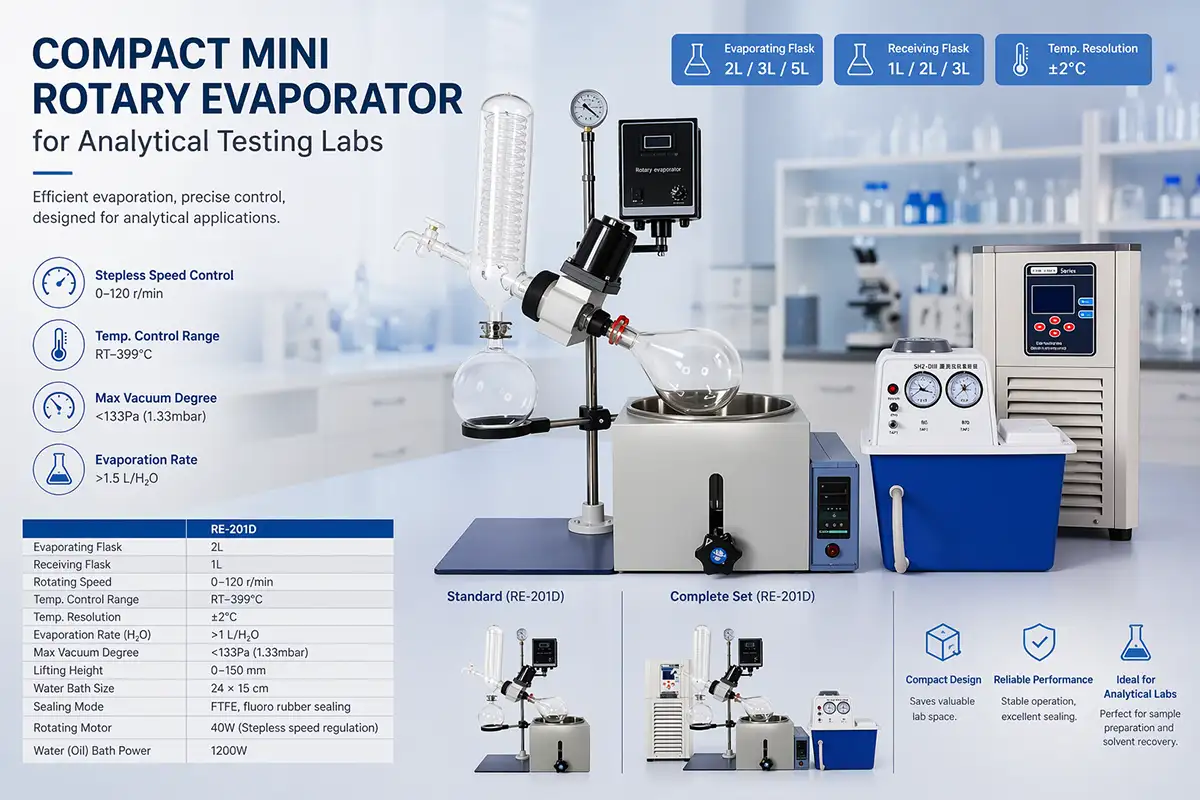
| RE-201D | 2 L | 1 L | 0-120 rpm | 1200 W | RT-399℃ | >1 L/h (H2O) | 0-150 mm | Basic lab solvent removal, education, small-batch R&D |
| RE-301 | 3 L | 2 L | 0-120 rpm | 1500 W | RT-399℃ | >1.5 L/h | 0-120 mm | Routine chemistry labs needing slightly higher throughput |
| RE-501 | 5 L | 3 L | 0-120 rpm | 1500 W | RT-399℃ | >1.5 L/h | 0-120 mm | General organic synthesis and extraction concentration |
| RE-1002 | 10 L | 5 L | 0-120 rpm | 3000 W | RT-99(250)℃ | >3 L/h | 0-220 mm | Pilot-scale solvent recovery and larger sample prep |
| RE-2002 | 20 L | 10 L | 0-90 rpm | 5000 W | RT-99(250)℃ | >5 L/h | 0-220 mm | Process development and medium-scale chemical production |
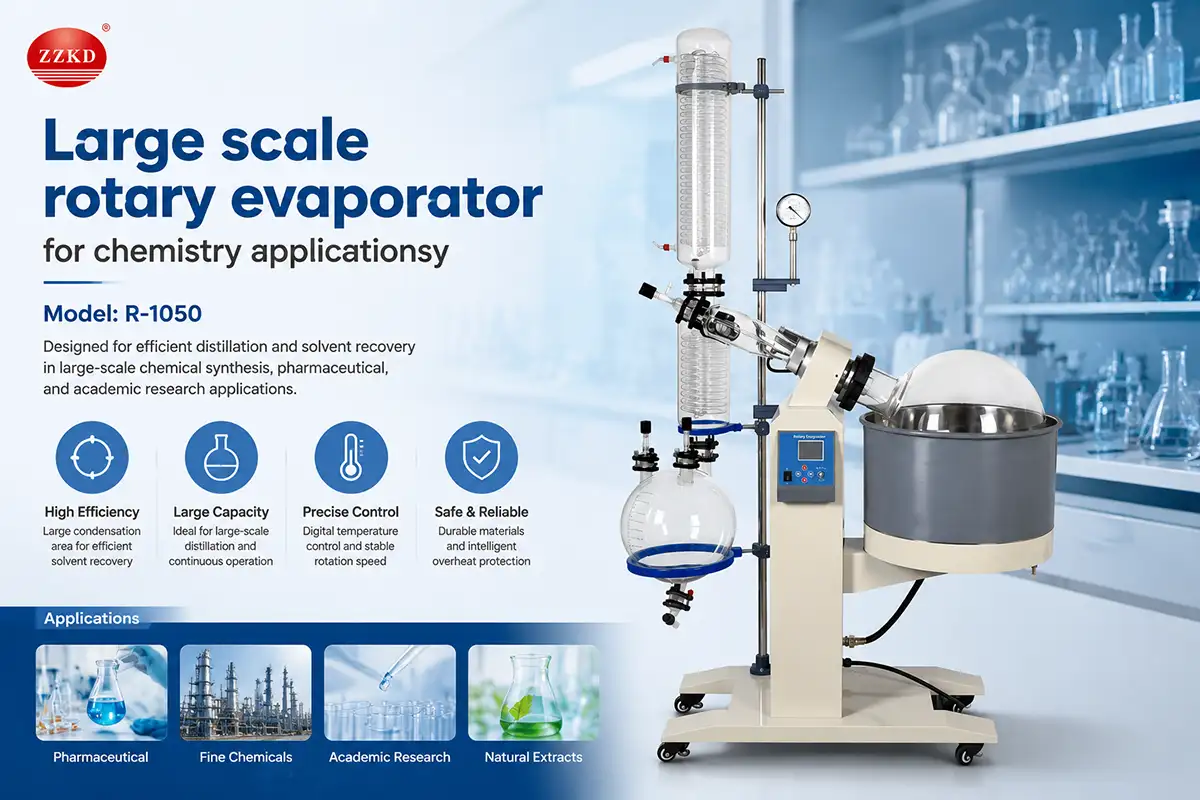
| RE-5002 | 50 L | 20 L | 0-90 rpm | 7000/9000 W | RT-99(250)℃ | >9 L/h | 0-220 mm | Large-batch evaporation and solvent recycling |
| R1005 / R1010 / R1020 / R1050 | 5 / 10 / 20 / 50 L | 3 / 5 / 10 / 20 L | 10-140 or 20-120 rpm | 2-4.0 kW | By system setup | Application dependent | Electric or electric + hand lift | Labs that prioritize condenser efficiency and flexible scaling |
For laboratories specifically evaluating higher-capacity processing, the 50 liter rotary evaporator category is especially relevant for solvent recycling, extraction concentration, and pilot production support.
What to Look for When Selecting a Rotary Evaporator
A strong buying decision in rotovap chemistry should match the equipment to the process, facility, and expected workload. The following selection points are often the most decisive:
Batch Size and Solvent Volume
Choose a flask size that matches daily throughput. Oversized units may consume extra space and utilities, while undersized systems slow down production.
Solvent Type
Different solvents require different vacuum depth, condenser capacity, and bath settings. Ethanol, methanol, dichloromethane, and hexane behave differently during evaporation.
Sample Sensitivity
Heat-sensitive extracts, bioactive compounds, and specialty intermediates benefit from stable temperature control and efficient vacuum operation.
Lab Infrastructure
Check available power supply, ventilation, cooling resources, and installation space before moving into mid-scale or large-scale equipment.
Final Thoughts on Rotovap Chemistry
Rotovap chemistry is ultimately about precision in solvent handling. A rotary evaporator helps create that precision by combining reduced pressure, controlled heating, rotation, and reliable condensation into one compact process tool. Whether the application involves routine analytical prep, organic chemistry synthesis, botanical extraction, or pilot-scale solvent recovery, the right model can improve both product quality and operational efficiency.
Small systems such as 2 L to 5 L units are ideal for general laboratory work. Mid-range 10 L to 20 L models open the door to more demanding throughput. Large 50 L platforms provide the scale required for process development and industrial support. With the right configuration, a rotary evaporator becomes more than a basic lab instrument; it becomes a dependable productivity asset.
Need a Rotary Evaporator Matched to a Specific Chemistry Process?
A well-selected system should reflect solvent characteristics, working volume, thermal sensitivity, condenser demand, and scaling plans. Matching technical parameters to actual applications is the fastest way to improve evaporation efficiency and long-term equipment value.
Compact systems for routine chemistry and education
Mid-scale equipment for process development and extraction labs
Large-capacity models for pilot production and solvent recovery