Rotary Evaporator System for Cannabis or Botanical Extraction
A rotary evaporator system is one of the most practical ways to recover ethanol or other approved extraction solvents from cannabis, hemp, essential oil, flavor, fragrance, and botanical research workflows. The right system is not only a glass evaporator. It is a matched combination of flask capacity, bath control, vacuum stability, condenser cooling, receiving volume, and safety-minded operation.
Why a Rotary Evaporator Matters After Botanical Extraction
In a cannabis or botanical extraction line, the extraction solvent does useful work first: it pulls target compounds from plant material. After that, the solvent becomes a processing load that must be removed, recovered, and reused or handled properly. A rotary evaporator shortens this step by spreading the extract into a thin rotating film under vacuum while controlled heat drives evaporation and a condenser captures solvent vapor back into a receiving flask.
For ethanol workflows, this balance is especially important. Vacuum lowers the boiling point, so the bath does not need to run at aggressive temperatures. Rotation improves surface area, so evaporation becomes smoother and more repeatable. Condensation protects the solvent recovery rate and keeps the workspace cleaner. For a deeper process foundation, KD's guide to ethanol rotary evaporator applications is a useful related resource.
Rotary evaporator system arranged for botanical solvent recovery.
No. From a technical process view, the same evaporation principle applies to hemp extracts, essential oils, herbal tinctures, natural fragrances, flavors, plant research, and many solvent recovery tasks. Cannabis is one application, while botanical extraction is the broader category.
Gentle solvent removal: Vacuum-assisted evaporation helps reduce thermal stress on heat-sensitive botanical fractions.
Solvent recovery: Condenser and receiving flask capacity directly affect how efficiently solvent is captured.
Repeatable batches: Controlled rotation, bath temperature, and vacuum make recovery more predictable than open evaporation.
Scalable workflow: A lab can start with 5L glassware and move toward 10L, 20L, or 50L as batch volume increases.
Matching KD Rotary Evaporator Capacity to Extraction Volume
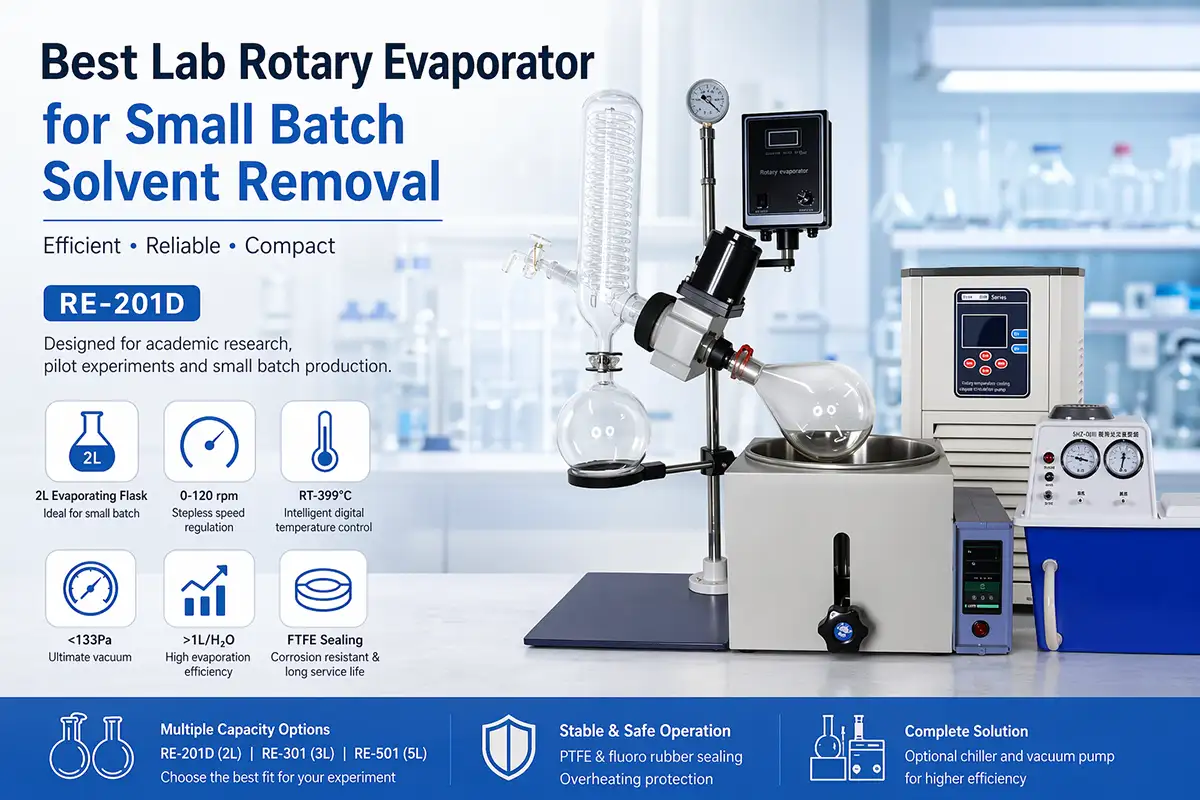
The supplied KD parameter sheets show two useful equipment groups. Smaller RE-201D, RE-301, and RE-501 models support compact laboratory preparation. Larger RE-1002, RE-2002, RE-5002, and R series models are more appropriate when botanical extraction moves into daily solvent recovery, pilot batches, or production support.
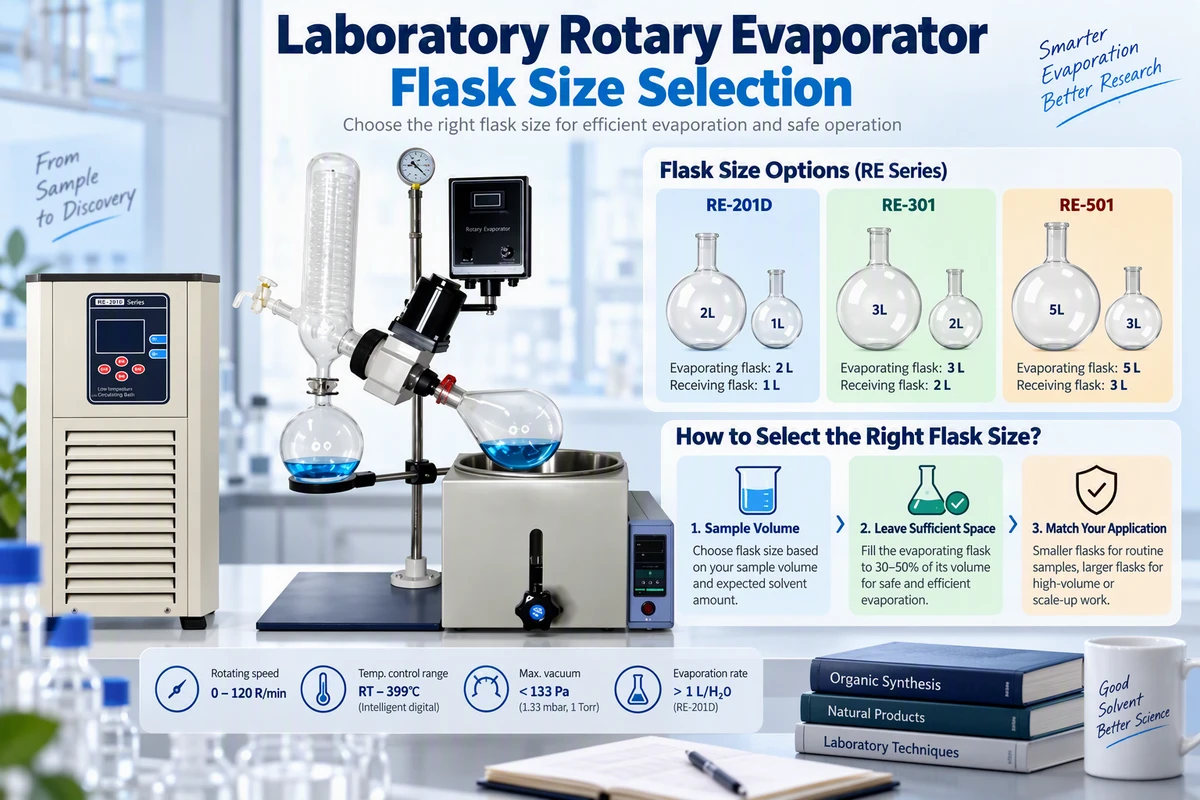
The practical sizing rule is simple: flask size should provide headroom. A rotating flask should not be filled to its rated maximum during evaporation because foaming, bumping, and solvent expansion need space. In extraction environments, a larger flask often improves working comfort even when the actual extract charge is smaller than the nominal capacity.
| Model | Evaporating Flask | Receiving Flask | Rotation Speed | Evaporation Rate | Best Fit in Botanical Extraction |
|---|---|---|---|---|---|
| RE-501 | 5L | 3L | 0-120 r/min | >1.5L/h H2O reference | Small lab batches, R&D, formula screening, and compact solvent recovery. |
| RE-1002 | 10L | 5L | 0-120 r/min | >3L/h H2O reference | Small production batches, hemp or botanical tincture concentration, and daily ethanol recovery. |
| RE-2002 | 20L | 10L | 0-120 r/min | >5L/h H2O reference | Pilot extraction lines that need better throughput without jumping directly to 50L equipment. |
| RE-5002 | 50L | 20L | 0-90 r/min | >9L/h H2O reference | Bulk botanical extraction, larger ethanol recovery loads, and production-oriented solvent removal. |
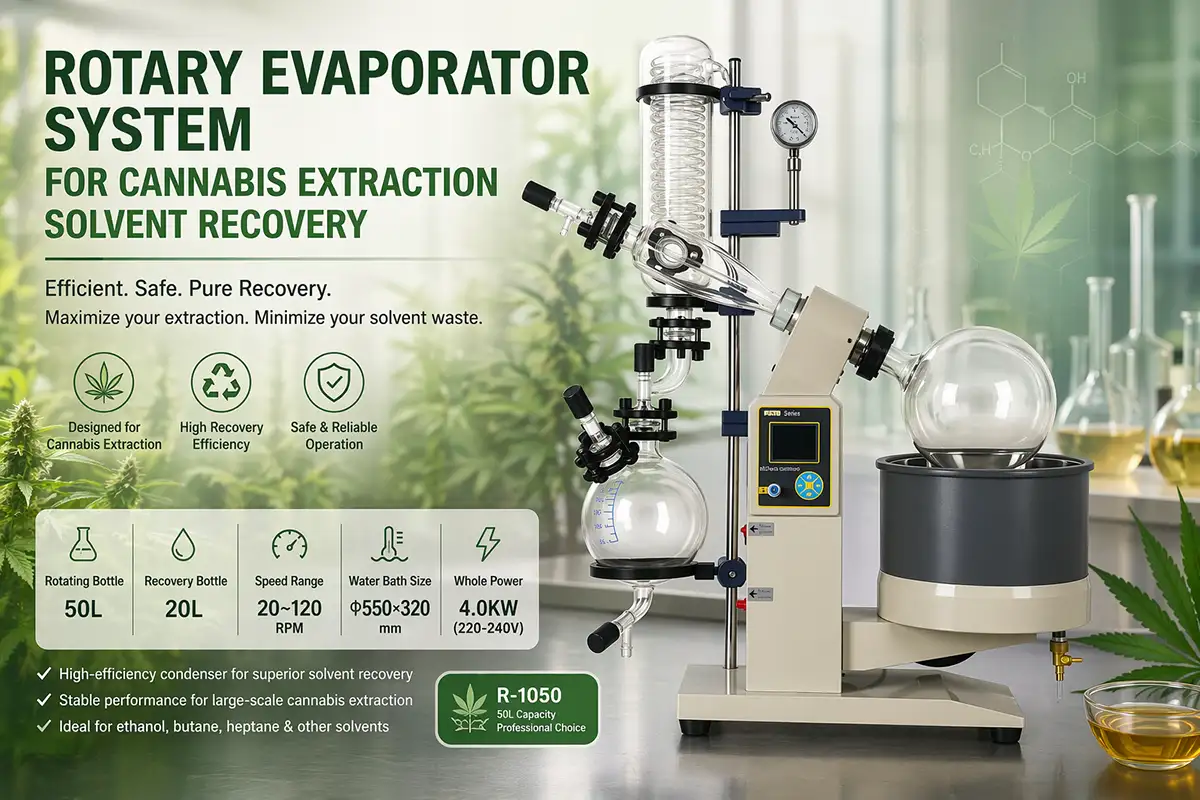
Large-flask work also changes the importance of lifting and condenser design. The R1005, R1010, R1020, and R1050 series use vertical condenser arrangements and stainless steel bath construction. The R1020 and R1050 step into larger recovery flasks and high-efficiency reflux condenser designs, which can be helpful when vapor load rises in botanical solvent recovery.
For occasional lab extraction, 5L can be enough. For a workflow that recovers solvent every day, 10L is often the more comfortable starting point because the 10L evaporating flask and 5L receiving flask reduce interruptions. For pilot or production work, 20L and 50L models become more realistic.
A Complete Cannabis or Botanical Rotovap System
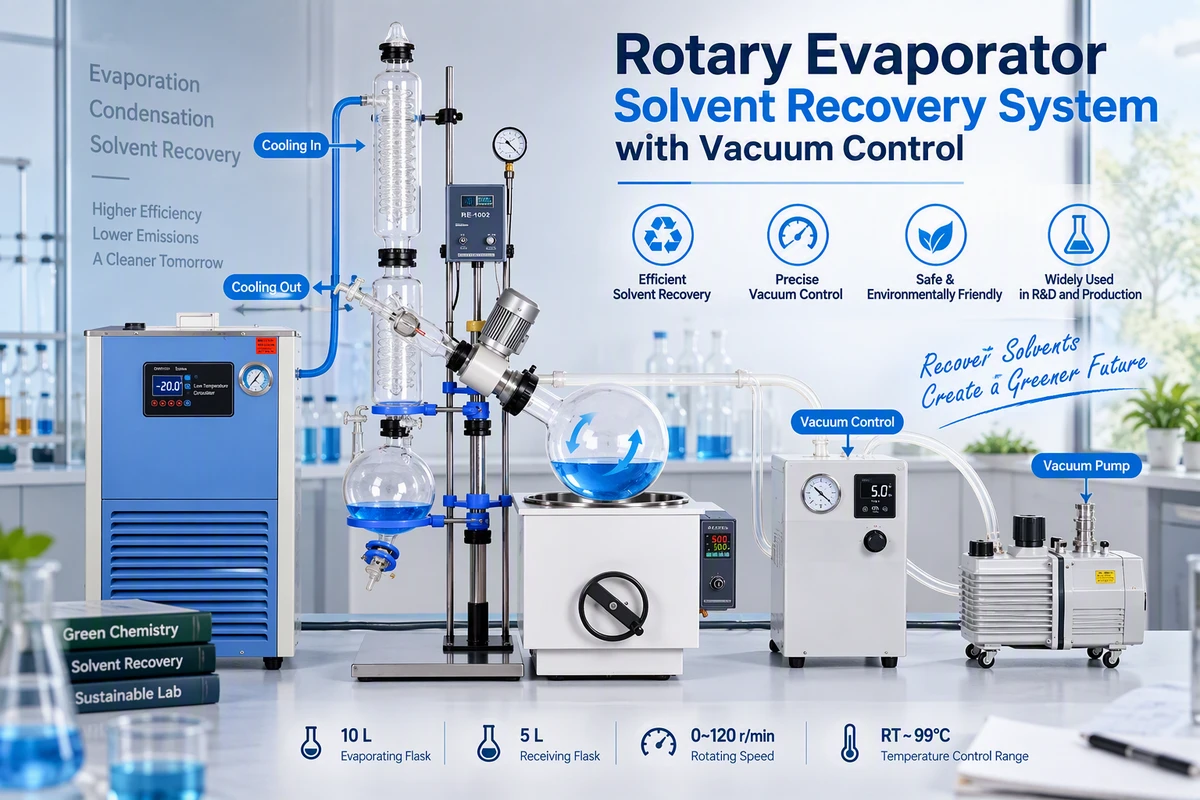
A rotovap performs best when the evaporator, vacuum pump, condenser cooling, and operating method are selected as one system. The evaporator body provides rotation, heating, glassware, and sealing. The vacuum pump controls boiling behavior. The chiller or cooling circulator determines how well solvent vapor condenses. The operator controls feed volume, bumping risk, bath set point, and receiving flask changes.
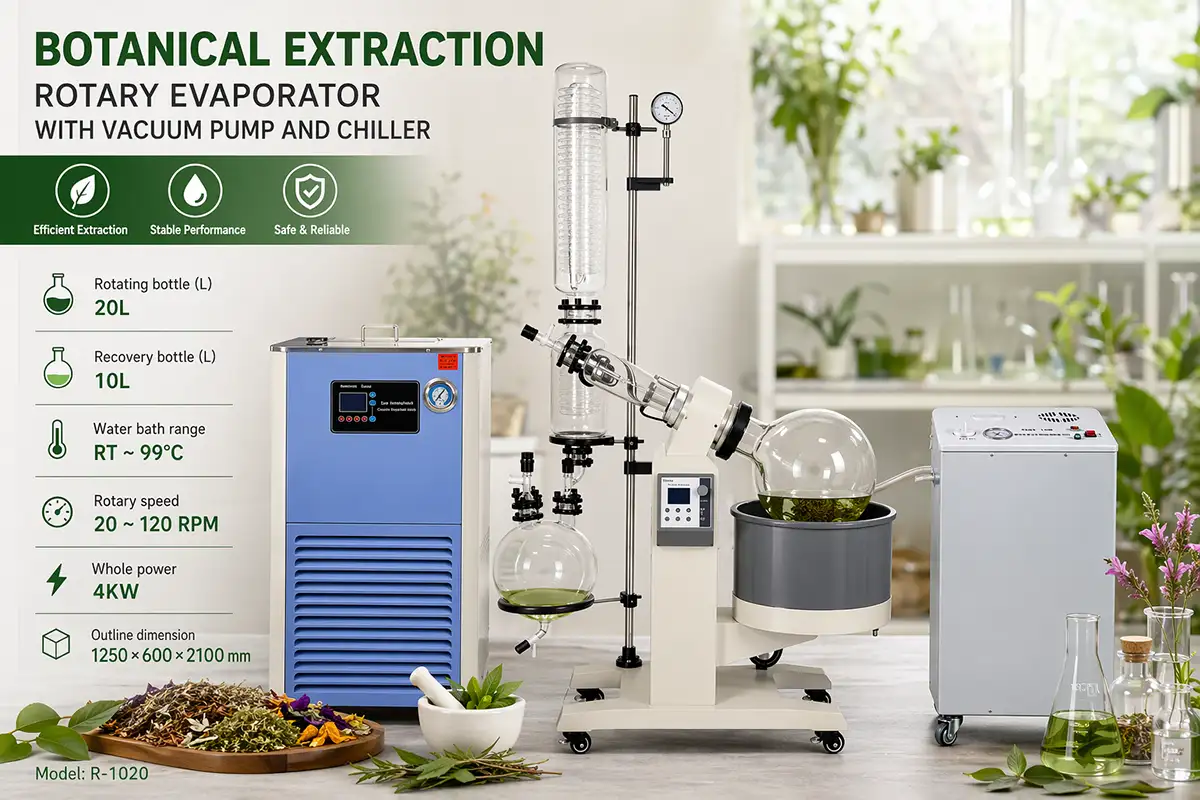
Botanical extraction rotary evaporator with cooling and vacuum accessories.
Choose flask capacity based on working volume, not only maximum flask size. For botanical extracts, leave enough headspace for foaming and solvent expansion. PTFE and fluoro rubber sealing, shown in the KD parameter sheets, helps maintain vacuum integrity.
Stable vacuum is essential for controlled solvent boiling. A sudden deep vacuum can trigger bumping, while weak vacuum slows recovery. Gradual vacuum application is usually the smoother path for ethanol-rich botanical mixtures.
Condenser temperature must be low enough to capture solvent vapor. Larger models such as RE-5002 and R1050 need cooling capacity that matches the higher vapor load. This is where a complete rotary evaporator system matters more than the evaporator alone.
The bath should provide enough heat for steady evaporation without overheating the botanical material. Rotation spreads the extract into a thin film, improving evaporation surface area. KD small and mid-size models support stepless rotation control for process tuning.
For readers reviewing the basic mechanism behind vacuum, rotation, heat, and condensation, the related KD article on rotary evaporator chemistry adds helpful background.
Rotary Evaporator Price Guidance for Extraction Labs
Price should be judged together with capacity, condenser design, lift style, included accessories, voltage, and whether the system is suitable for the solvent and facility. Based on the supplied KD price sheet, when a product has several listed prices, the middle lower value is used as the reference price.
| Equipment Class | Example KD Model or Listing | Reference Price | Price Selection Note | Extraction Use |
|---|---|---|---|---|
| 5L lab rotovap | RE-501 / 5L lab rotary evaporator | $780 | RE-501 prices included $760, $780, and $956 in the supplied sheet; the middle value is $780. | Small botanical samples, test batches, and solvent recovery trials. |
| 10L recovery system | RE-1002 10L rotary evaporator | $1,818 | Listed RE-1002 prices included $1,818 and $1,900; the lower middle reference is $1,818. | Daily small production recovery and ethanol concentration. |
| 20L pilot system | RE-2002 20L rotary evaporator | $2,061 | Listed RE-2002 prices included $2,061 and $2,100; the lower middle reference is $2,061. | Pilot botanical extraction and higher-volume solvent reclamation. |
| 50L production system | RE-5002 50L rotary evaporator | $2,545 | The RE-5002 essential oil distillation listing showed $2,545. | Bulk ethanol recovery, larger botanical extracts, and production support. |
| 50L R series option | R-1050 / R1050 50L rotary evaporator | $1,818 | The R-1050 seller listing showed $1,818 in the supplied price sheet. | Large flask botanical evaporation where R series configuration is preferred. |
The reference price is a comparison aid, not a complete system quote. A botanical extraction lab should confirm pump type, chiller capacity, voltage, glassware package, shipping, installation needs, and any facility-specific safety requirements before purchase.
How to Choose the Right Rotary Evaporator System
A strong selection starts with the real solvent load per batch. Next comes the desired turnaround time, solvent type, target recovery rate, available bench or floor space, and whether the process is research, pilot, or production. The best cannabis or botanical extraction rotovap is the one that keeps recovery predictable without forcing the operator to overfill the flask or push the condenser beyond its practical limit.
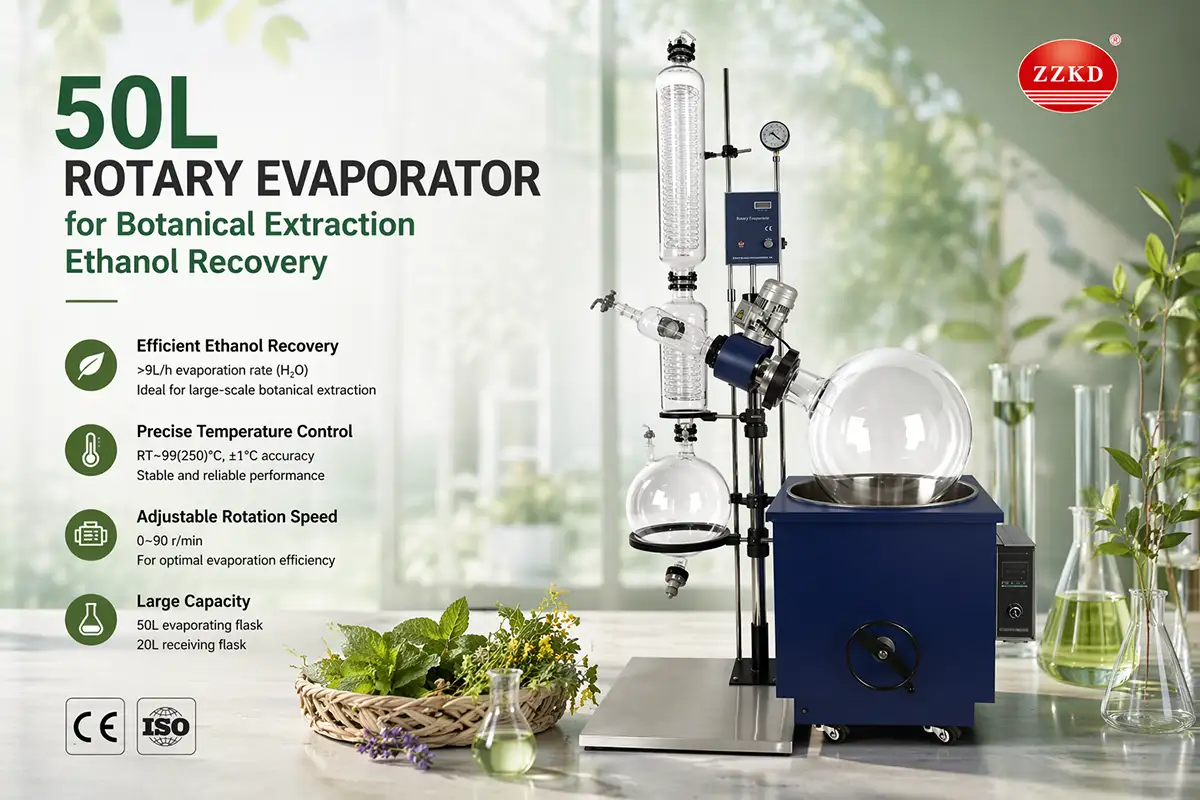
50L rotary evaporator for larger botanical extraction solvent recovery.
For test batches: choose 5L when the process is light, experimental, and space-sensitive.
For daily small production: choose 10L when solvent recovery is frequent and receiving volume matters.
For pilot extraction: choose 20L when the lab needs better throughput but still wants manageable glassware size.
For bulk botanical work: choose 50L when recovery volume, condenser capacity, and production rhythm are the priority. The KD RE-5002 large-scale rotary evaporator page is a relevant internal reference for this capacity class.
Not automatically. Larger glassware provides more capacity, but recovery speed also depends on vacuum depth, bath power, condenser cooling, solvent properties, flask fill level, and operating technique. A well-matched 20L system can outperform an oversized 50L setup if the 50L condenser or vacuum pump is underpowered.
Operational details that protect extract quality
Botanical extracts can foam, bump, or darken when operated too aggressively. A controlled process usually uses moderate fill volume, gradual vacuum, suitable condenser cooling, steady rotation, and a bath temperature matched to the solvent. For ethanol recovery, enough cooling capacity is especially important because uncondensed vapor reduces recovery efficiency and can create avoidable odor and handling issues.
Solvent handling for cannabis and botanical extraction may be subject to local regulations, fire codes, and facility safety requirements. The evaporator should be used only with approved solvents, compatible materials, proper ventilation, trained personnel, and suitable vacuum and cooling accessories.
Bottom Line
A rotary evaporator system for cannabis or botanical extraction should be selected as a complete solvent recovery workflow. For compact R&D, a 5L unit is practical. For daily botanical extraction, 10L offers better comfort. For pilot and production solvent recovery, 20L and 50L models bring the receiving volume, evaporation capacity, and condenser structure needed for serious throughput.
KD rotary evaporator options cover the full path from small laboratory testing to larger botanical solvent recovery. The strongest choice is the model that matches real batch volume, solvent behavior, cooling capacity, and daily operating rhythm.
KD Rotary Evaporators