Which Rotary Evaporator Is Best for Analytical Testing?
For analytical testing, the best rotary evaporator is not always the largest one. It is the system that removes solvent predictably, protects small samples, fits the bench, and keeps method development repeatable from one run to the next.
The best choice for analytical testing is usually a 2L rotary evaporator
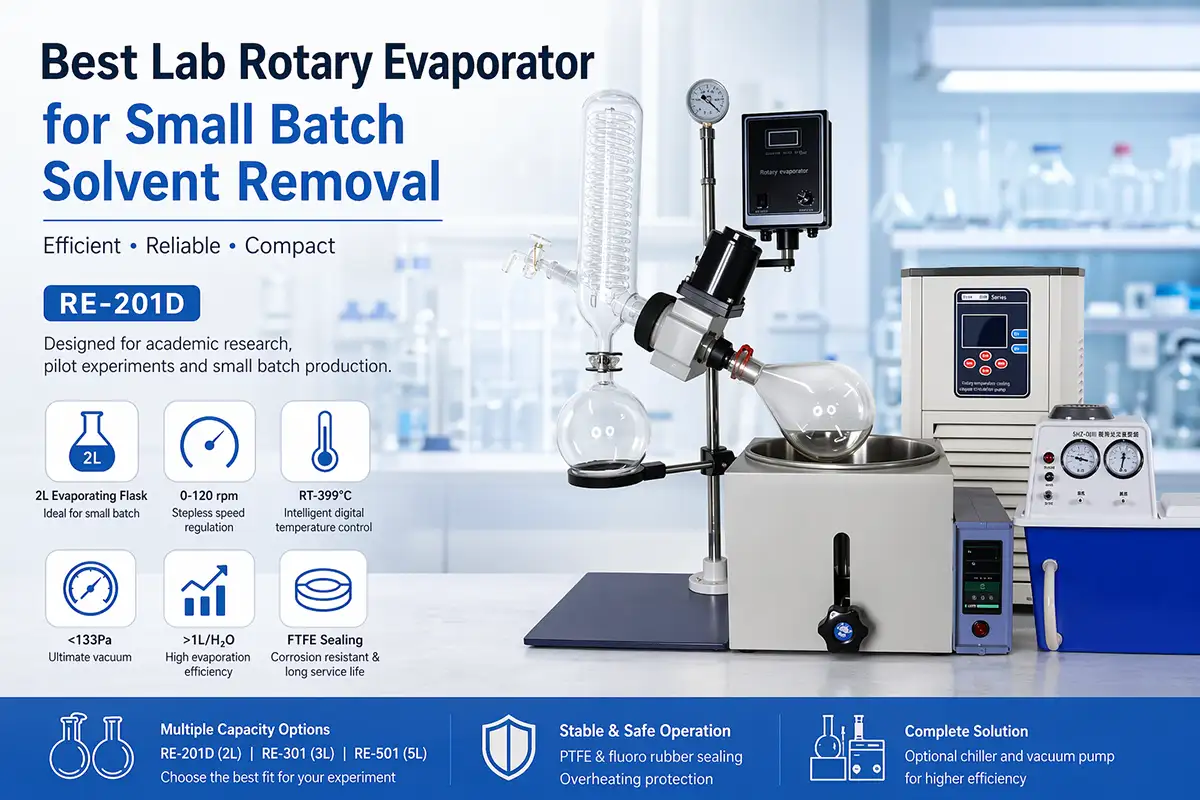
Analytical testing laboratories often work with solvent extracts, reaction aliquots, sample cleanup fractions, and small batches that need gentle concentration before HPLC, GC, LC-MS, residue testing, stability work, or formulation screening. In that setting, the RE-201D 2L rotary evaporator is the strongest default choice because it balances compact size, controlled heating, 0-120 rpm rotation, a 1L receiving flask, and enough evaporation capacity for routine bench work.
A 5L or 10L system can be excellent for production or pilot batches, but analytical testing is different. Sample volume, recovery control, flask handling, and fast changeover matter more than sheer throughput. A 2L unit keeps the evaporation path shorter and the glassware easier to clean between test methods.
Why analytical testing favors compact, repeatable evaporation
Analytical work rewards consistency. The instrument should help remove methanol, ethanol, ethyl acetate, acetone, water-rich mixtures, and other common laboratory solvents without forcing the operator to use excessive bath temperature. A compact lab rotary evaporator also makes it easier to monitor bumping, adjust vacuum gradually, and recover target compounds without overheating them.
For a broader chemistry background on how rotary evaporation works, the site's rotovap chemistry guide is a useful companion. For equipment selection, the key decision is capacity: the evaporation flask should be large enough for the sample load, but not so large that small-volume runs become awkward and slow.
Is a larger rotary evaporator more accurate for analytical testing?
No. Larger capacity does not automatically improve analytical accuracy. In my view, a smaller unit often supports better repeatability because the flask is easier to control, the sample film is easier to observe, and cleaning between methods is faster.
Choose 2L for daily sample concentration, teaching labs, R&D screening, and routine solvent removal where bench space matters.
Choose 3L when the workflow sometimes exceeds 1L batches but still needs a compact analytical footprint.
Choose 5L when analytical testing is paired with heavier extraction, formulation trials, or repeated pre-concentration of larger solvent volumes.
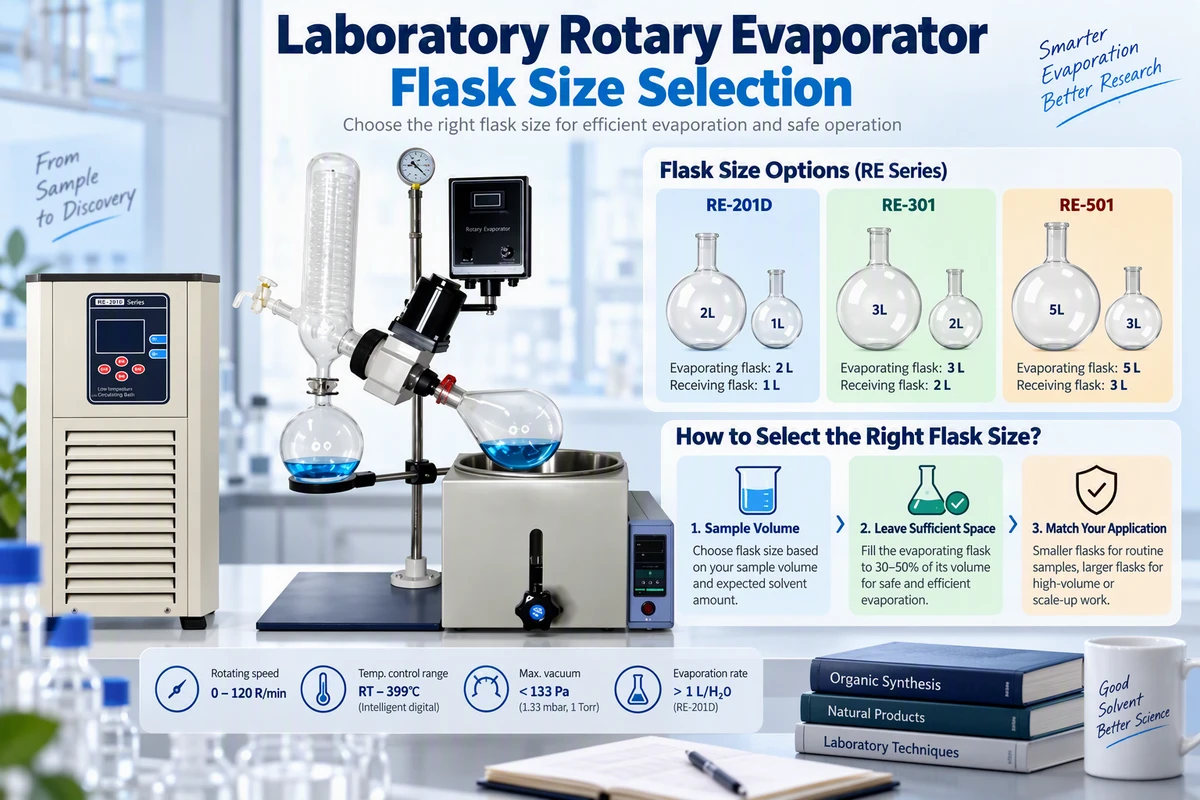
RE-201D: the practical best fit for small analytical batches
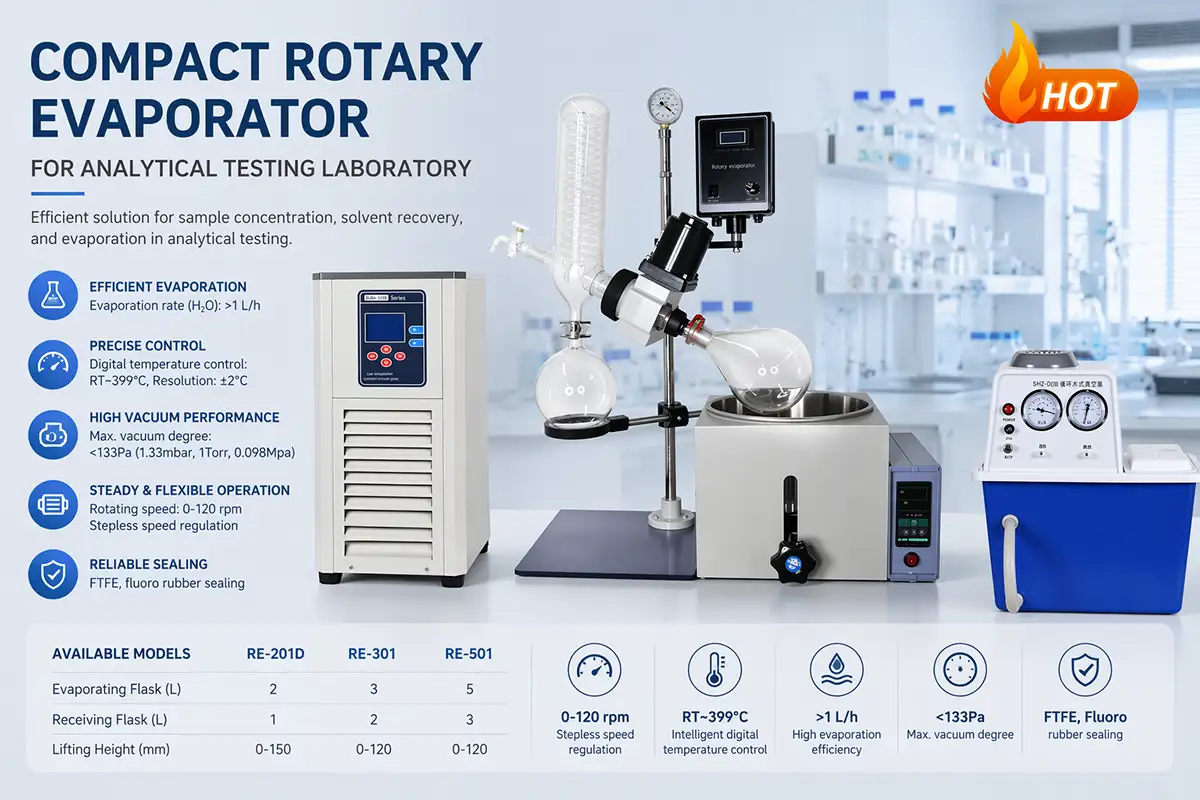
The RE-201D uses a 2L evaporating flask and a 1L receiving flask, with stepless 0-120 rpm rotation and a digital water or oil bath. Its listed maximum vacuum degree is below 133 Pa, which gives the lab enough vacuum headroom for low-temperature evaporation when paired with an appropriate pump and condenser cooling source.
From the supplied price sheet, multiple RE-201D listings appear from USD 480 to USD 655. Following the mid-lower selection rule for multiple prices, the reference price used here is about USD 600. That makes the RE-201D attractive for labs that need a real analytical rotovap instead of an oversized production-style system.
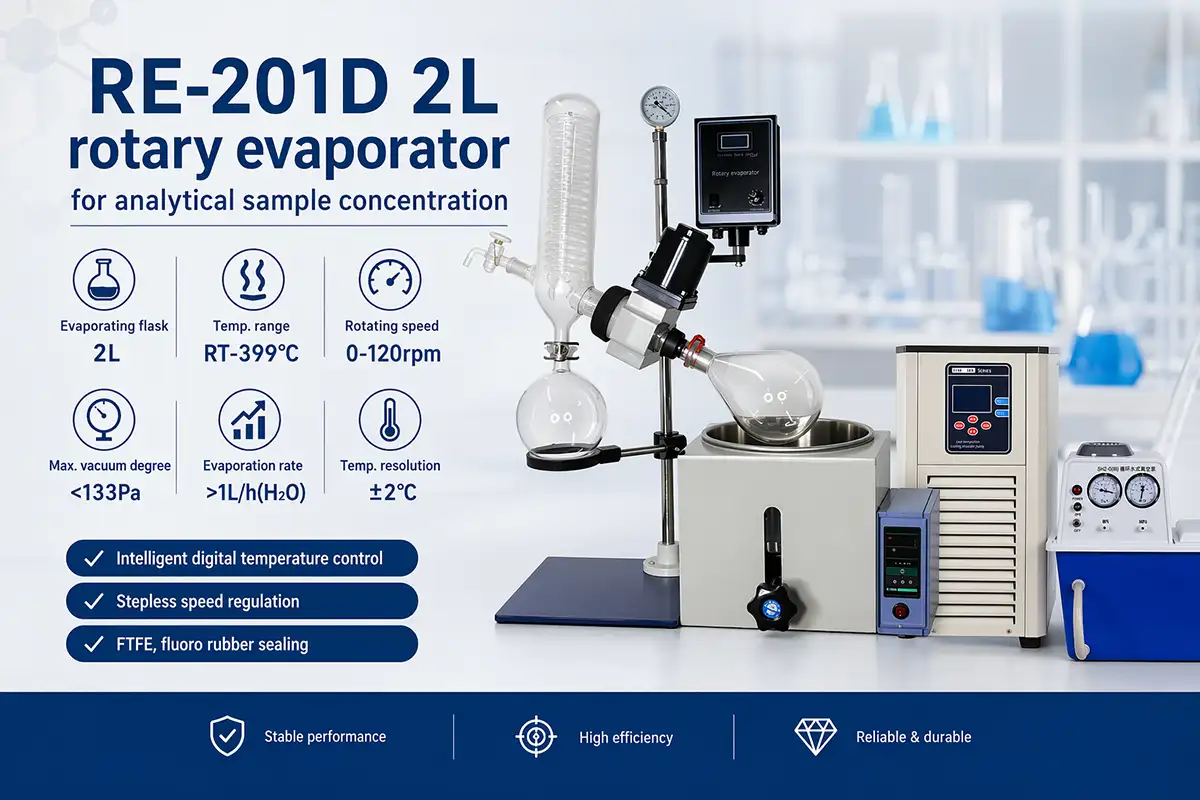
A 2L rotary evaporator is usually the most efficient capacity for routine analytical solvent removal.
Analytical testing rotary evaporator comparison
The following comparison focuses on the RE-201D, RE-301, and RE-501 models because these sizes are the most relevant for analytical testing and laboratory-scale solvent removal. Prices are reference values from the supplied product price sheet.
| Specification | RE-201D | RE-301 | RE-501 |
|---|---|---|---|
| Best lab use | Routine analytical testing, small-batch solvent removal | Larger sample cleanup and method development | High-volume sample prep and extraction concentration |
| Evaporating flask | 2L | 3L | 5L |
| Receiving flask | 1L | 2L | 3L |
| Rotating speed | 0-120 rpm | 0-120 rpm | 0-120 rpm |
| Rotating motor | 40W stepless speed regulation | 40W stepless speed regulation | 40W stepless speed regulation |
| Bath power | 1200W | 1200W | 1500W |
| Evaporation rate | >1 L/H2O | >1.5 L/H2O | >1.5 L/H2O |
| Maximum vacuum degree | <133 Pa | <133 Pa | <133 Pa |
| Lifting height | 0-150 mm | 0-120 mm | 0-120 mm |
| Reference price | About USD 600 | About USD 800 | About USD 780 |
When the 3L or 5L model becomes the better choice
The RE-201D is the best analytical starting point, but it is not the only sensible choice. The RE-301 adds a 3L evaporating flask and 2L receiving flask, which helps when extraction batches are slightly larger or when the lab wants a little more room without stepping into a heavy-duty unit. The RE-501 adds a 5L evaporating flask and 3L receiving flask, making it more appropriate for repeated concentration of larger extraction volumes.
For labs already leaning toward a larger flask, the RE-501 5L rotary evaporator is a natural upgrade path. It is still a laboratory rotary evaporator, but it gives more working volume for sample preparation before analytical measurement.
When does a 5L rotary evaporator make sense in an analytical lab?
A 5L system makes sense when the lab regularly receives larger extracts, concentrates solvent before final analytical cleanup, or supports multiple analysts with one instrument. I would not choose 5L just for occasional small samples; the extra glass volume is only valuable when the workflow genuinely needs it.
RE-201D 2L rotary evaporator
Best for routine analytical testing, small batches, teaching labs, and R&D sample concentration.
Reference price: about USD 600RE-301 3L rotary evaporator
Best for labs that need more capacity than 2L while keeping the workflow compact and easy to clean.
Reference price: about USD 800RE-501 5L rotary evaporator
Best for analytical support labs handling larger extraction volumes or frequent pre-concentration work.
Reference price: about USD 780How to match a rotary evaporator to analytical testing workflow
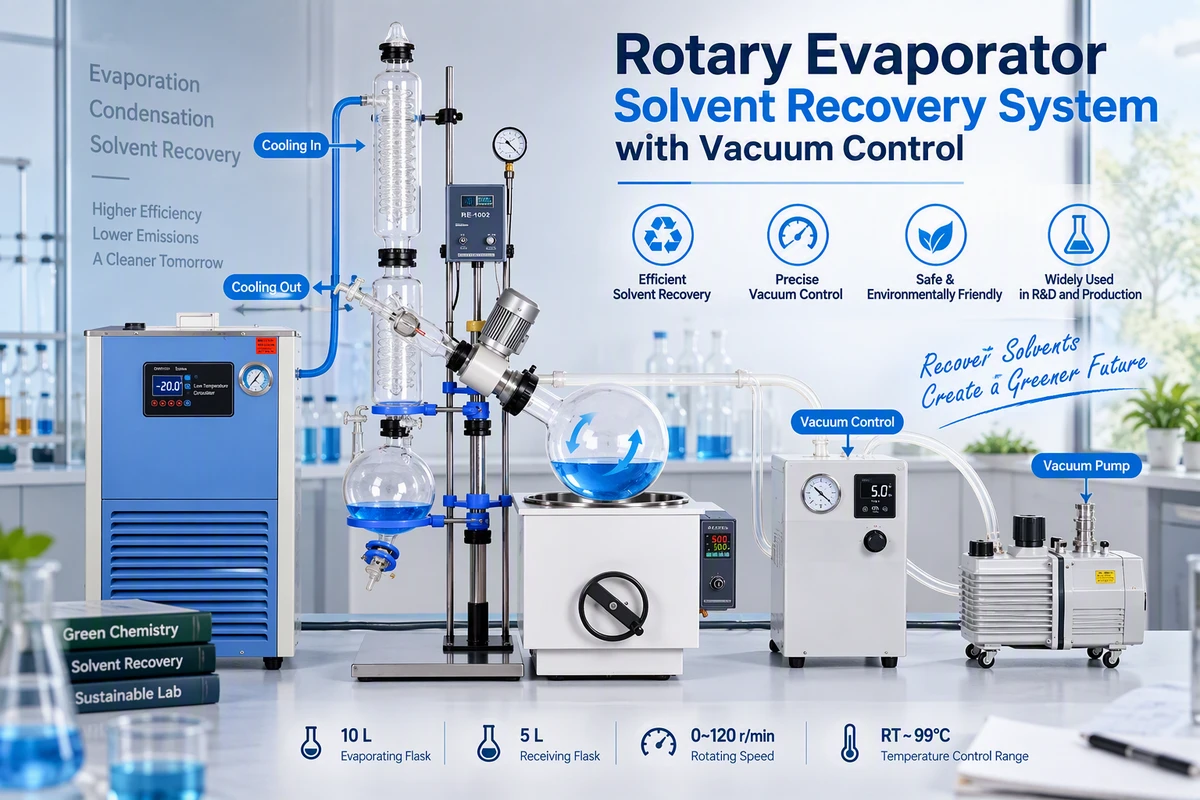
A good analytical rotovap setup is more than a heated bath and rotating flask. It should include suitable vacuum control, condenser cooling, compatible glassware, solvent recovery capacity, and a practical bench layout. When the application involves volatile solvents, temperature-sensitive compounds, or residue testing, the lab should favor gentle evaporation over maximum speed.
Operational discipline also matters. Gradual vacuum application, correct flask fill level, enough condenser cooling, and proper bath temperature are the difference between clean concentration and sample loss. A standard operating procedure should define flask fill level, vacuum ramping, condenser temperature, bath temperature, and shutdown steps before the instrument becomes part of routine analytical testing.
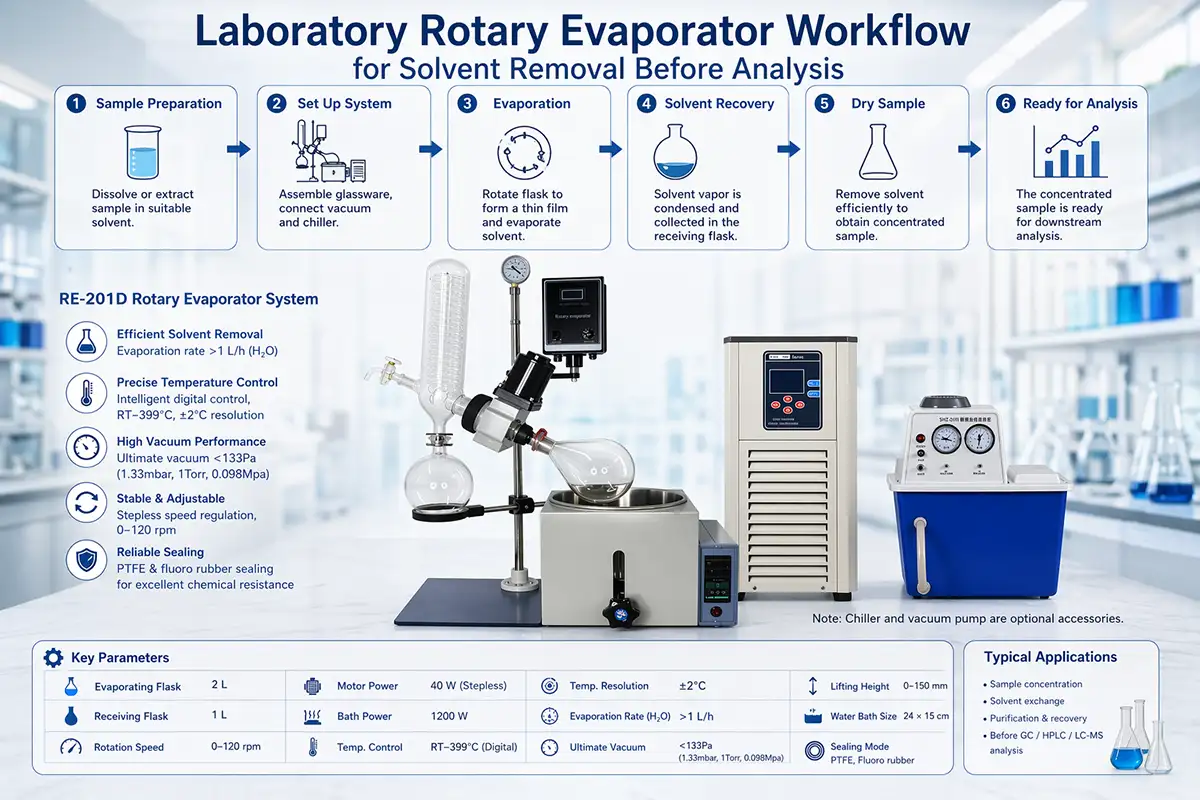
Analytical testing benefits from controlled evaporation, clean glassware handling, and repeatable solvent recovery conditions.
Recommended setup for most analytical testing labs
For routine analytical testing, I would configure the RE-201D with a reliable vacuum pump, cold-water circulation or a recirculating chiller, spare 2L evaporating flasks, spare receiving flasks, and solvent-compatible seals. This setup supports quick turnaround and keeps the total system simple enough for daily laboratory use.
If the lab concentrates extracts every day and routinely handles larger solvent loads, the RE-501 becomes more attractive. The larger receiving flask gives more solvent recovery room, and the 1500W bath provides stronger heating capacity for heavier workflows. Still, the RE-201D remains the best answer when the main goal is analytical repeatability rather than throughput.
What should matter more: price or repeatability?
Repeatability should come first. A lower purchase price is helpful, but an analytical testing lab gains more value from stable vacuum, controlled bath temperature, easy glassware handling, and a size that matches the sample workload.
Final recommendation: choose RE-201D first, then scale by workload
The best rotary evaporator for analytical testing is the RE-201D 2L rotary evaporator for most laboratories. It is compact, easy to operate, suitable for small-batch solvent removal, and priced competitively based on the supplied product list. The RE-301 is a useful middle option, while the RE-501 is better when analytical testing is supported by larger extraction or sample preparation volumes.
Best overall: RE-201D 2L rotary evaporator for routine analytical testing.
Best capacity upgrade: RE-501 5L rotary evaporator for larger sample prep and extraction concentration.
Best selection rule: choose the smallest rotary evaporator that handles the real sample volume comfortably, then add the right vacuum pump and cooling source.
Build a reliable analytical solvent removal setup
For labs comparing 2L, 3L, and 5L rotary evaporators, KD Rotary Evaporators can help match flask capacity, bath power, vacuum accessories, condenser cooling, and price expectations to the testing workflow.