Rotovap Machine: Complete Buying Guide for Lab and Industrial Solvent Removal
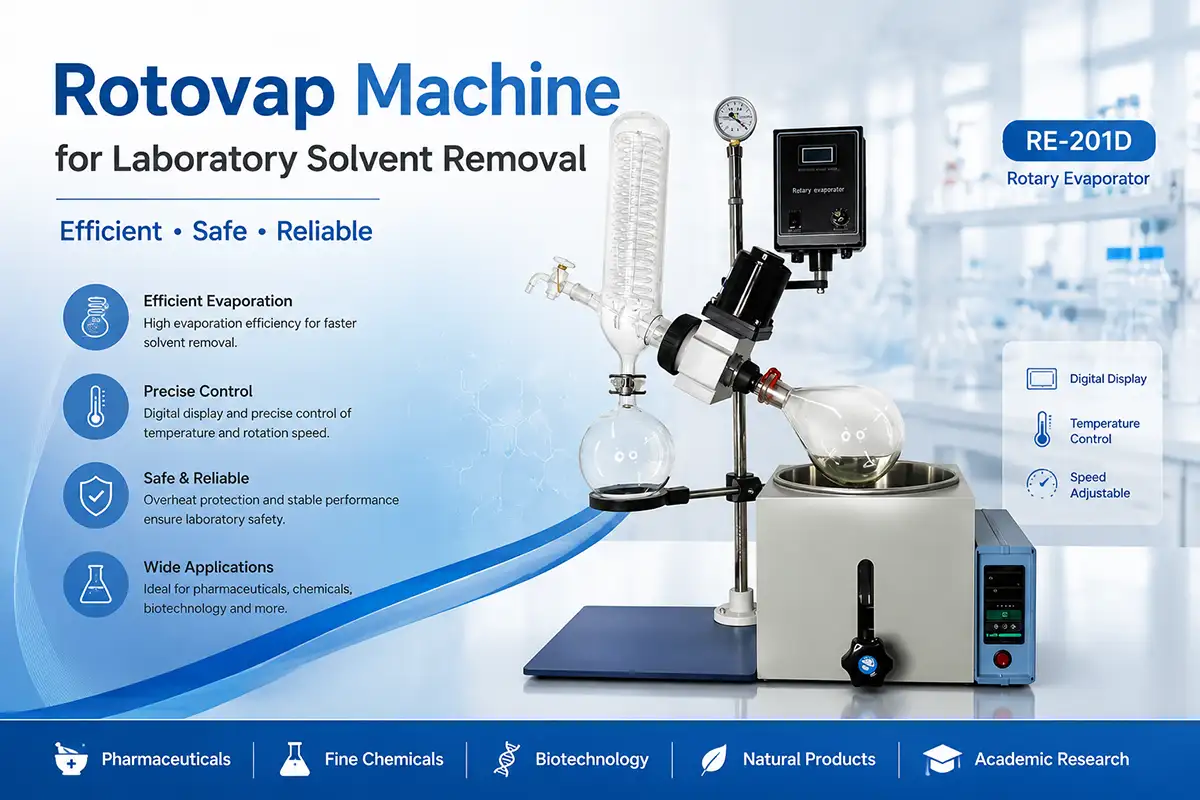
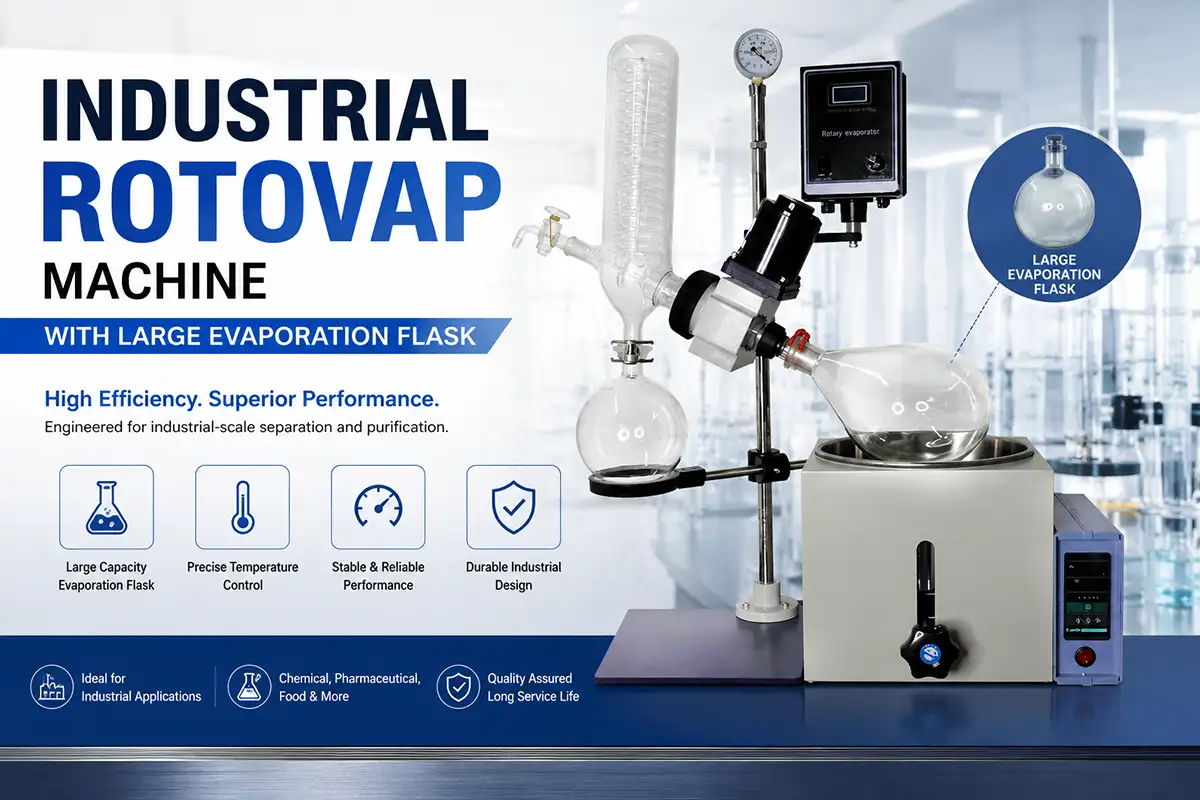
A rotovap machine is one of the most efficient tools for controlled solvent evaporation, concentration, and recovery. Whether the application involves routine chemistry work, botanical extraction, ethanol recovery, or pilot-scale processing, the right machine improves productivity, protects heat-sensitive materials, and supports cleaner separation results.
Why a rotovap machine matters in modern evaporation work
Compared with open heating or simple distillation, a rotovap machine combines rotation, vacuum, and controlled bath heating to remove solvents at lower boiling points. This reduces thermal stress, speeds up evaporation, and supports better recovery efficiency. For laboratories and production environments, that means more reliable operation and improved material protection.
Many users searching for roto vap or rotary evaporation solutions are really looking for the same thing: fast solvent removal with repeatable control. That is exactly where a properly selected rotary evaporator delivers value. For a more foundational explanation of principles and applications, see rotary evaporator chemistry explained.
What defines a high-performance rotovap machine?
Is a larger flask always the better choice?
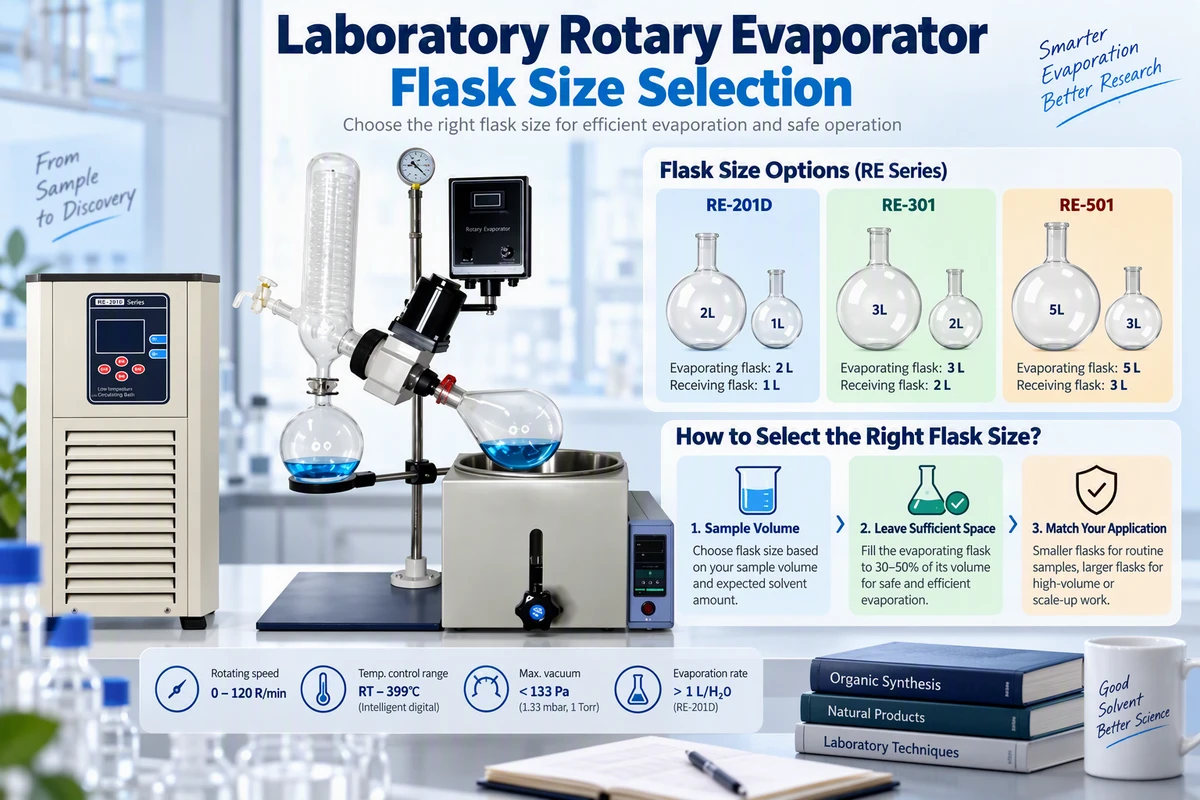
Not necessarily. From an equipment selection perspective, the best size is the one that matches actual batch volume, evaporation target, and available utilities. Oversized systems can increase footprint and heating demand without improving real process efficiency for smaller batches.
Technical comparison of available rotovap machine sizes
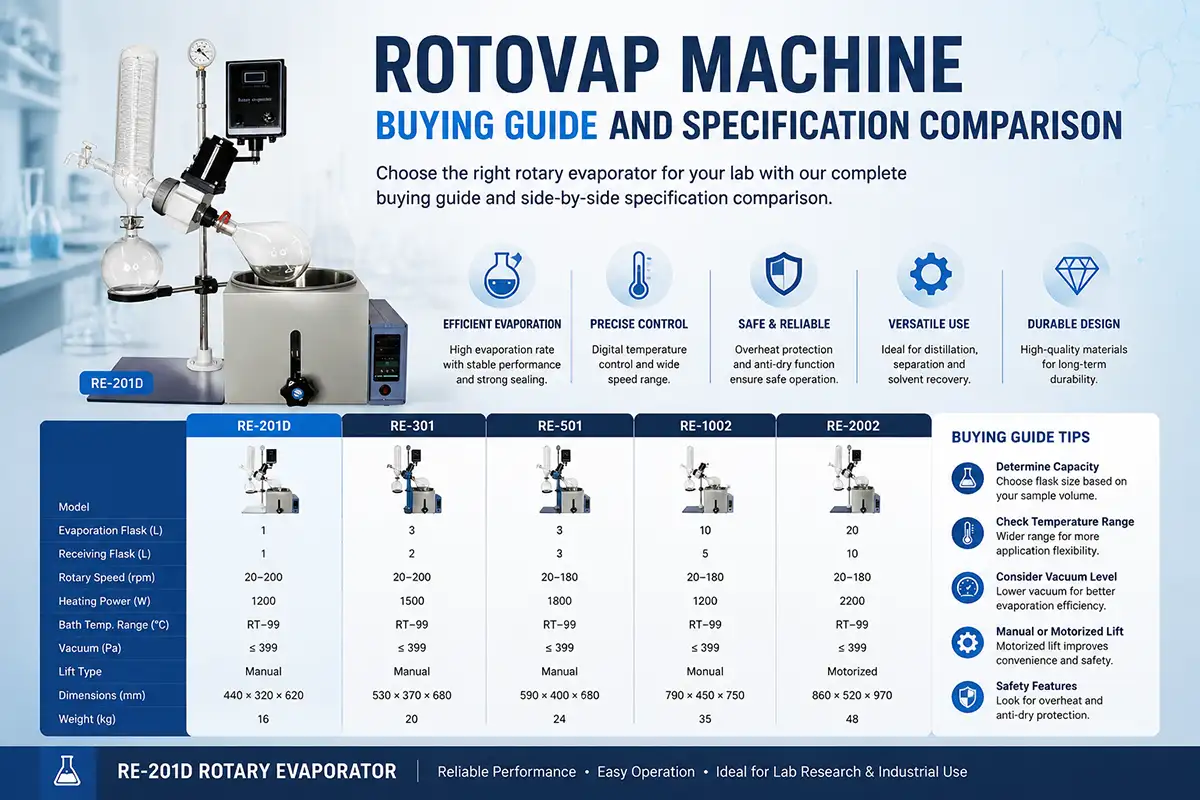
The following summary combines the provided specifications for compact, mid-size, and large-scale rotary evaporator models. These figures help show how performance changes with capacity.
| Model | Evaporating Flask | Receiving Flask | Motor Power | Speed Range | Bath Power | Temp Range | Evaporation Rate | Lifting Height | Key Notes |
|---|---|---|---|---|---|---|---|---|---|
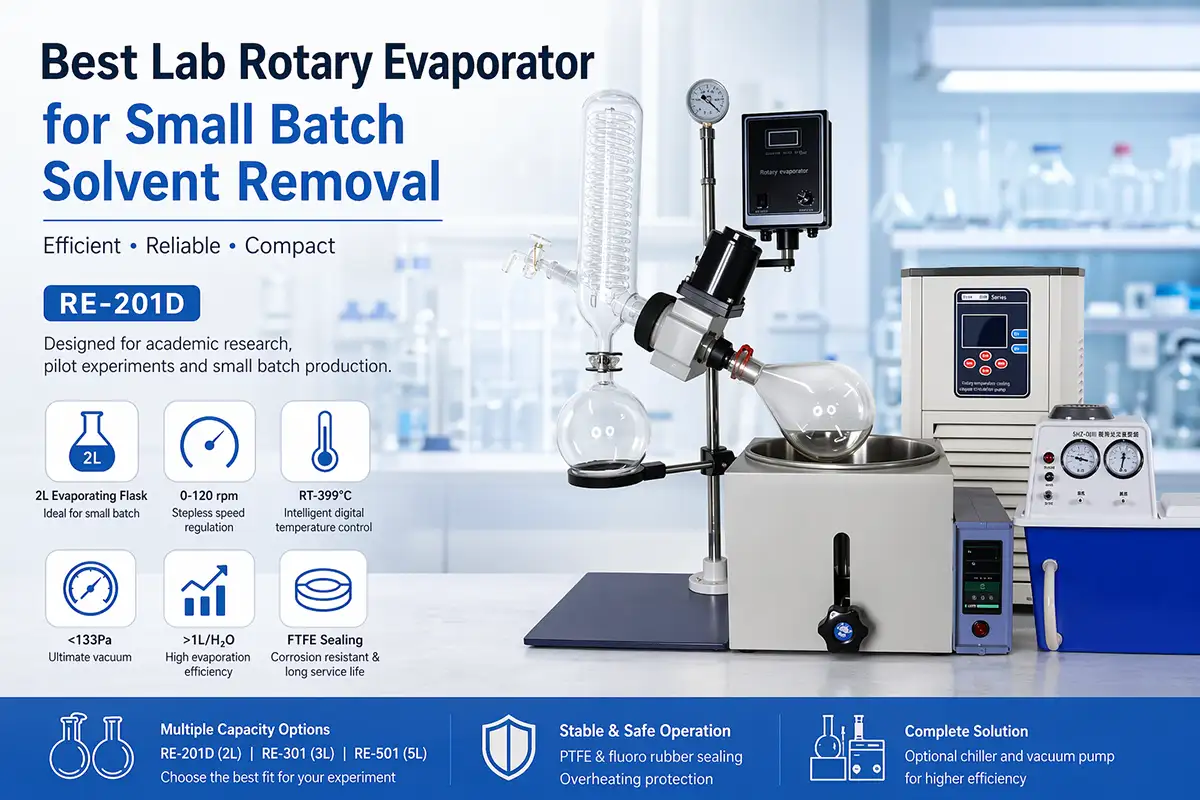
| RE-201D | 2L | 1L | 40W | 0-120 rpm | 1200W | RT-399℃ | >1 L/h (H2O) | 0-150 mm | Digital control, compact lab use |
| RE-301 | 3L | 2L | 40W | 0-120 rpm | 1500W | RT-399℃ | >1.5 L/h | 0-120 mm | Balanced benchtop configuration |
| RE-501 | 5L | 3L | 40W | 0-120 rpm | 1500W | RT-399℃ | >1.5 L/h | 0-120 mm | PTFE and fluoro rubber sealing |
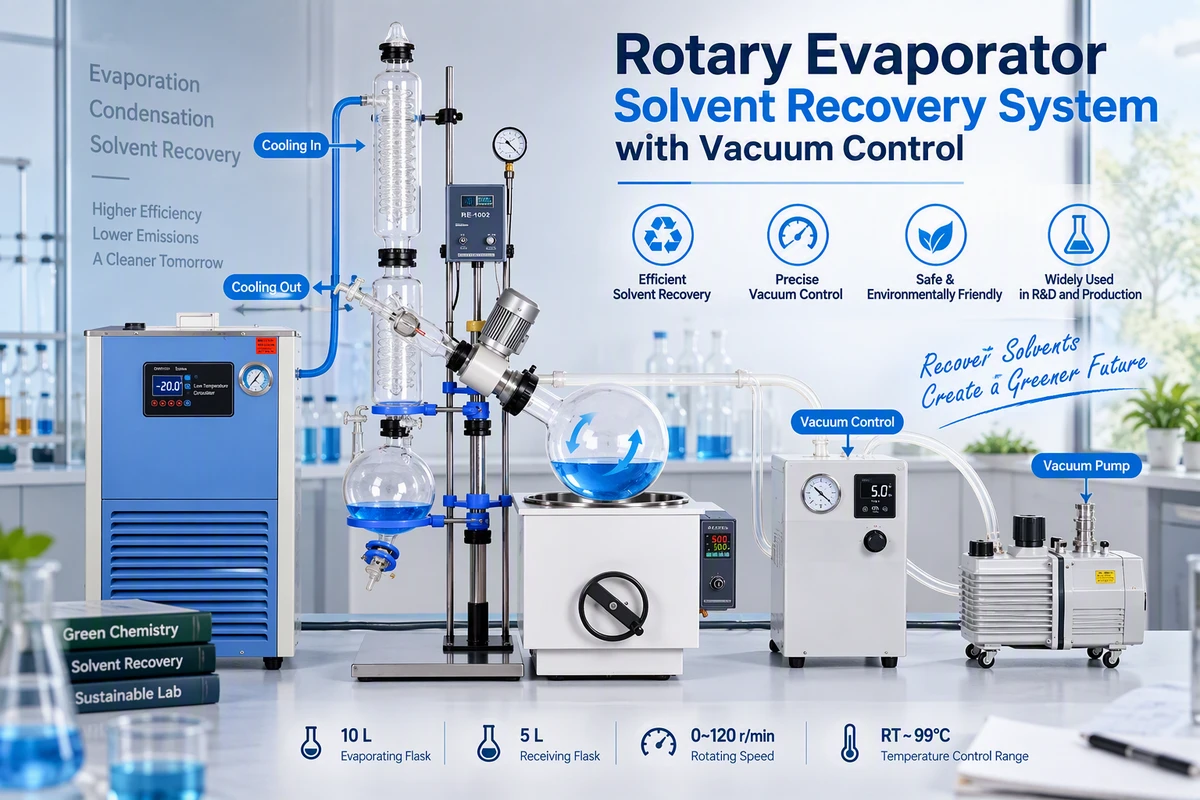
| RE-1002 | 10L | 5L | 180W | 0-120 rpm | 3000W | RT-99(250)℃ | >3 L/h | 0-220 mm | Vertical double condenser |
| RE-2002 | 20L | 10L | 180W | 0-120 rpm | 5000W | RT-99(250)℃ | >5 L/h | 0-220 mm | Manual bath lifting |
| RE-5002 | 50L | 20L | 250W | 0-90 rpm | 7000/9000W | RT-99(250)℃ | >9 L/h | 0-220 mm | Large-scale solvent recovery |
| R1005 | 5L | 3L | 40W | 10-140 rpm | Total power 2 kW | Application dependent | - | 0-150 mm | Electric lift, vertical double coil |
| R1010 / R1020 / R1050 | 10L / 20L / 50L | 5L / 10L / 20L | Brush-less 250W | 20-120 rpm | 3 / 4 / 4 kW | Application dependent | - | 0-160 / 190 / 180 mm | High-efficiency reflux condenser |
How to choose the right model for the application
Lab R&DSolvent RecoveryEthanol EvaporationPilot ScaleProduction ExpansionFor routine lab tasks, 2L to 5L models are usually the most practical. They are compact, responsive, and easy to operate for sample prep, concentration, and educational or analytical workflows. For extraction labs and higher-volume processing, 10L to 20L systems offer a better balance between throughput and footprint. When continuous batches and higher solvent recovery volumes are required, a 50L rotovap machine becomes the stronger option.
In ethanol applications, condenser efficiency and vacuum stability become especially important. If the goal includes alcohol recovery, reduced thermal exposure, and better collection efficiency, it also helps to understand process-specific evaporation guidance. Related reading: ethanol rotary evaporator guide.
Can a 5L rotovap machine handle serious production work?
Yes, for smaller commercial batches or frequent laboratory runs, a 5L system can be highly effective. However, once evaporation time becomes a bottleneck or solvent recovery volume rises sharply, moving to a 10L, 20L, or 50L configuration is usually the more economical long-term decision.
Key performance details buyers should not ignore
Maximum vacuum degree: Compact RE series units reach less than 133 Pa, which supports lower boiling temperatures and gentler evaporation.
Temperature stability: Smaller RE units list ±2℃ resolution, while larger RE-1002 to RE-5002 units show temperature fluctuation around ±1℃, helping improve consistency.
Sealing system: PTFE and fluoro rubber sealing is valuable for corrosion resistance and solvent compatibility.
Condenser structure: Vertical double condensers or high-efficiency reflux condensers support stronger recovery performance, especially at larger volumes.
Lifting mode: Electric lift improves convenience and control, while electric plus hand lift offers flexibility on larger models.
Power supply: Larger machines may require three-phase power, which should be confirmed before installation planning.
Buyers comparing equipment often focus only on flask size, but the real process outcome depends on how the whole system works together. Rotation, heating, vacuum, condensation, and lifting all contribute to evaporation efficiency.
Operating benefits of a modern rotovap machine
A well-matched rotovap machine offers several practical benefits:
Rotation increases surface area, while vacuum lowers boiling point.
Lower-temperature evaporation helps maintain product quality.
Efficient condenser design captures more vapor for reuse or disposal control.
Digital temperature control and stable speed settings improve consistency.
For users wanting a practical operational overview, how to use a rotovap is a useful companion topic because purchasing decisions and operating methods are closely connected.
Does stronger heating always mean faster evaporation?
Only in part. In actual process design, evaporation speed depends on the balance between bath temperature, vacuum level, rotation speed, and condenser capacity. Excessive heating without proper vacuum and condensation can reduce control rather than improve performance.
Recommended selection path
When evaluating a rotovap machine, it is helpful to follow a simple selection sequence:
Define solvent type and daily evaporation volume.
Choose flask capacity based on actual batch needs, not idealized maximums.
Confirm vacuum target, condenser style, and heating requirements.
Check lifting method, available power supply, and installation space.
Review sealing materials for chemical compatibility.
Match evaporation rate expectations with practical production goals.
Final thoughts on choosing a rotovap machine
The best rotovap machine is not simply the biggest or the highest-powered model. It is the system that matches process scale, solvent characteristics, temperature sensitivity, and operating workflow. Small RE models serve labs that need compact and reliable daily evaporation. Mid-size and large systems such as 10L, 20L, and 50L configurations are better suited for extraction labs, pilot operations, and large-batch solvent recovery.
With the right combination of flask size, vacuum performance, condenser efficiency, and bath control, a rotary evaporator can become one of the most productive and dependable pieces of equipment in the entire process line.